
Network service intelligent deployment method and system
A network service and deployment system technology, applied in the field of network service intelligent deployment methods and systems, can solve the problems of inability to virtualize resource allocation, inability to realize efficient deployment of network services, lack of intelligent and automatic deployment methods of network services, etc., to achieve guarantee The effect of normal operation
- Summary
- Abstract
- Description
- Claims
- Application Information
AI Technical Summary
Problems solved by technology
Method used
Image

Examples
Embodiment 1
[0081] Embodiment 1 of the present invention provides a network service intelligent deployment method, including the following steps:
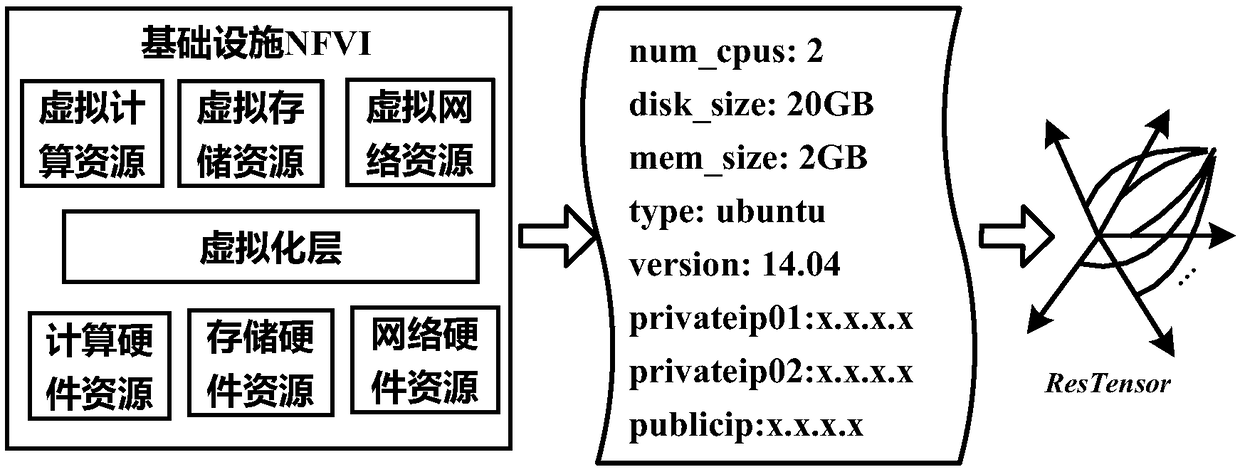
[0082] The tensor-based formalized description of virtualized resources, combined with the cloud application-oriented topology and orchestration specification TOSCA template, uses key / value to describe virtual resources, and formalizes and unifies virtual computing, storage, and network resources in the telecom cloud platform describe;
[0083] Based on artificial intelligence technology and historical sample data, calculate the transfer probability of each virtual resource, generate a transfer tensor model, and predict the future change trend of virtual resource utilization according to the transfer tensor model;
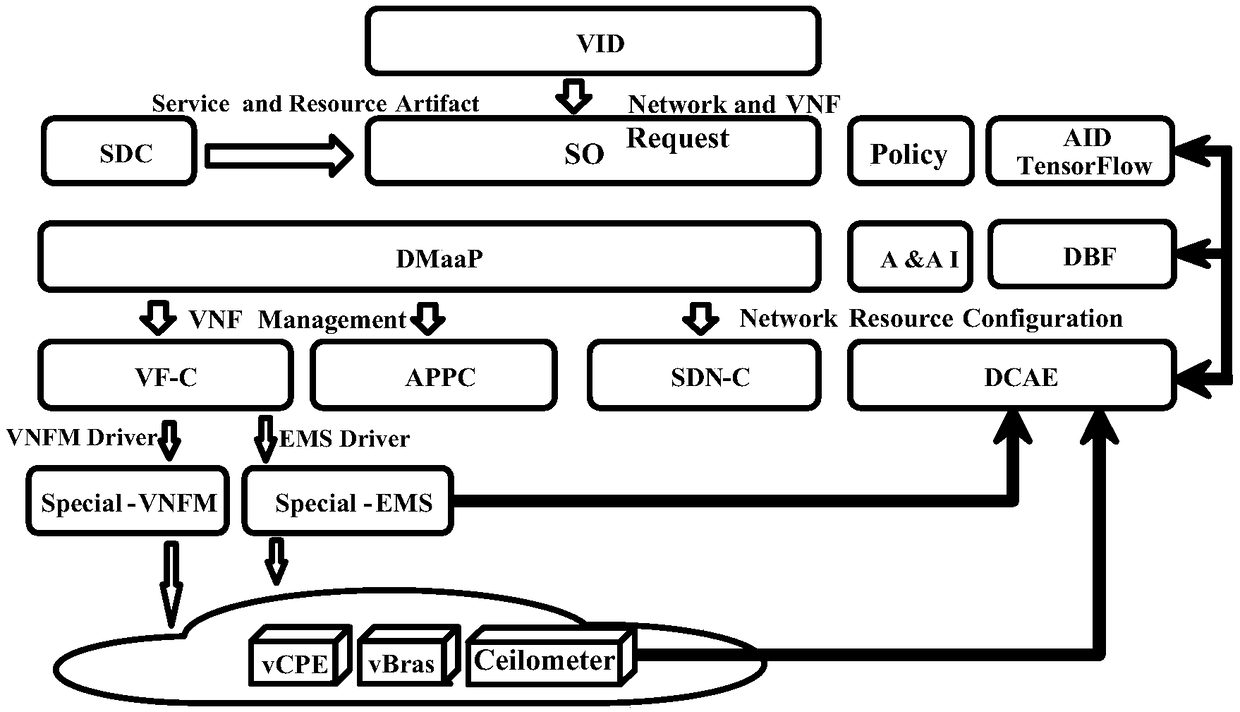
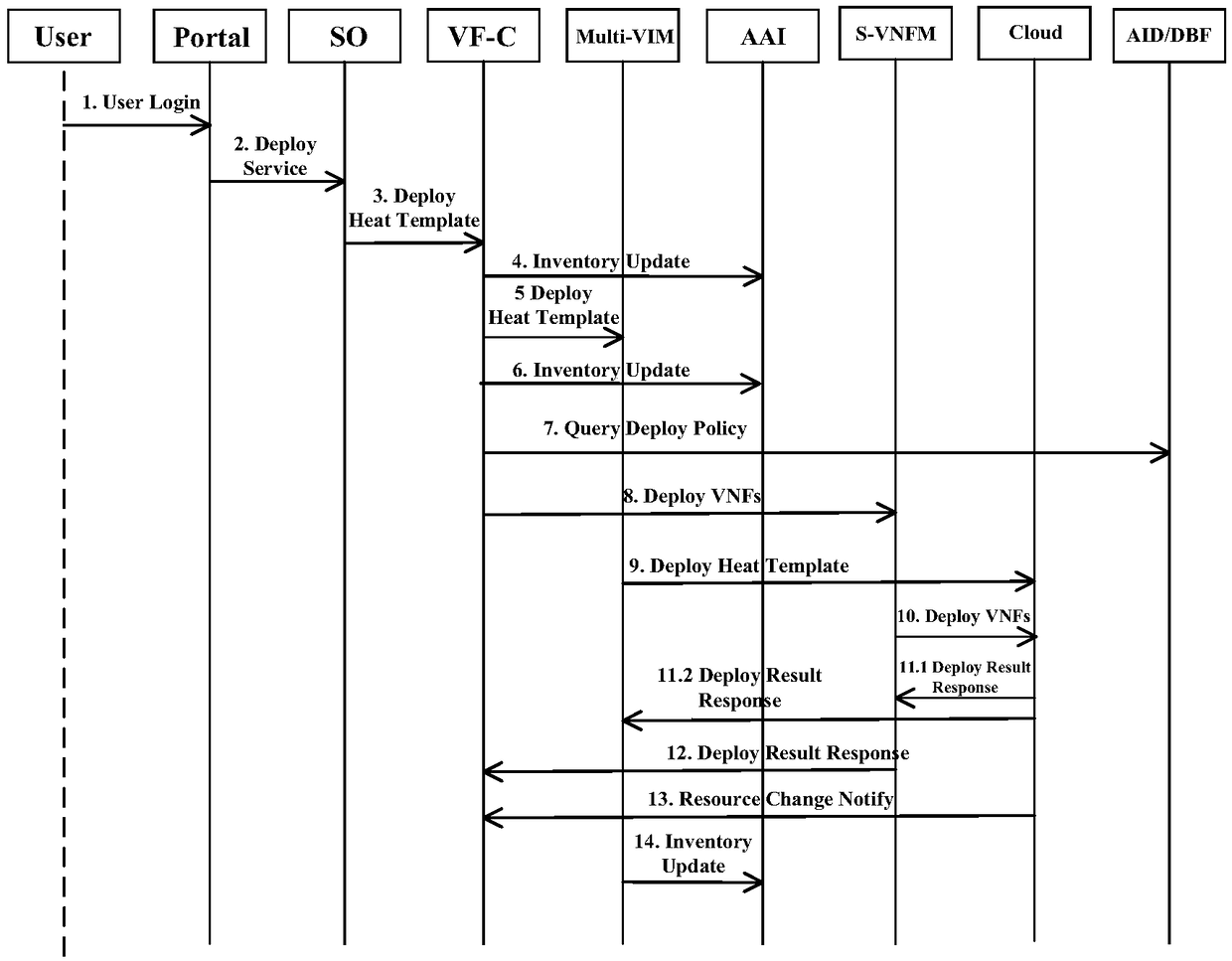
[0084] In the online phase, write the virtual network function description file based on the Heat template, create a vCER installation package based on the virtual network function description file and the vCER (Virtualized Cloud E...
Embodiment 2
[0089] Embodiment 2 of the present invention provides an intelligent network service deployment system, including a description unit, a trend prediction unit, and an intelligent deployment unit, wherein:
[0090] The description unit is used for: tensor-based formalized description of virtualized resources, combined with cloud application-oriented topology and orchestration specification TOSCA template, using key / value to describe virtual resources, and integrating virtual computing, storage, and network in the telecom cloud platform Formalized unified description of resources;
[0091] The trend prediction unit is used to: calculate the transfer probability of each virtual resource based on artificial intelligence technology and historical sample data, generate a transfer tensor model, and predict the future change trend of virtual resource utilization according to the transfer tensor model;
[0092] The intelligent deployment unit includes network service orchestration SO mo...
Embodiment 3
[0094] On the basis of Embodiment 1 or 2, for the virtualized client terminal equipment vCER device, the virtual resources include non-business-related and business-related resources, and the non-business-related resources include CPU utilization, the total amount of control plane memory and the remaining amount of memory , the total amount of memory on the forwarding plane and the remaining amount of memory, the inflow rate and outflow rate of the virtual network interface, the packet loss rate, the tunnel flow rate, and related resource alarms. Use key / value to describe virtual resource related data, and perform formal processing based on TOSCA ; Communication equipment alarm and performance-related data are described by MIB.
PUM
 Login to View More
 Abstract
Description
Claims
Application Information
 Login to View More