
A kind of treatment method of epichlorohydrin production waste water
A technology for epichlorohydrin and waste water production, which is applied in oxidation water/sewage treatment, natural water treatment, water/sewage treatment, etc., can solve the problems of inorganic salt pollution, inability to oxidatively degrade organic substances, and difficult to meet discharge requirements, etc. Realize the effect of recycling, prolonging service life and low disposal cost
- Summary
- Abstract
- Description
- Claims
- Application Information
AI Technical Summary
Problems solved by technology
Method used
Image


Examples
Embodiment 1
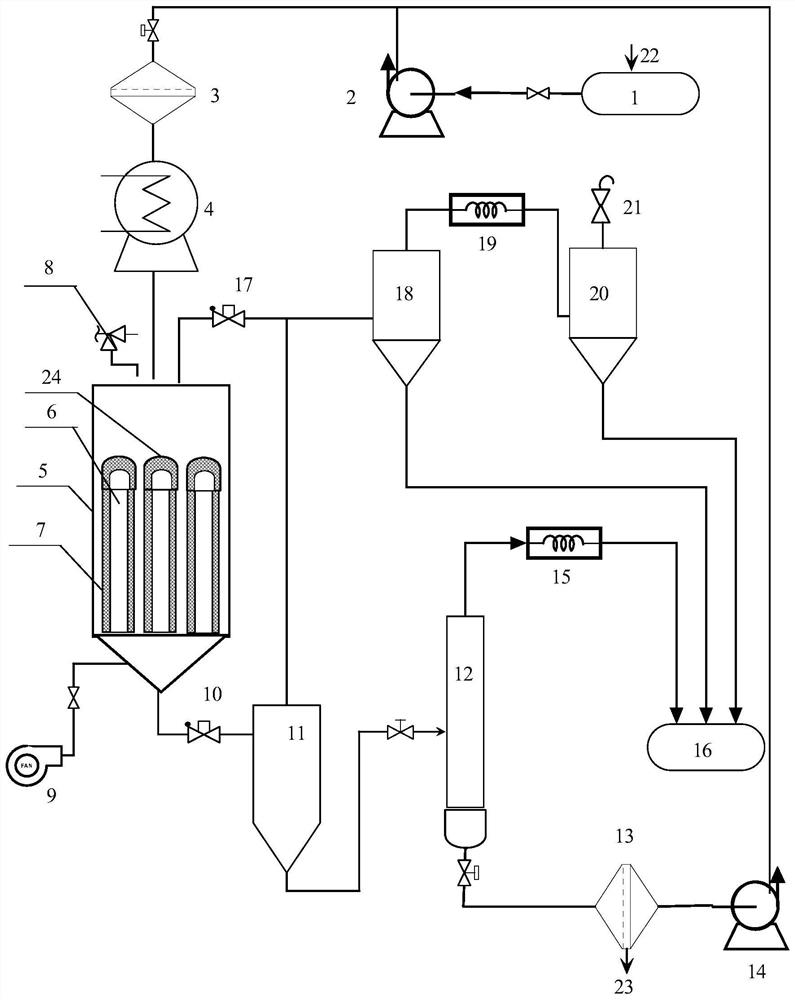
[0040] Add the waste water from the production of epichlorohydrin into the waste water storage tank, add the catalytic oxidation aid anhydrous cobalt chloride and stir evenly, then preheat, and after preheating, enter the porous solid catalyst Nd 2 o 5 In the oxidation reactor of / SBA-15, it reacts with the oxidant, and controls the temperature, pressure, flow rate and residence time of the reaction; after the reaction is completed, samples are taken at the outlet of the oxidation reactor for analysis, and then the treated organic wastewater enters the flash evaporation The temperature is lowered, and the solid salt is separated by centrifugation through the desalination filter. The concentrated liquid after centrifugation is returned to the filter device, and then enters the preheating device, which is applied to the process to realize the recycling of catalytic oxidation additives. The treated organic wastewater was measured for COD and calculated for its removal rate, and a...
Embodiment 2
[0045] The process parameters are:
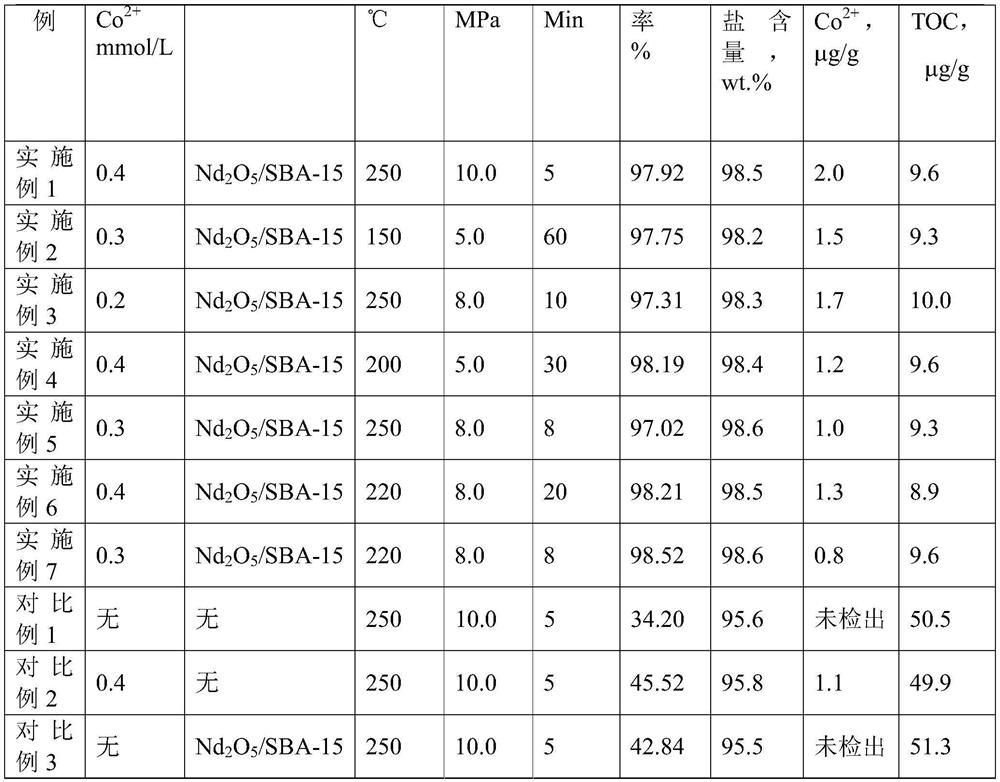
[0046] (1) NaCl content is 15.0wt.% in the epichlorohydrin production wastewater, and COD is 5000mg / L; After adding anhydrous cobalt chloride in the epichlorohydrin production wastewater, Co 2+ The molar concentration in epichlorohydrin production wastewater is 0.3mmol / L; the preheating temperature is 150°C; the reaction temperature is 150°C, the reaction pressure is 5.0MPa, the residence time is 60min, the flow rate of wastewater is 16.7ml / min, and the oxidant for air;
[0047] (2) After testing, the removal rate of COD in the treated organic wastewater is 97.75%, and the recovery rate of NaCl is 99.1%. After the solid salt is dried, it is analyzed, and its quality index is: NaCl: 98.2wt.%; Co 2+ : 1.5 μg / g; TOC: 9.3 μg / g.
Embodiment 3
[0049] The process parameters are:
[0050] (1) CaCl in epichlorohydrin production wastewater 2 The content is 14.0wt.%, and the COD is 4500mg / L; after adding anhydrous cobalt chloride to the epichlorohydrin production wastewater, Co 2+ The molar concentration in the epichlorohydrin production wastewater is 0.2mmol / L; the preheating temperature is 250°C; the reaction temperature is 250°C, the reaction pressure is 8.0MPa, the residence time is 10min, the wastewater flow rate is 100ml / min, and the oxidant is oxygen;
[0051] (2) After testing, the removal rate of COD in the treated organic wastewater is 97.31%, and CaCl 2 The recovery rate is 99.3%, and the solid salt is analyzed after drying, and its quality index is: CaCl 2 : 98.3wt.%; Co 2+ : 1.7 μg / g; TOC: 10.0 μg / g.
PUM
| Property | Measurement | Unit |
|---|---|---|
| thickness | aaaaa | aaaaa |
Abstract
Description
Claims
Application Information
 Login to View More