
A kind of treatment method of thioglycolic acid production wastewater
A technology for producing wastewater and thioglycolic acid, which is applied in natural water treatment, water/sewage treatment, water treatment parameter control, etc. It can solve problems such as inability to oxidize and degrade organic matter, difficulty in meeting discharge requirements, solid salt pollution, etc., and achieve recycling. , low processing cost, prolonging the service life
- Summary
- Abstract
- Description
- Claims
- Application Information
AI Technical Summary
Problems solved by technology
Method used
Image

Examples
Embodiment 1
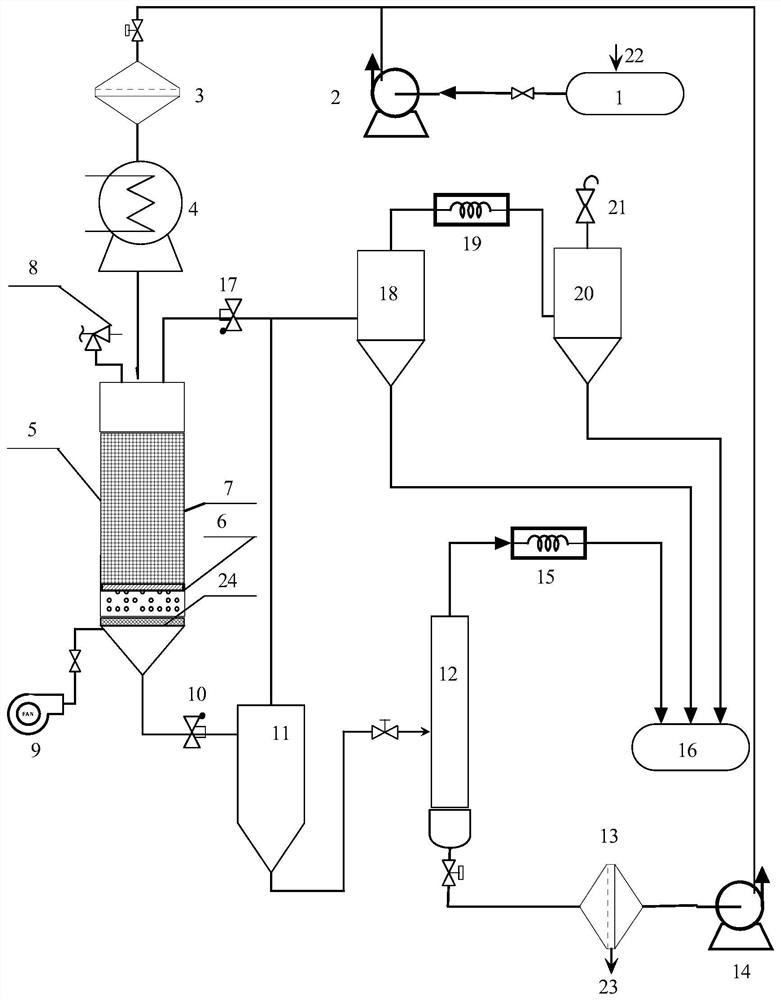
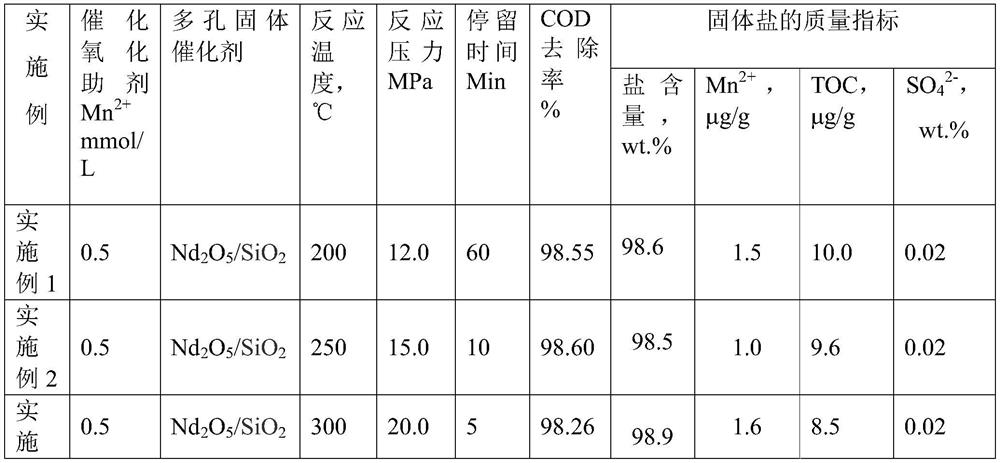
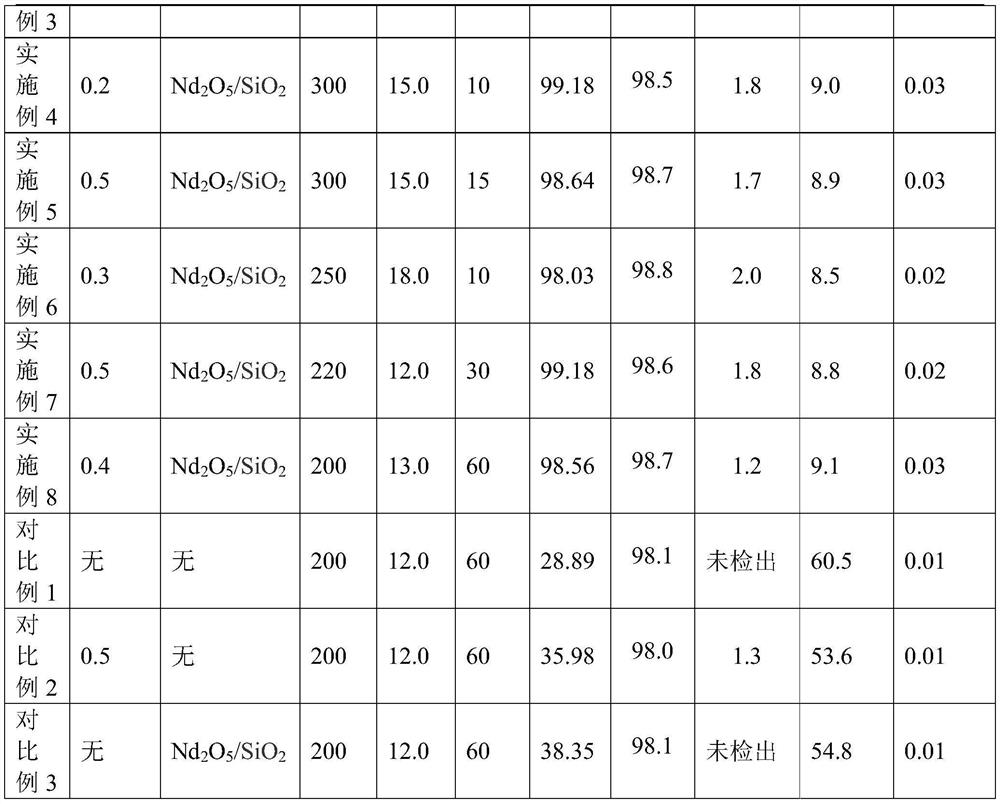
[0035] (1) Take mercaptoacetic acid production wastewater (NaCl content 17.0wt.%, COD: 20000mg / L, pH value is 0.5) and join in the wastewater storage tank, add catalytic oxidation auxiliary agent anhydrous manganese chloride and stir evenly, in the organic wastewater mn 2+ The molar concentration is 0.5mmol / L;
[0036] (2) Preheat to 200°C, enter the porous solid catalyst Nd 2 o 5 / SiO 2 React with oxygen in the bubbling reactor; control the reaction temperature to 200°C, the reaction pressure to 12.0MPa, the residence time to 60min, and the flow rate of waste water to 16.7ml / min;
[0037] (3) Sampling and analysis at the outlet of the bubbling reactor, then enter the flashing device, cool down, and centrifuge the solid salt NaCl through the desalting filter, return the concentrated solution after centrifugation to the filtering device, then enter the preheating device, and apply it to In the process, the recycling of catalytic oxidation aids is realized.
[0038] After t...
Embodiment 2
[0040] (1) Take thioglycolic acid production wastewater (NaCl content 17.0wt.%, COD: 15000mg / L, pH value is 5.0) and join in the wastewater storage tank, add catalytic oxidation auxiliary agent anhydrous manganese chloride and stir evenly, in the organic wastewater mn 2+ The molar concentration is 0.5mmol / L;
[0041] (2) Preheat to 250°C, enter the porous solid catalyst Nd 2 o 5 / SiO 2 React with oxygen in the bubbling reactor; control the reaction temperature to 250°C, the reaction pressure to 15.0MPa, the residence time to 10min, and the flow rate of waste water to 100ml / min;
[0042] (3) Sampling and analysis at the outlet of the bubbling reactor, then enter the flashing device, cool down, and centrifuge the solid salt NaCl through the desalting filter, return the concentrated solution after centrifugation to the filtering device, then enter the preheating device, and apply it to In the process, the recycling of catalytic oxidation aids is realized.
[0043] After test...
Embodiment 3
[0045] (1) Take thioglycolic acid production wastewater (NaCl content 22.0wt.%, COD: 20000mg / L, pH value is 3.0) and join in the wastewater storage tank, add catalytic oxidation auxiliary agent anhydrous manganese chloride and stir evenly, in the organic wastewater mn 2+ The molar concentration is 0.5mmol / L;
[0046] (2) Preheat to 300°C, enter the porous solid catalyst Nd 2 o 5 / SiO 2 React with oxygen in the bubbling reactor; control the reaction temperature to 300°C, the reaction pressure to 20.0MPa, the residence time to 5min, and the flow rate of waste water to 200ml / min;
[0047] (3) Sampling and analysis at the outlet of the bubbling reactor, then enter the flashing device, cool down, and centrifuge the solid salt NaCl through the desalting filter, return the concentrated solution after centrifugation to the filtering device, then enter the preheating device, and apply it to In the process, the recycling of catalytic oxidation aids is realized.
[0048] After testi...
PUM
| Property | Measurement | Unit |
|---|---|---|
| porosity | aaaaa | aaaaa |
| recovery rate | aaaaa | aaaaa |
| clearance rate | aaaaa | aaaaa |
Abstract
Description
Claims
Application Information
 Login to View More