
Application of Interleukin 4 Receptor in Preparation of Drugs for Prevention and Treatment of Enterovirus 71 Infection
A technology of interleukin and enterovirus, applied to the new target and application field of anti-enterovirus 71 infection
- Summary
- Abstract
- Description
- Claims
- Application Information
AI Technical Summary
Problems solved by technology
Method used
Image

Examples
Embodiment 1
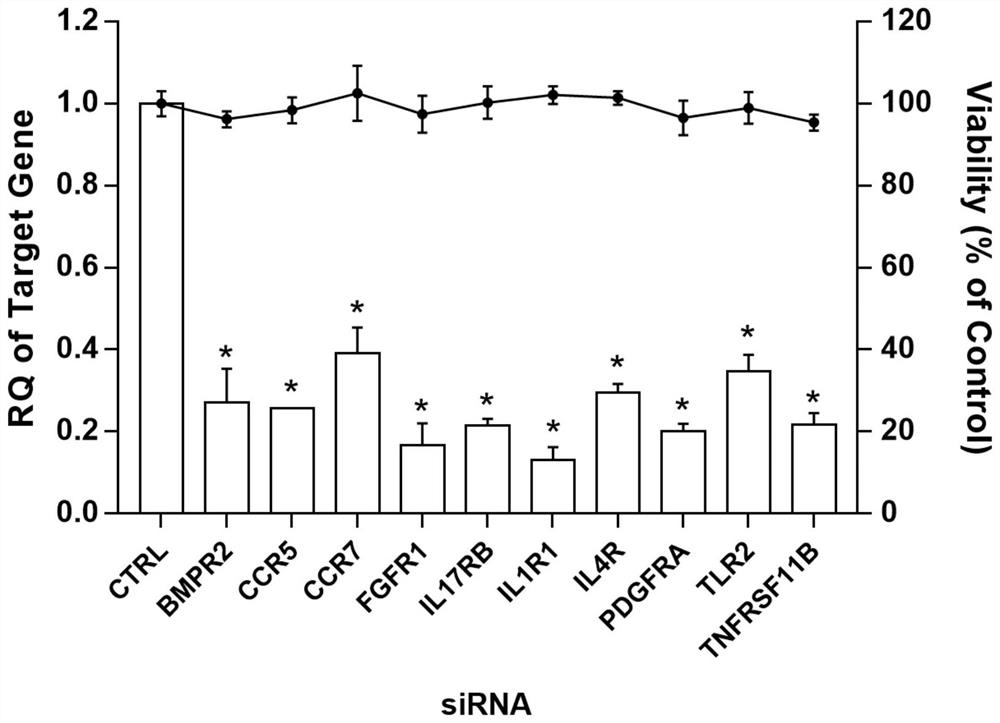
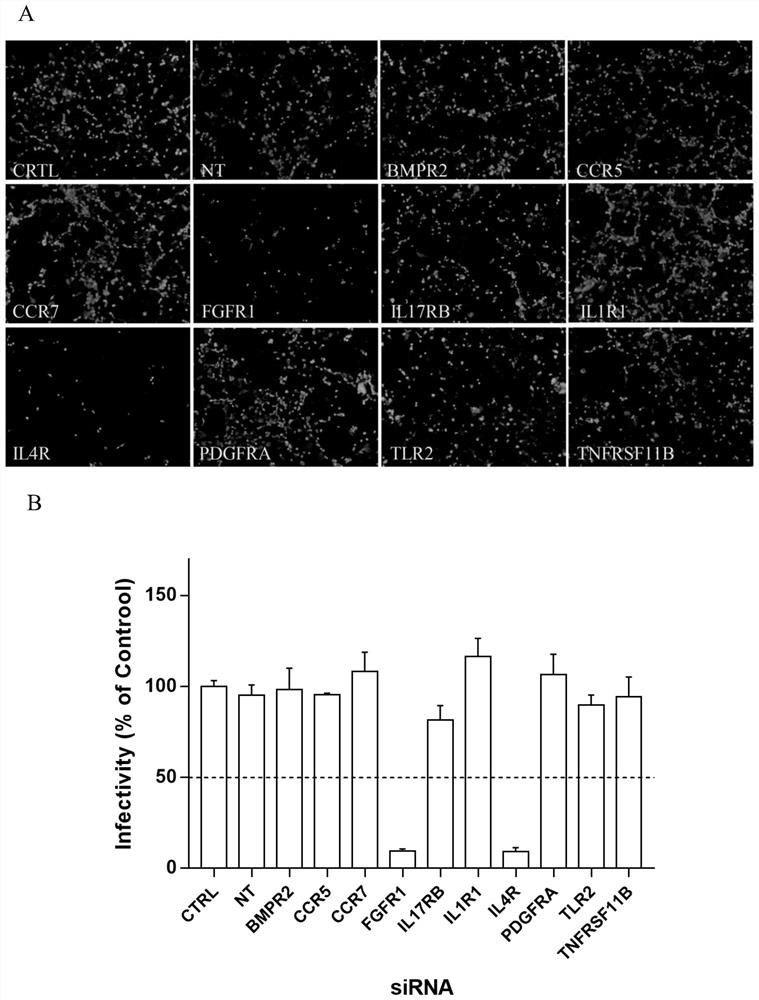
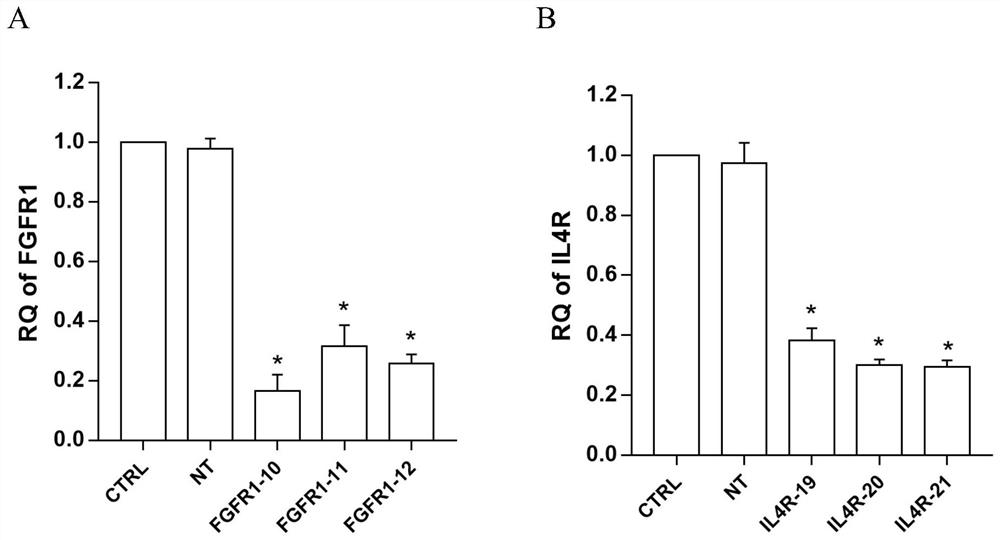
[0062] 1 Design and synthesis of specific siRNA sequences for each transport-related membrane protein.
[0063] 1.1 For each target gene, search NCBI GeneBank to obtain the full sequence and mRNA sequence, use existing network resources and commonly used software to conduct biological analysis on AXIIR, and select the coding region as the target sequence for siRNA design. Refer to the siRNA design principle, and compare it with the human genome sequence through the blast function of the GeneBank database to ensure that there is no homology; exclude potential siRNAs that have 8 consecutive bases at the 5' end of the aitisense chain paired with other genes; exclude any consecutive 14 bases base-pairing potential siRNAs with other genes. The design software was used for pre-evaluation and determination, and three targets with the best kinetic parameters were selected to enter the subsequent experimental process. A total of three interference sequences were synthesized for each ge...
PUM
 Login to View More
 Abstract
Description
Claims
Application Information
 Login to View More