

Methods of forming unitary serological pipettes
A pipette and cavity technology, applied in the field of forming an integral serological pipette, can solve the problems of increased parts cost, increased manufacturing time, material waste and the like
- Summary
- Abstract
- Description
- Claims
- Application Information
AI Technical Summary
Problems solved by technology
Method used
Image



Examples
Embodiment
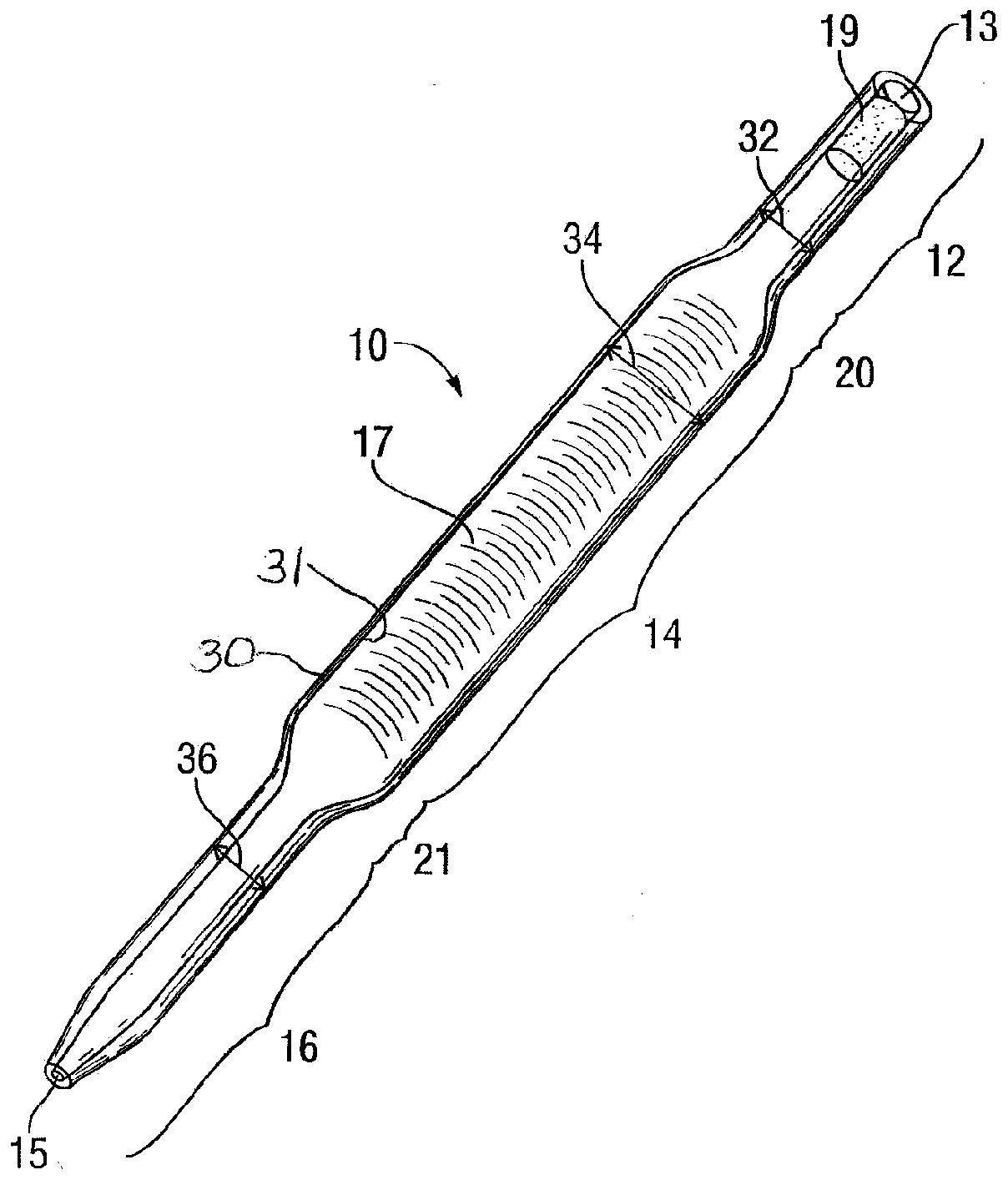
[0060] according to Figure 7 The blow molding method shown for integral pipettes, manufactures 10ml and 25ml pipettes. The cold preform is inserted into the blow mold and pressurized (10 psi to 20 psi), then heated with radiant heat from the mould. The process takes approximately 40 minutes to heat the mold, expand the mold and cool the mold. Remove parts and measure.
[0061] Table II shows the inner diameter (ID), outer diameter (OD) and thickness measurements (in mm) of the tip portion, body portion and spout portion of these experimental pipettes.
[0062] Table II
[0063]
[0064] As can be seen from Table II, the tip and spout thicknesses of the experimental pipettes manufactured by blow molding were greater than the body thickness. These measurements are consistent with the thicknesses expected using modeling.
[0065] Table III shows the modeling using blow molding (according to Figure 7 expected measured value for the method shown). The calculated final d...
PUM
 Login to View More
 Abstract
Description
Claims
Application Information
 Login to View More