
Apparatus and method for registering 2D radiographic images with images reconstructed from 3D scan data
- Summary
- Abstract
- Description
- Claims
- Application Information
AI Technical Summary
Benefits of technology
Problems solved by technology
Method used
Image

Examples
Embodiment Construction
The present invention is directed to an improved method and system for performing medical 2D / 3D registration. The tracking method and system of the present invention is useful in radiosurgery and radiotherapy; however the method and system of the present invention can also be used in applications other than radiosurgery and radiotherapy, i.e. in any application where there a need to track rigid object by registering 2D radiographic images onto 3D scan data. While 2D x-ray images are described in the preferred embodiment of the present invention, the present invention can be used for the registration of any other type of 2D images onto 3D scan data.
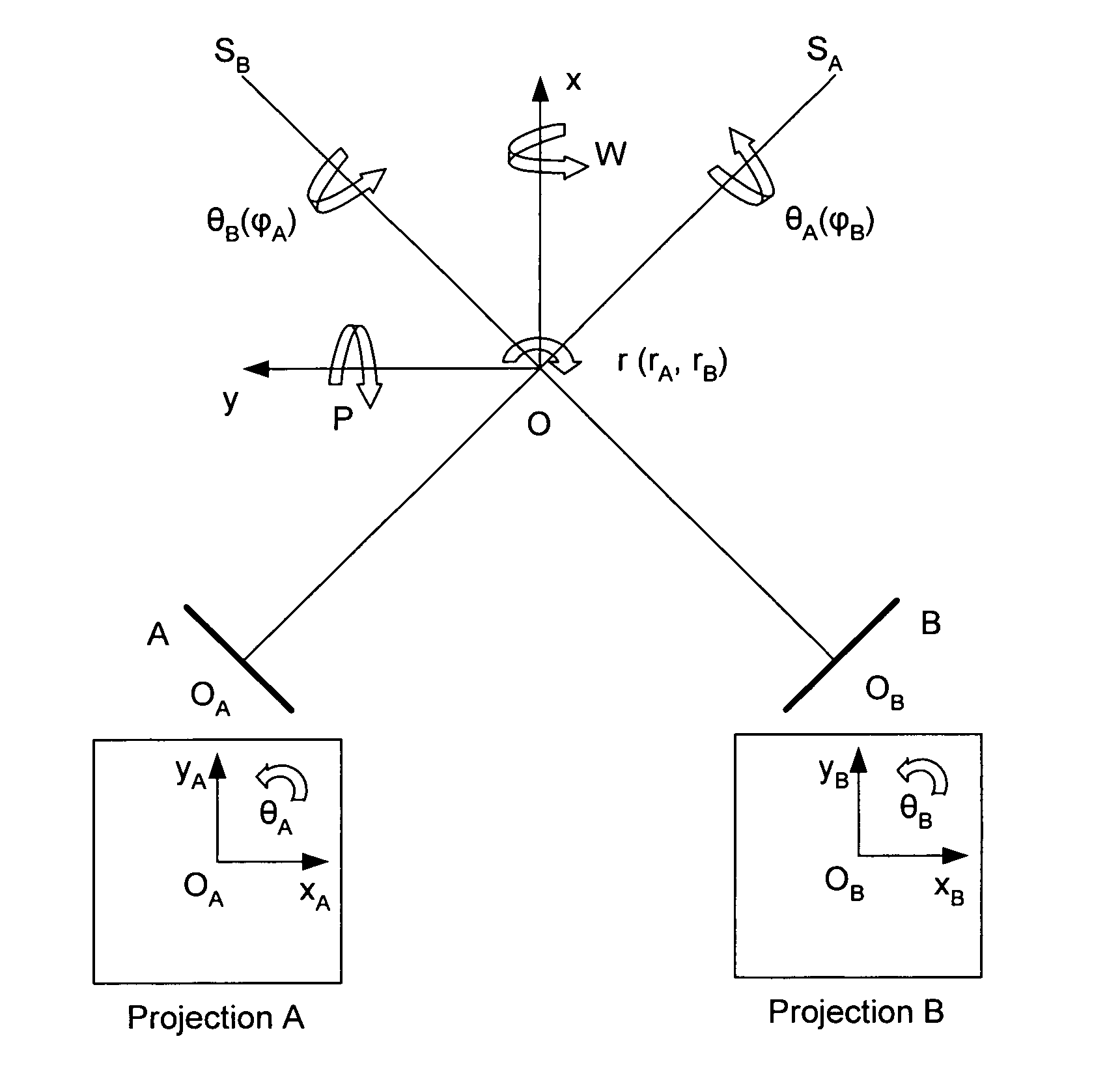
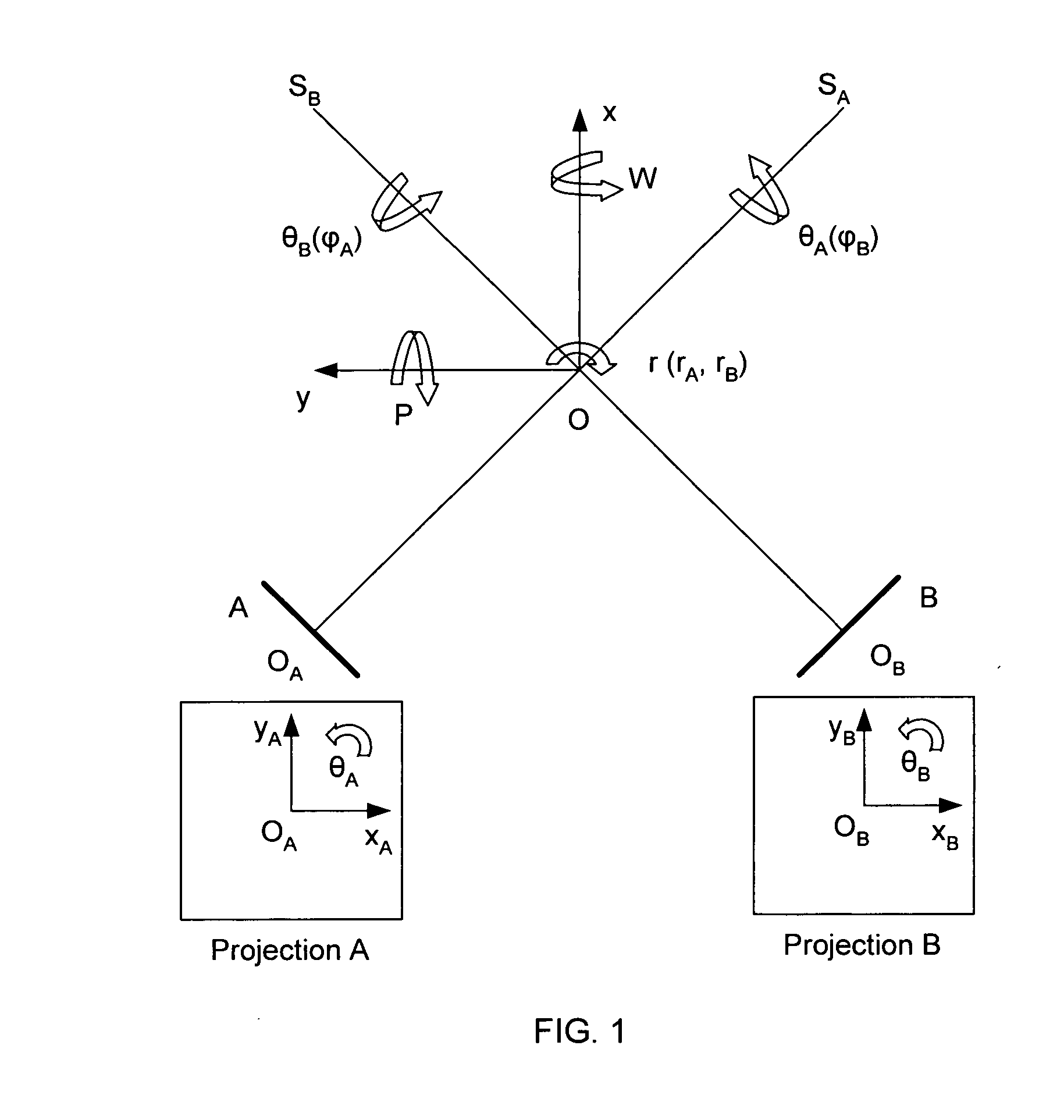
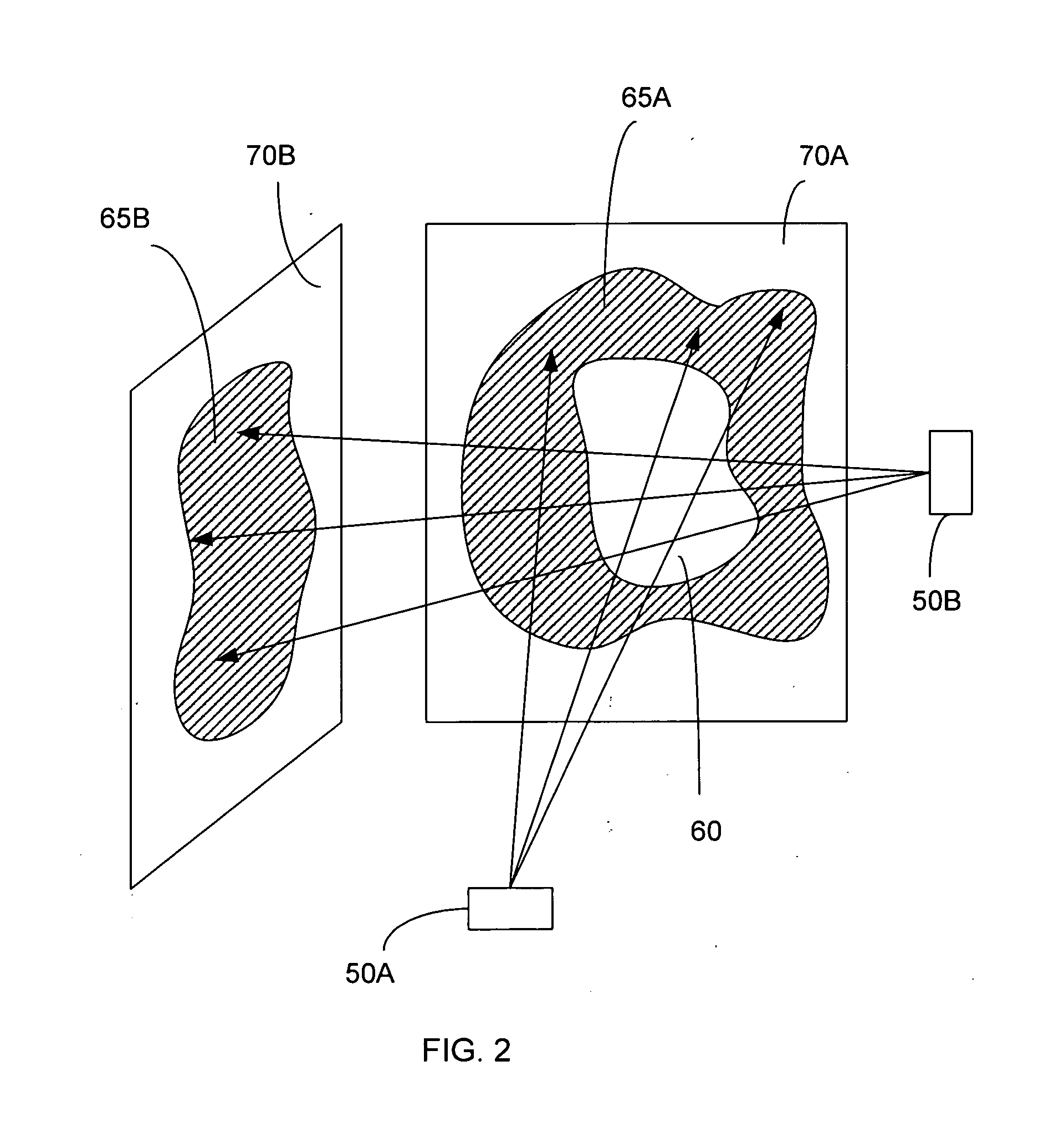
In overview, the method of the present invention includes generating a reconstructed 2D image from the 3D scan data. The change in the position of the target (or other rigid object) in the radiographic image, as compared to the position of the target in the 3D scan data (as indicated in the reconstructed 2D image) is described using 3D ...
PUM
 Login to View More
 Abstract
Description
Claims
Application Information
 Login to View More