
Data transmission method and receiver
a data transmission and receiver technology, applied in the direction of pulse technique, amplitude demodulation, line-faulst/interference reduction, etc., can solve the problems of multiple access interference (mai) present in the receiver, interference-limited cdma system performance and system capacity points of view, and inability to achieve optimal performance of this kind of receiver
- Summary
- Abstract
- Description
- Claims
- Application Information
AI Technical Summary
Benefits of technology
Problems solved by technology
Method used
Image

Examples
Embodiment Construction
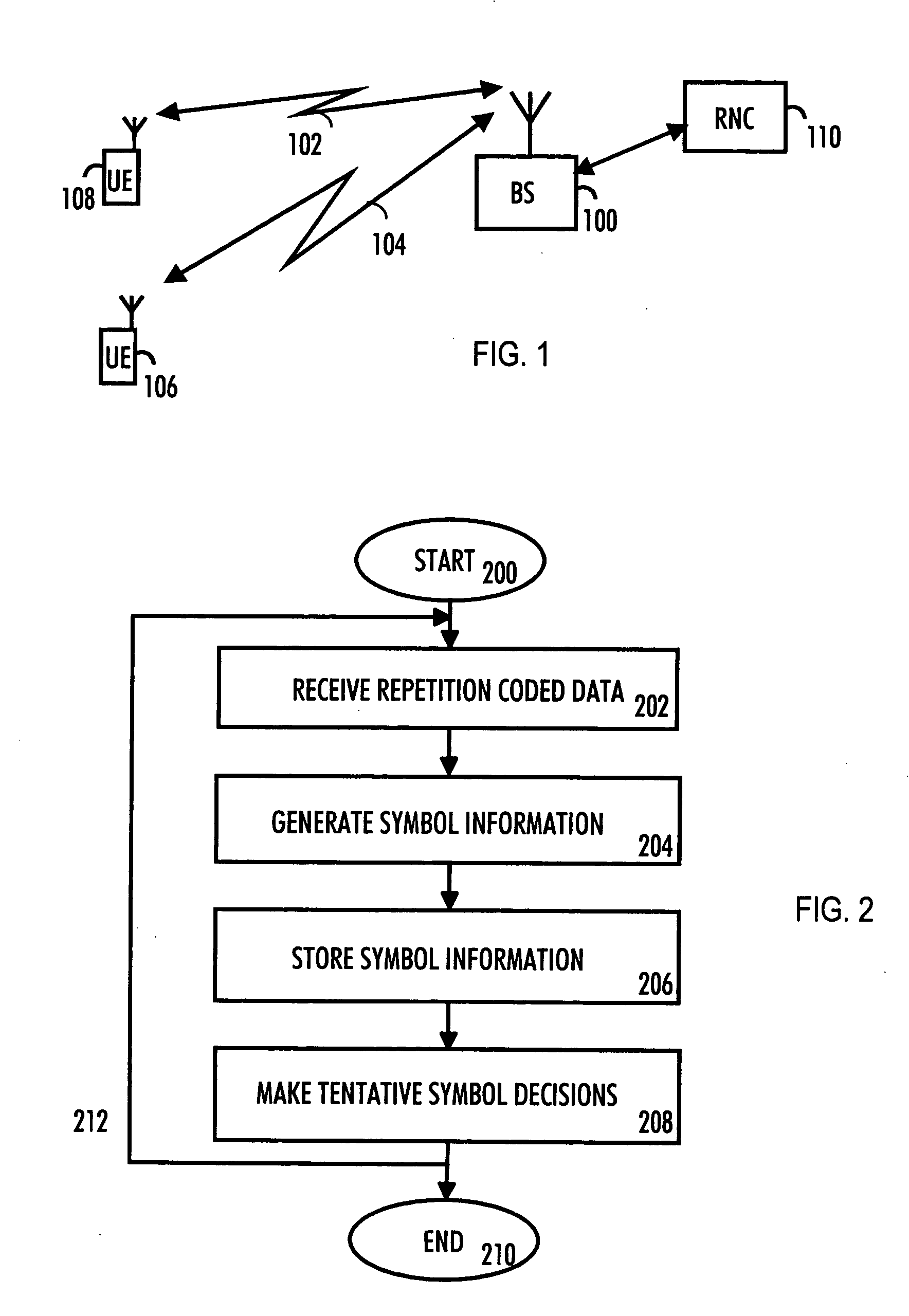
[0017] With reference to FIG. 1, we examine an example of a communication system to which embodiments of the invention can be applied. The present invention can be applied to various wireless communication systems. One example of such a communication system is the UMTS (Universal Mobile Telecommunications System) radio access network. It is a radio access network which includes WCDMA (wideband code division multiple access) technology and can also offer real-time circuit and packet switched services. The embodiments are not, however, restricted to the systems given as examples, but a person skilled in the art may apply the solution to other radio systems provided with the necessary properties.
[0018] It is clear to a person skilled in the art that the method according to the invention can be applied to systems utilizing different modulation methods or air interface standards.
[0019]FIG. 1 is a simplified illustration of a digital data transmission system to which the solution accord...
PUM
 Login to View More
 Abstract
Description
Claims
Application Information
 Login to View More