
Advanced Weight Responsive Supplemental Restraint Computer System
a technology of supplemental restraints and computer systems, applied in the direction of electric devices, pedestrian/occupant safety arrangements, tractors, etc., can solve the problems of airbag use hazards, serious injuries, and many injuries, and achieve the effects of preventing the deployment of airbags, reducing the risk of airbag damage, and being inexpensiv
- Summary
- Abstract
- Description
- Claims
- Application Information
AI Technical Summary
Benefits of technology
Problems solved by technology
Method used
Image

Examples
Embodiment Construction
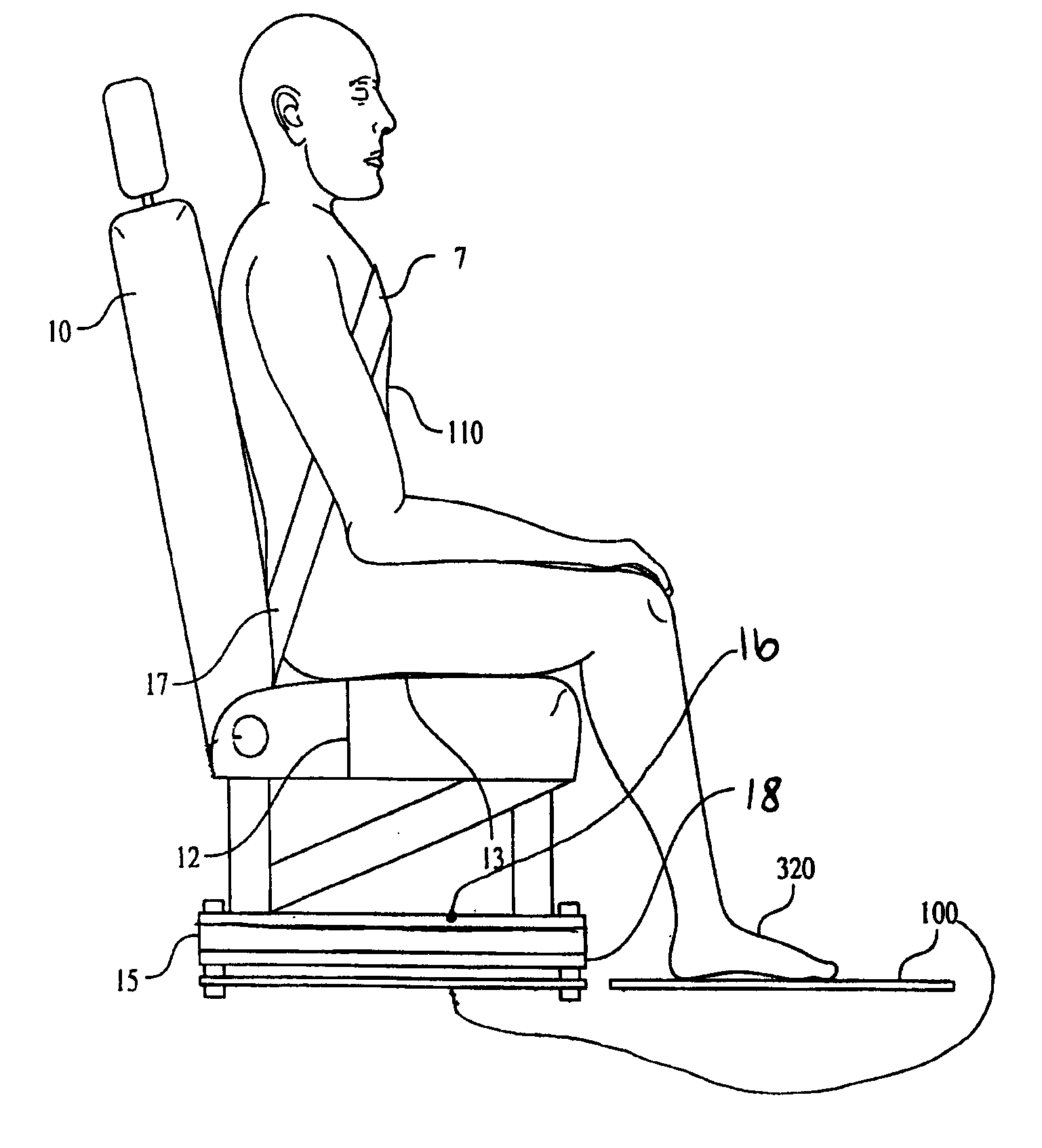
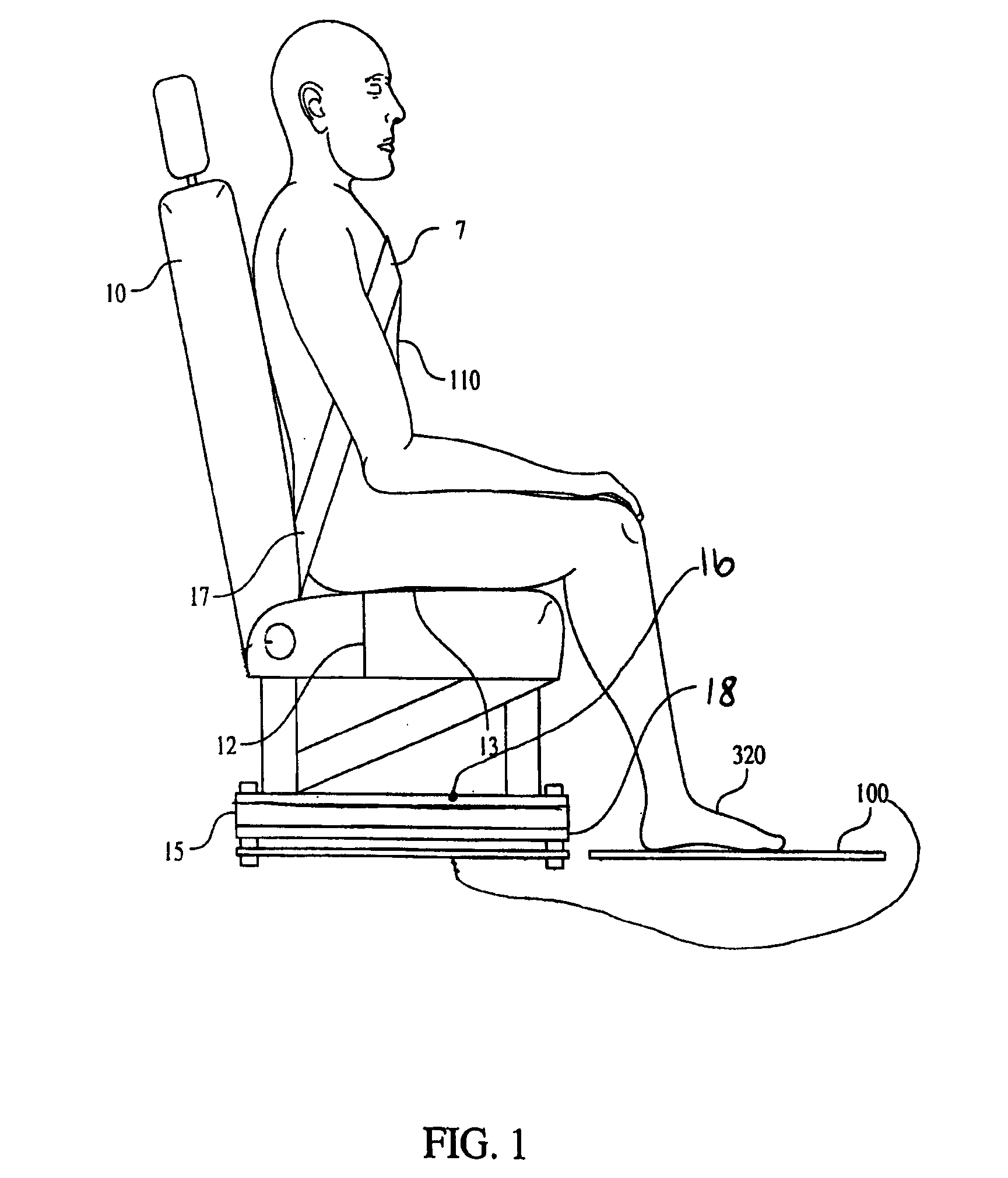
[0036] The present invention discloses a mechanism for providing controlled air bag deployment based on the weight of a vehicle occupant. In this regard, the mechanism variably controls the amount of gas in a combustion chamber, which propels the airbag (1). The air bag can deploy with as little or as much force as is appropriate based upon the occupant's weight and the severity of the collision. As shown in FIG. 41, the controlled release of gas (65) from the gas canister (60) is accomplished by the release valve configured with the sliding pot (61), which is open a specific amount as a result of the energy generated by the accelerometer (40). As a result, the force of deployment of air bag (1) correctly matches the force of occupant (110) on seat (10), occupant (110) and seat (10) showing in FIG. 1.
[0037] With reference to FIG. 1, seat cushioning (12) and floor (100) are shown. Seat (16) is mounted on a load cell (15), which is disposed between a seat mounting frame (16) and the ...
PUM
 Login to View More
 Abstract
Description
Claims
Application Information
 Login to View More