
Fast semantic extraction using a neural network architecture
a neural network and semantic extraction technology, applied in the field of neural networks, can solve the problems of slow state-of-the-art solutions of many of these tasks, the cost of producing labeled training data needed for statistical models, and the inability to be used in many applications
- Summary
- Abstract
- Description
- Claims
- Application Information
AI Technical Summary
Problems solved by technology
Method used
Image

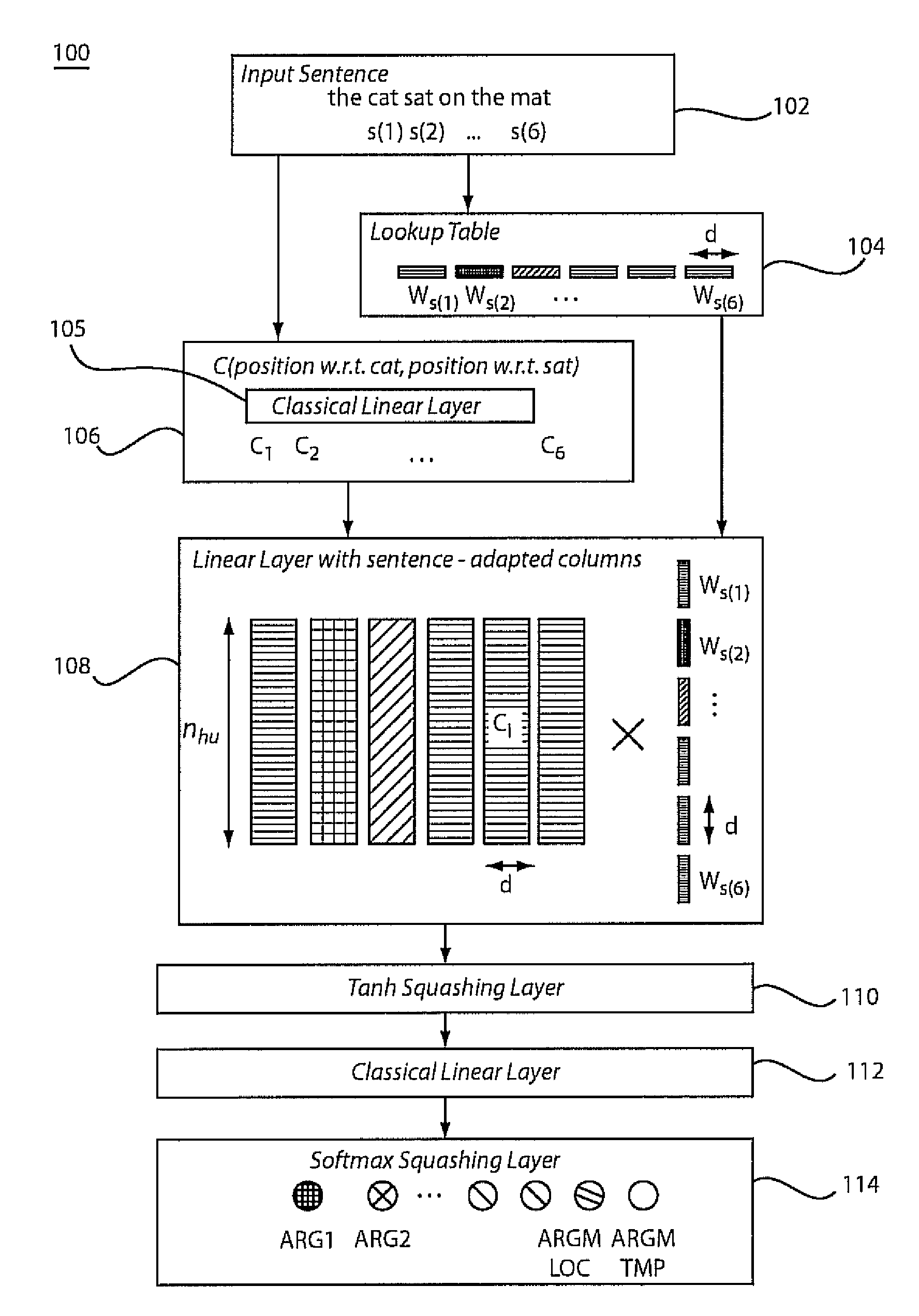
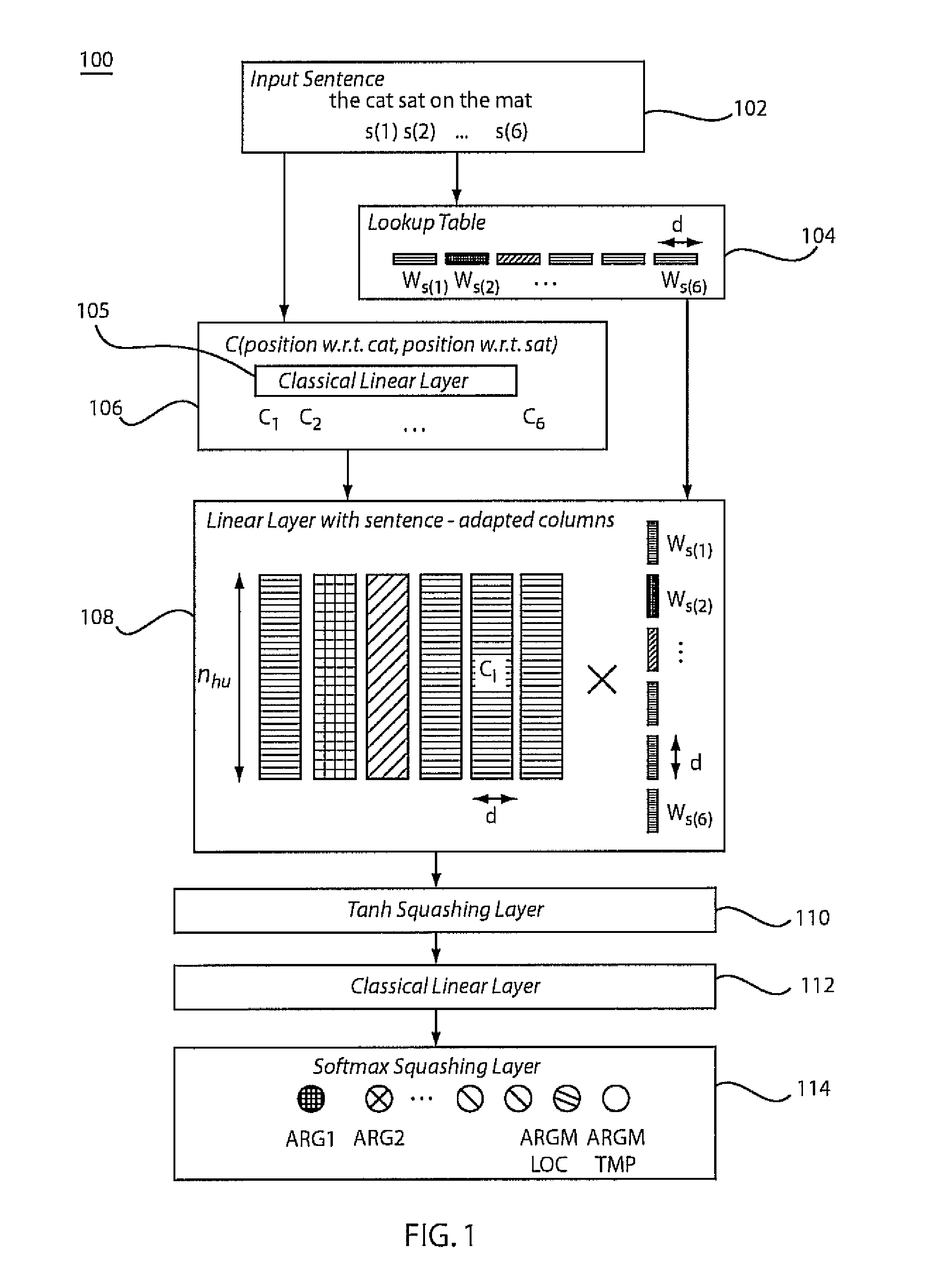
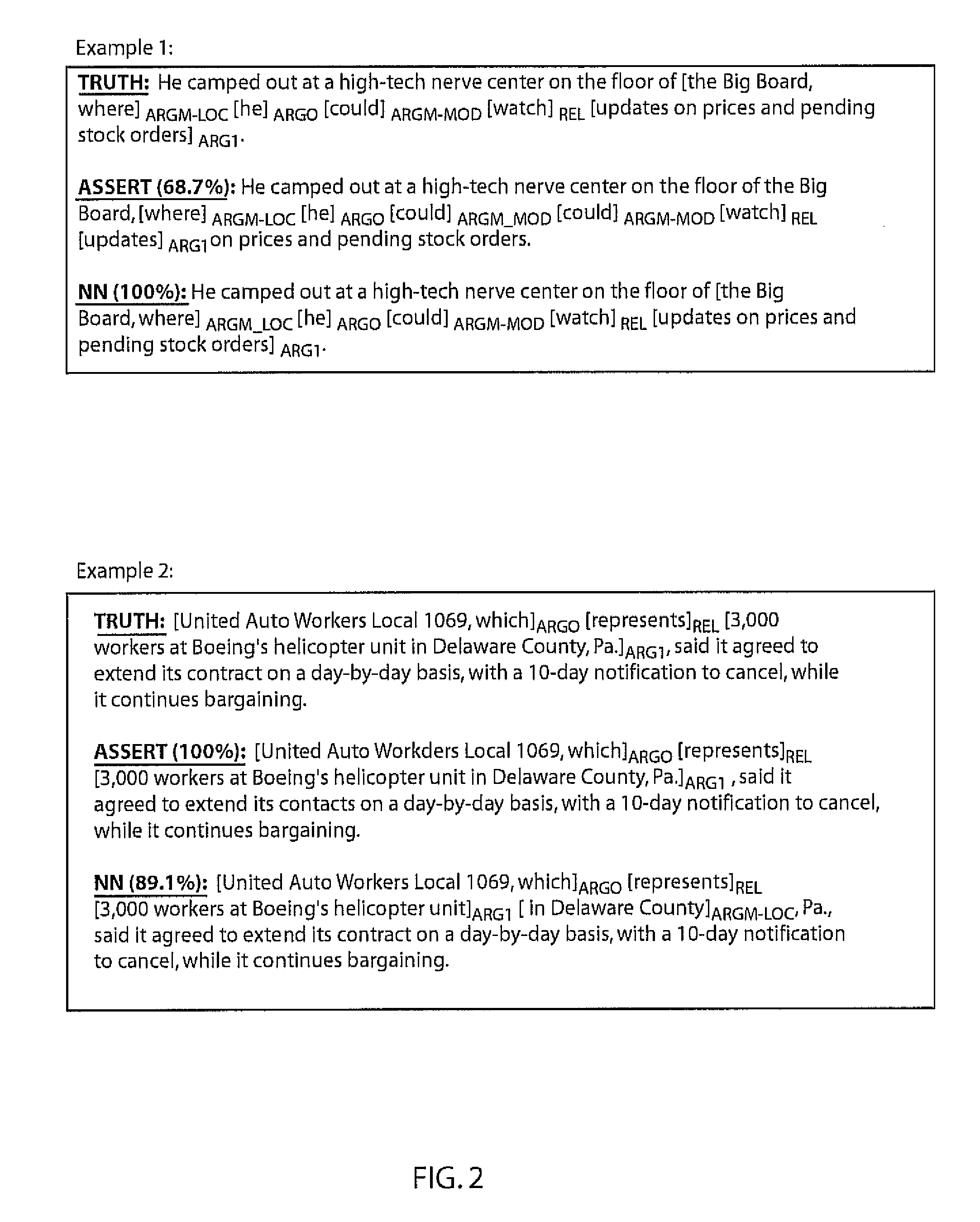
Examples
Embodiment Construction
[0015]A neural network architecture is described for the problem of semantic role labeling. Many current solutions are complicated, consist of several stages and hand-built features, and are too slow to be applied as part of real applications that need semantic labels, partly because of their use of a syntactic parser. In accordance with the present principles, a system and method instead learns a direct mapping from a source sentence to semantic tags for a given predicate without the aid of a parser or a chunker. A resulting system obtains accuracies comparable to the current state-of-the-art at a fraction of the computational cost.
[0016]A neural network architecture in accordance with the present principles is able to give a semantic role to a syntactic constituent of a sentence, e.g., annotating the predicate argument structure in text. Because of its nature, role labeling seems to need the syntactic analysis of a sentence before attributing semantic labels. Using this intuition,...
PUM
 Login to View More
 Abstract
Description
Claims
Application Information
 Login to View More