
Apparatus and method for generating a monocycle
a monocycle and apparatus technology, applied in the field of apparatus and methods for generating monocycles, can solve the problems of reducing the flexibility of this approach, reducing the cost of low-cost applications, and few high-speed monocycle generators, and achieving the effect of simple and cheap use and easy reproduction
- Summary
- Abstract
- Description
- Claims
- Application Information
AI Technical Summary
Benefits of technology
Problems solved by technology
Method used
Image

Examples
Embodiment Construction
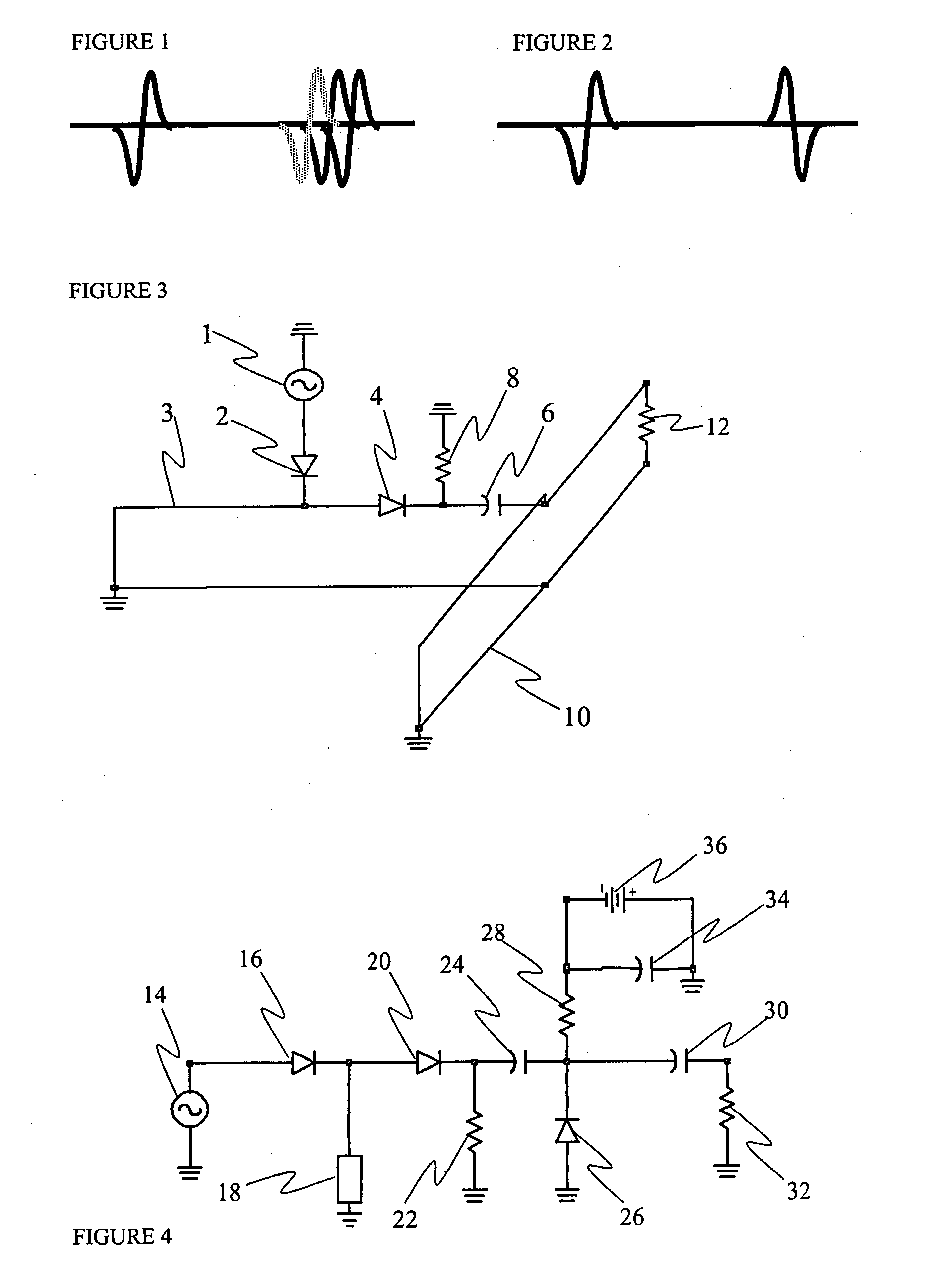
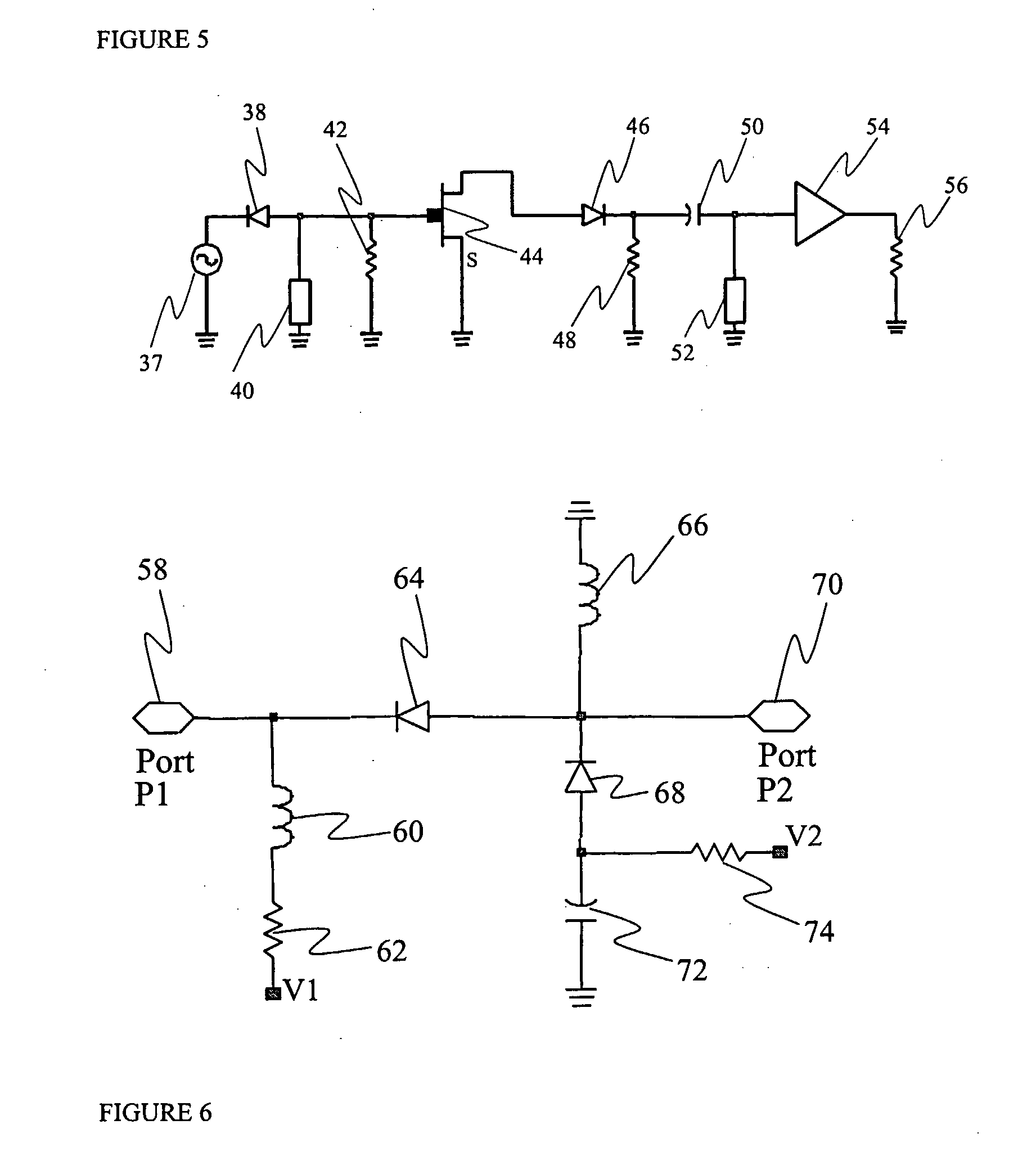
[0067]FIGS. 1 to 6 show conventional circuits for producing monocycles and / or pulses and associated waveforms. These circuits have been described above in the Background of The Invention section.
[0068]The methods and devices which illustrate preferred embodiments of the invention will be explained with reference to FIGS. 7 to 23.
[0069]Preferred embodiments of the invention relate to the generation of narrow monocycles using step recovery diodes (SRDs). These monocycles are suitable for Ultra Wideband applications. Preferably, the embodiments of the invention make use of the reverse recovery phenomenon of the SRD to generate fast transitions, and preferably use distributed microstrip elements to generate very narrow monocycle pulses from these transitions.
[0070]The SRD has the ability to store charge and to change impedance levels very rapidly. During the forward biased condition, the SRD conducts and stores the charge. When the biasing changes from the forward biased condition to th...
PUM
 Login to View More
 Abstract
Description
Claims
Application Information
 Login to View More