
Methods and compositions for treating onchomycosis
- Summary
- Abstract
- Description
- Claims
- Application Information
AI Technical Summary
Benefits of technology
Problems solved by technology
Method used
Image

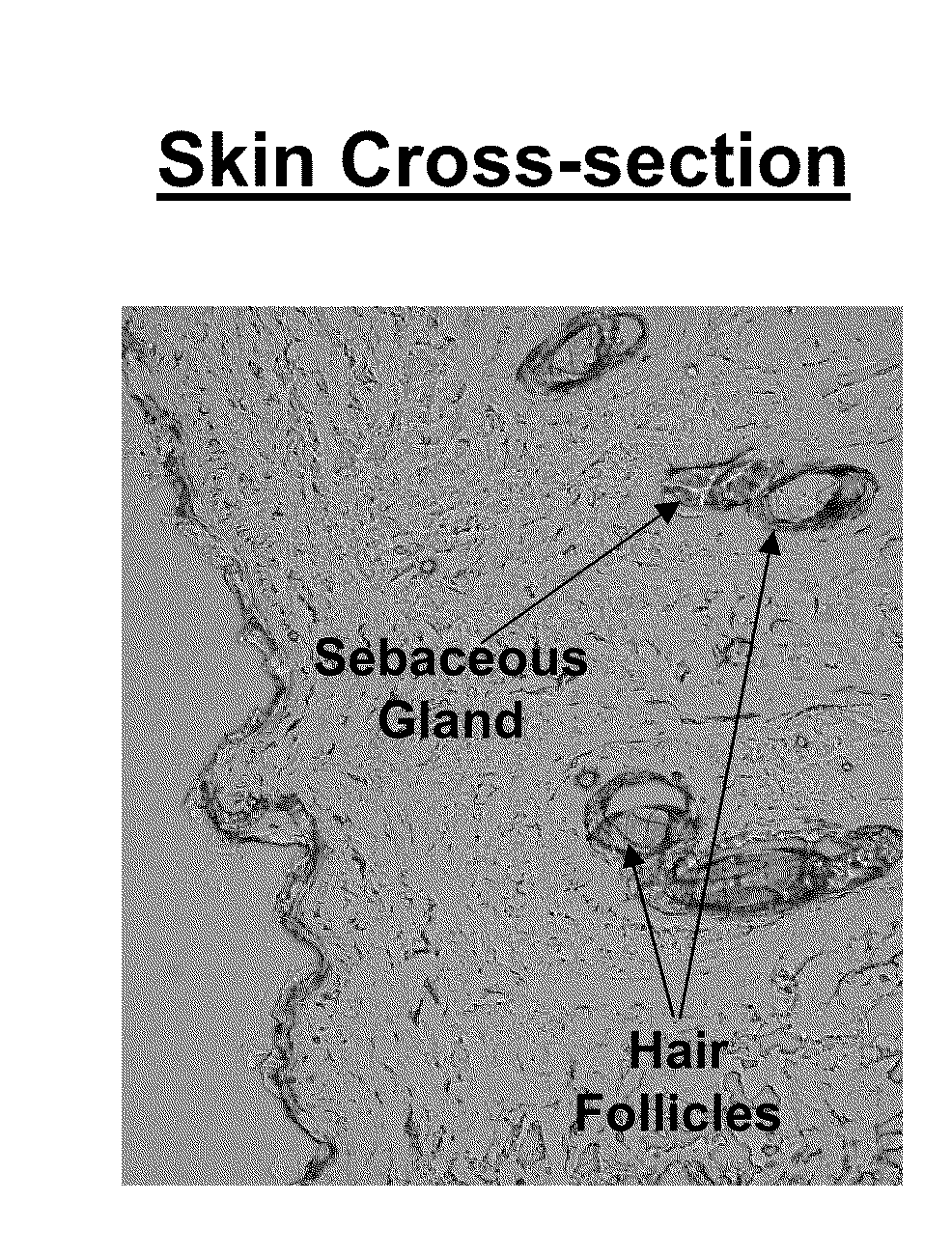
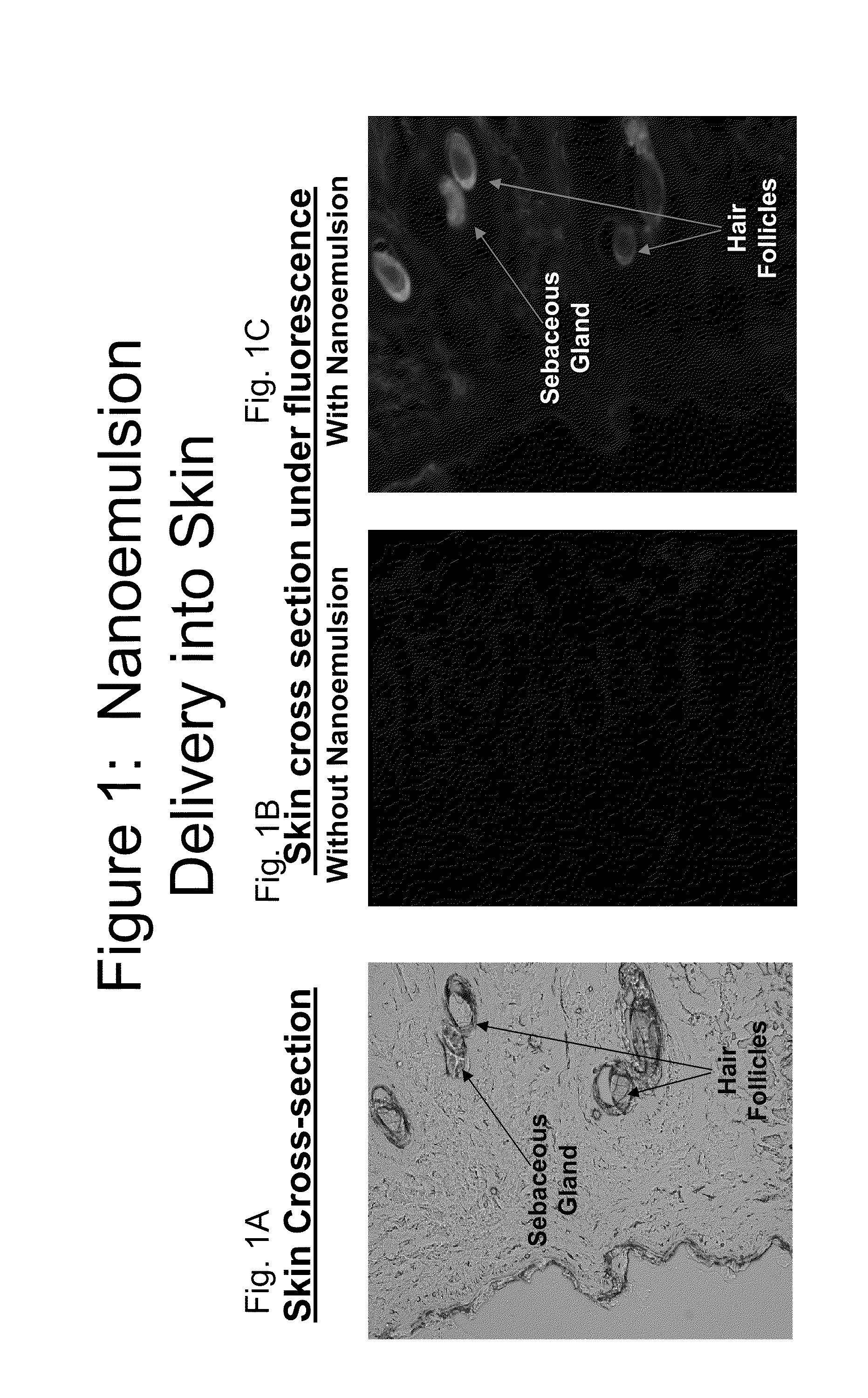
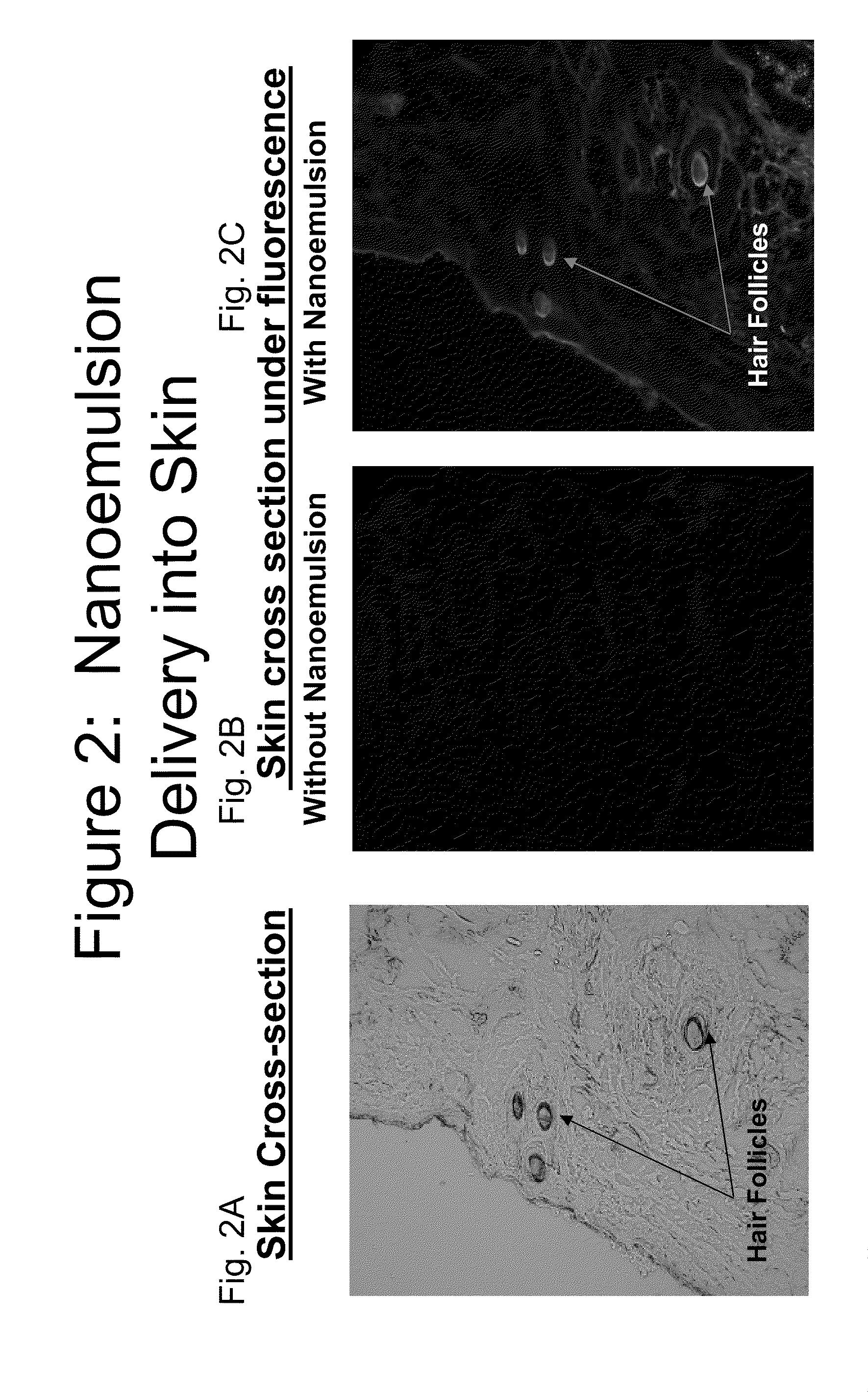
Examples
example 1
The Nanoemulsions have Potent Activity Against Fungal, Yeast and / or Mold Infections
[0171]Nanoemulsions according to the invention were tested in an in vitro fungicidal assay to determine the minmum inhibitory concentration (MIC) and minmum fungicidal concentration (MFC) against laboratory and clinical dermatophyte isolates associated with fungal infections, as well as several Candida species. The nanoemulsions (“NB-002”) comprised, in an aqueous medium, soybean oil, Tween 20® as a nonionic surfactant, ethanol, cetylpyridinium chloride (CPC) as a cationic surfactant, EDTA, and water.
[0172]Nanoemulsions used in this study are oil-in-water (o / w) emulsions with mean droplet diameters of ˜200 nm. CPC resides at the interface between the oil and water phases. The hydrophobic tail of the surfactant distributes in the oil core and its polar head group resides in the water phase. The nanoemulsions are produced by mixing a water-immiscible oil phase into an aqueous phase to yield an emulsion....
example 2
The Nanoemulsions Are Not Toxic and Are Not Systemically Absorbed
[0185]Twenty subjects with advanced distal subungual onychomycosis of the toenails, including onycholysis of at least 5 toenails, were randomized to be treated with a nanoemulsion comprising a cationic surfactant, with 0.25% (w / v) cetylpyridinium chloride (CPC) or a nanoemulsion comprising 0.5% (w / v) cetylpyridinium chloride (CPC) as the cationic surfactant. The composition of the two emulsions (% w / w), was as follows and is shown is Table 12: Nanoemulsion I: (1) 15.7% soybean oil; (2) 1.48% Tween 20; (3) 1.68% ethanol, (4) 0.27% CPC; (5) 80.85% water; and (6) 0.019% EDTA; and Nanoemulsion 2: (1) 31.4% soybean oil; (2) 2.96% Tween 20; (3) 3.37% ethanol, (4) 0.53% CPC; (5) 61.7% water; and (6) 0.037% EDTA.
TABLE 12Soy-Nano-beanTweenEthanolCPC %EDTAH2Oemulsionoil %20%(%)(mg / mL)% (mM)%0.50%31.42.963.370.53 (5)0.0373 (1)61.70(w / v)0.25%15.71.481.680.27 (2.5)0.019 (0.5)80.85(w / v)
[0186]Treatments were applied twice daily to 10...
example 3
The Nanoemulsions are Clinically Effective
[0192]443 subjects with distal subungual onychomycosis of the toenails involving 25-65% of the toenail area were enrolled in a randomized, double-blind vehicle controlled dose-ranging study and treated with vehicle, a nanoemulsion comprising 0.25% (w / v) cetylpyridinium chloride or a nanoemulsion comprising 0.5 w / v % cetylpyridinium chloride. The composition of the two nanoemulsions (% w / w) is described as follows: Nanoemulsion 1: (1) 15.7% soybean oil; (2) 1.48% Tween 20; (3) 1.68% ethanol, (4) 0.27% cetylpyridinium chloride (CPC); (5) 80.85% water; and (6) 0.019% EDTA; and Nanoemulsion 2: (1) 31.4% soybean oil; (2) 2.96% Tween 20; (3) 3.37% ethanol, (4) 0.53% cetylpyridinium chloride (CPC); (5) 61.7% water; and (6) 0.037% EDTA.
[0193]In all subjects, KOH tests and dermatophyte cultures performed on samples from the subjects enrolled in the study were positive, confirming the presence of a dermatophyte pathogen. Treatments were applied once (...
PUM
| Property | Measurement | Unit |
|---|---|---|
| Temperature | aaaaa | aaaaa |
| Temperature | aaaaa | aaaaa |
| Temperature | aaaaa | aaaaa |
Abstract
Description
Claims
Application Information
 Login to View More