
Roof mounted photovoltaic system with accessible panel electronics
a photovoltaic and panel technology, applied in the field of mounting systems for photovoltaic cells, can solve the problems of deformation or breakage of cells, loosening of the mounting system provided, and affecting the performance of the system, and achieve the effect of convenient mounting and easy connection to adjacent panels
- Summary
- Abstract
- Description
- Claims
- Application Information
AI Technical Summary
Benefits of technology
Problems solved by technology
Method used
Image

Examples
Embodiment Construction
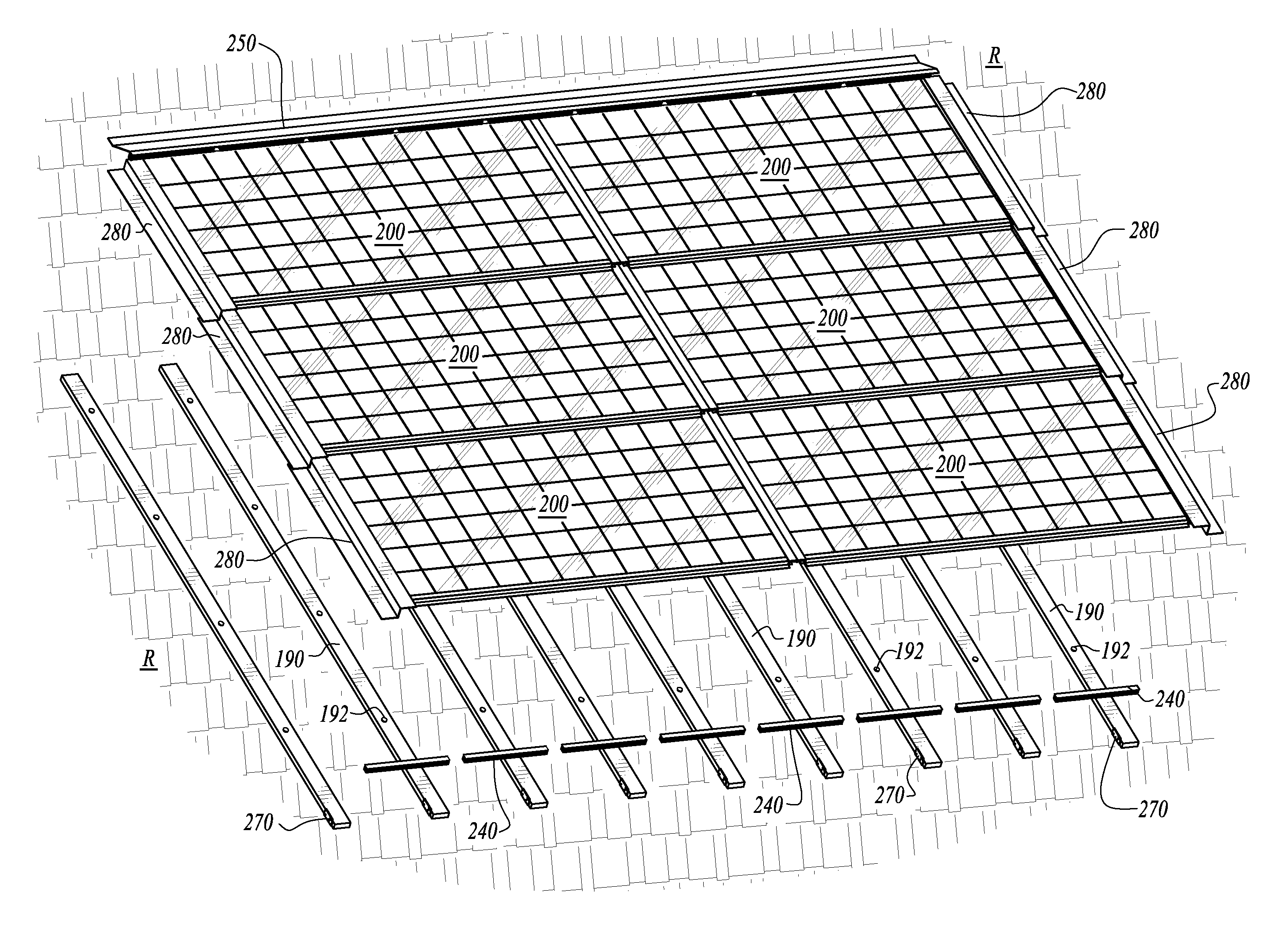
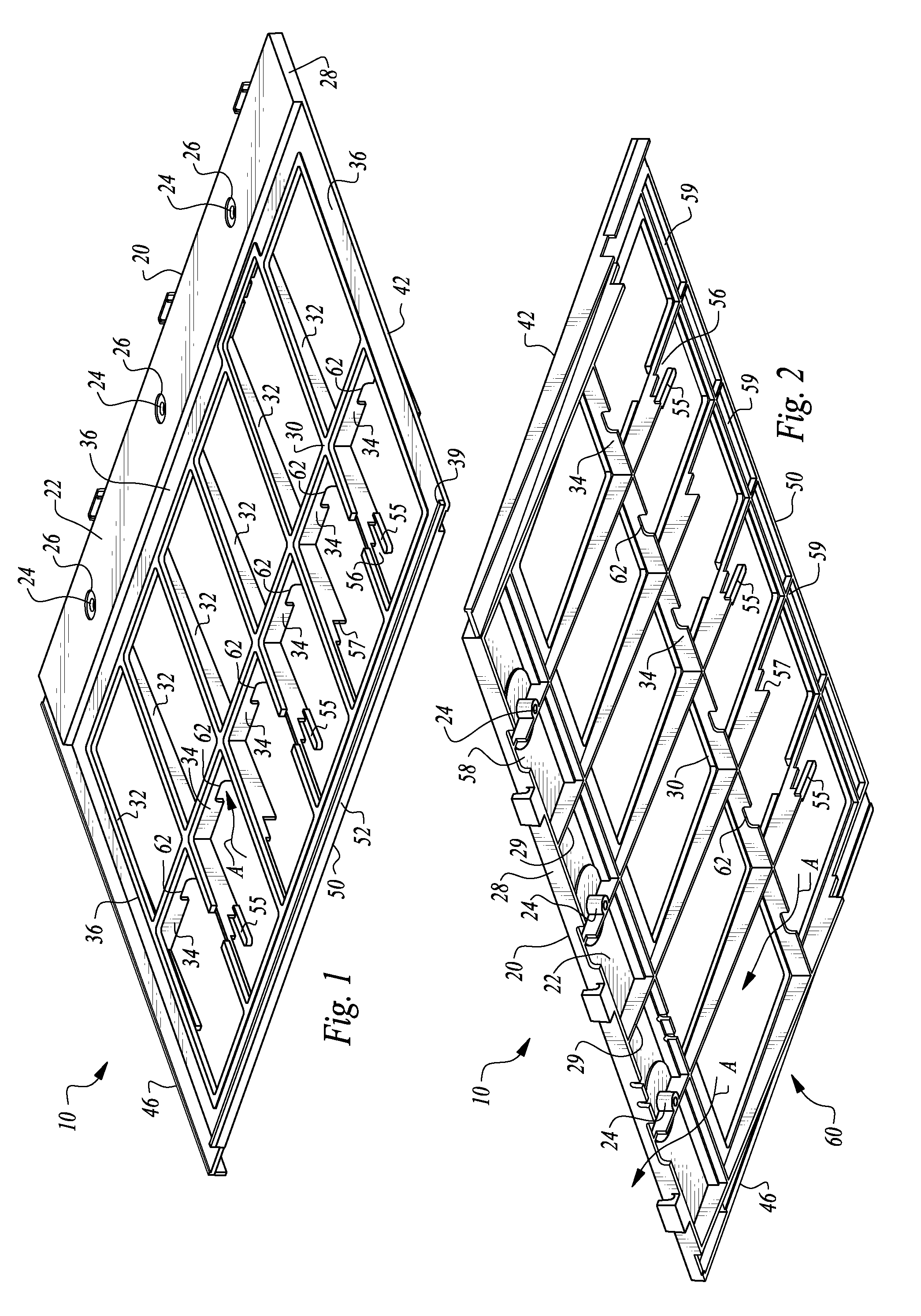
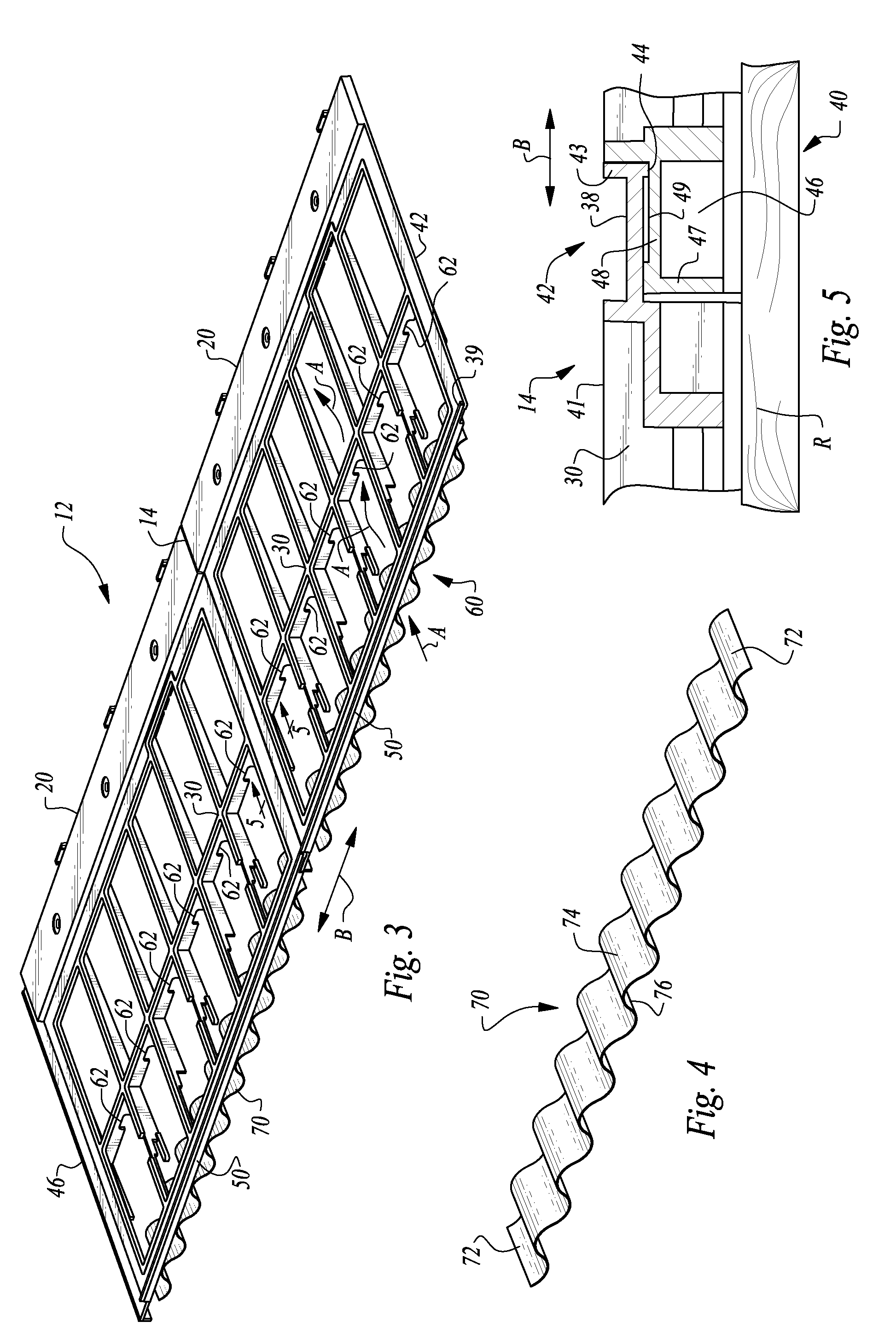
[0064]Referring to the drawings, wherein like reference numerals represent like parts throughout the various drawing figures, reference numeral 10 is directed to a bracket (FIGS. 1 and 2) for a roof mounted photovoltaic power generation system. The brackets 10 are provided in pairs 12 (FIG. 3) which together support a photovoltaic cell 102 stack assembly to form a panel 100 (FIG. 9). The panel 100 can act similar to a shingle S (FIG. 13) upon the roof R to shed water and protect structural portions of the roof. The brackets 10 interlock together laterally and vertically while accommodating airflow therebeneath for cooling. The brackets also accommodate thermal expansion and have edge details to facilitate airflow and to provide water preclusion. The brackets are also configured to facilitate interconnection of an electric subsystem 110 for combining adjacent panels 100 together as part of the overall photovoltaic power generation system.
[0065]In essence, and with particular referenc...
PUM
| Property | Measurement | Unit |
|---|---|---|
| Perimeter | aaaaa | aaaaa |
Abstract
Description
Claims
Application Information
 Login to View More