
Device and Method for Generating Vacuum for Vacuum Cementing Systems
- Summary
- Abstract
- Description
- Claims
- Application Information
AI Technical Summary
Benefits of technology
Problems solved by technology
Method used
Image

Examples
Embodiment Construction
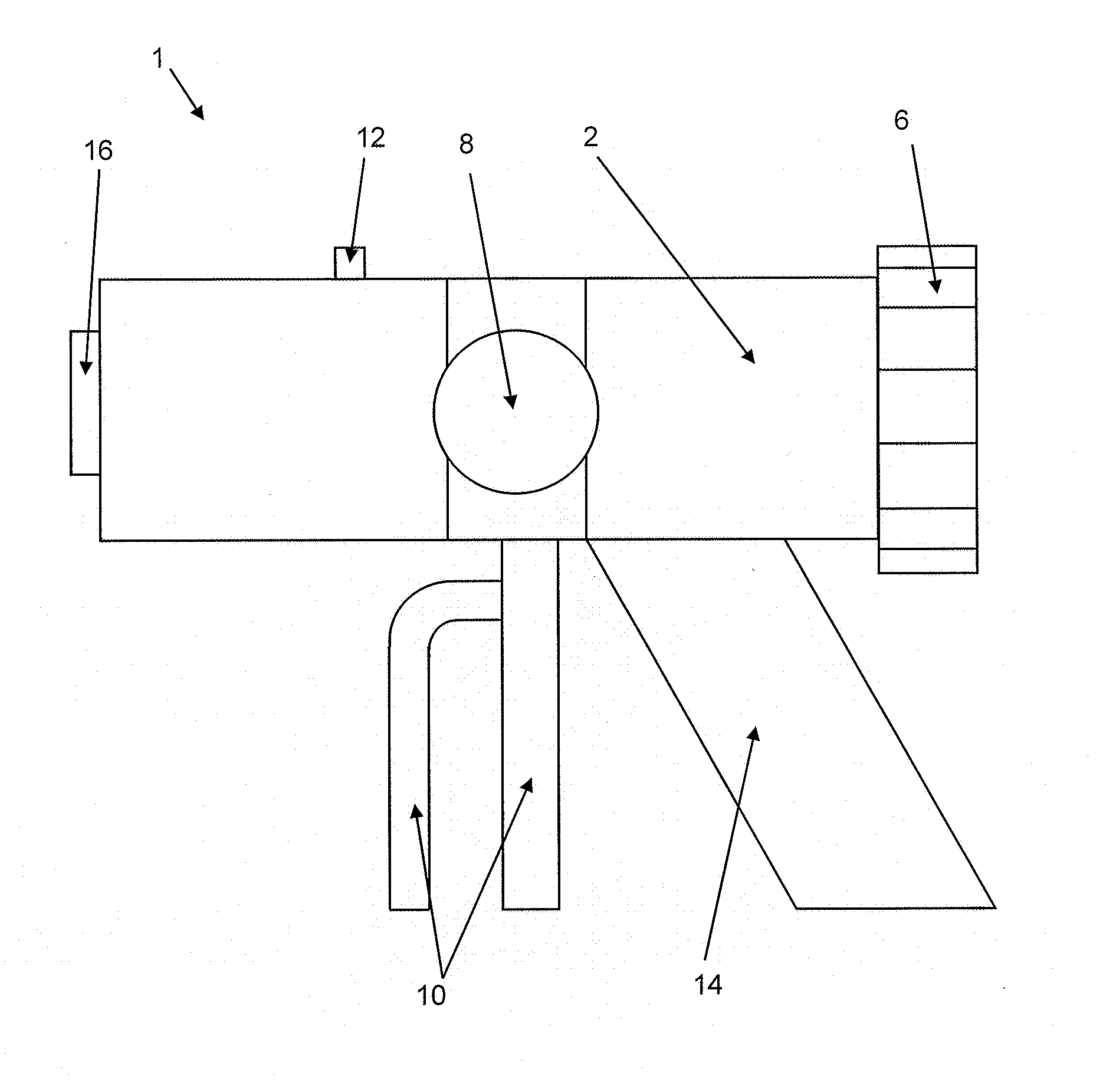
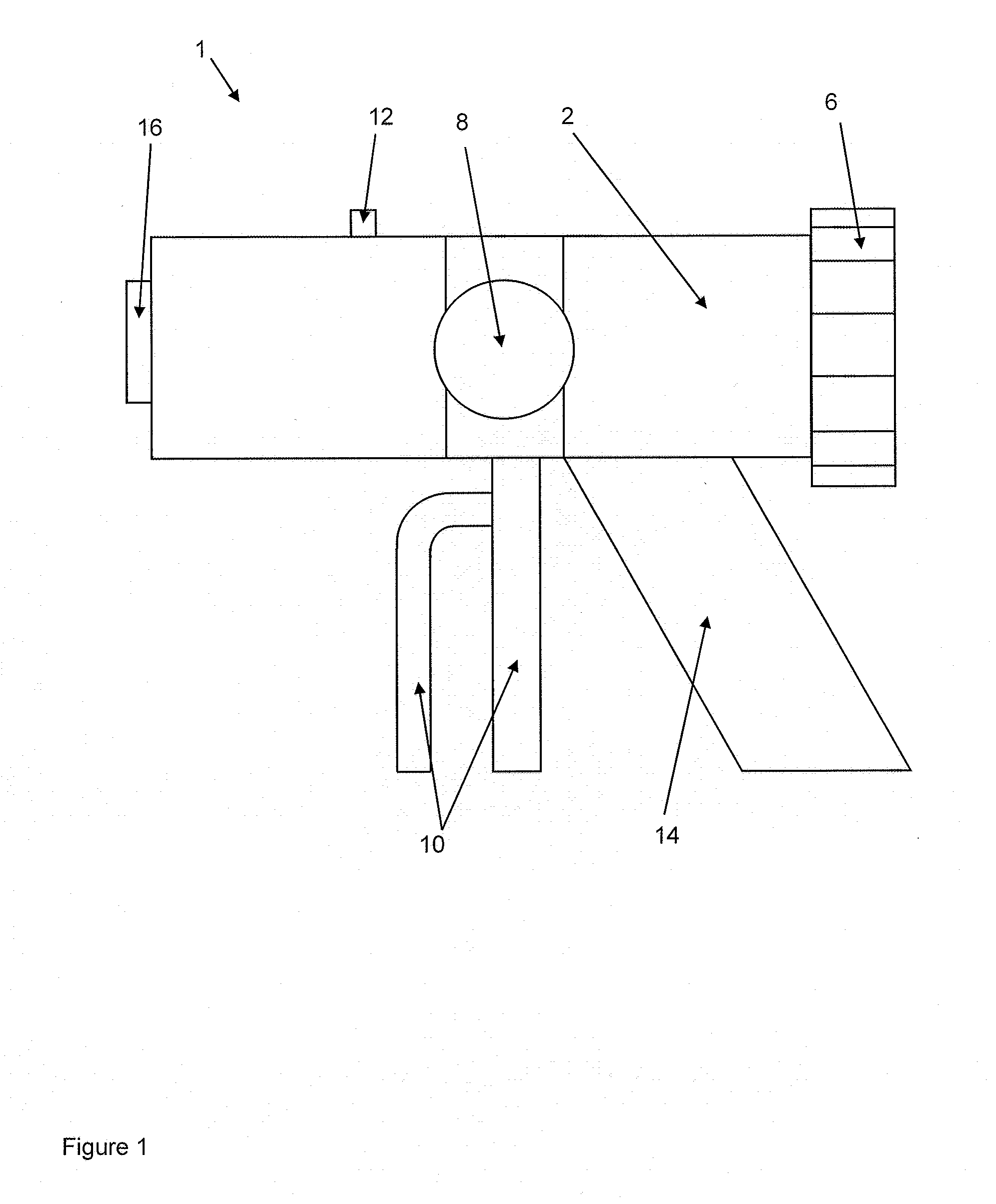
[0081]FIG. 1 shows a schematic cross-sectional view of a device 1 according to an embodiment of the invention for generating a vacuum for a vacuum cementing device. The device 1 comprises a housing 2 having a gas cartridge (not shown) arranged in it. The rear side of the device 1 is closed by a screw lid 6, such that the gas cartridge can be shifted on the inside of the device and pressed onto a mandrel or blade that opens the gas cartridge.
[0082]A rotatable valve 8 is arranged in the middle of the device 1 and can be used to open and close a channel (not shown) arranged on the inside of the device 1. The rotatable valve 8 is conical in shape and comprises a bushing that can connect a front part and a rear part of the channel in suitable position of the valve 8 and thus opens the channel. The rotatable valve 8 is shaped slightly conical and is seated in a press-fit in an opening of the housing 2 in the device 1, such that a gas-tight connection of the bushing to the channel or gas-t...
PUM
 Login to View More
 Abstract
Description
Claims
Application Information
 Login to View More