
Microorganism and deodorizer containing the same
a technology of microorganisms and deodorizers, applied in the direction of microorganisms, disinfection, bacteria based processes, etc., can solve the problems of large amount of offensive odor components, insufficient to reduce the offensive odor of livestock excrement, and their effect is dramatically limited, so as to achieve the effect of reducing the production of short chain fatty acids, the offensive odor components, and reducing the production of fatty acids
- Summary
- Abstract
- Description
- Claims
- Application Information
AI Technical Summary
Benefits of technology
Problems solved by technology
Method used
Image

Examples
example 1
Isolation of Microorganisms Efficiently Decomposing and Deodorizing Short Chain Fatty Acids and Taxonomic Properties of the Microorganisms
[0028]1-1. Isolation of Microorganisms
[0029]In order to search for microorganisms that vigorously act in the composting and are capable of efficiently decomposing and deodorizing the offensive odor components in the process of composting, livestock excrement in the process of composting was obtained from livestock farmers throughout Japan and isolation of offensive odor-reducing microorganisms was attempted.
[0030]As a result, microorganisms capable of actively functioning in the livestock excrement and growing under high-temperature conditions that can efficiently decompose and deodorize short chain fatty acids were acquired. The bacterial strain thus obtained is referred to as TAB7 strain.
[0031]1-2. Physiological Properties of TAB7 Strain
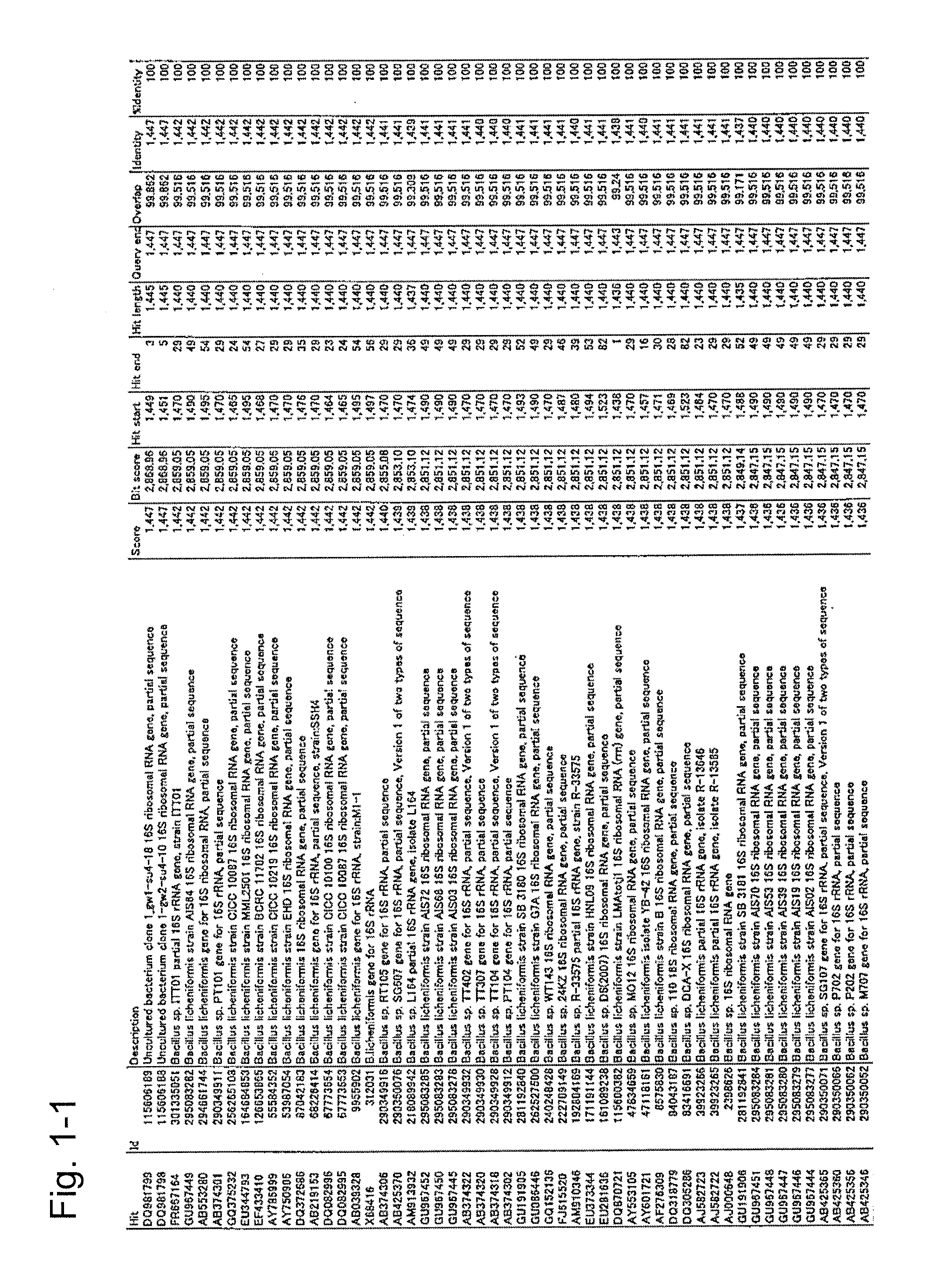
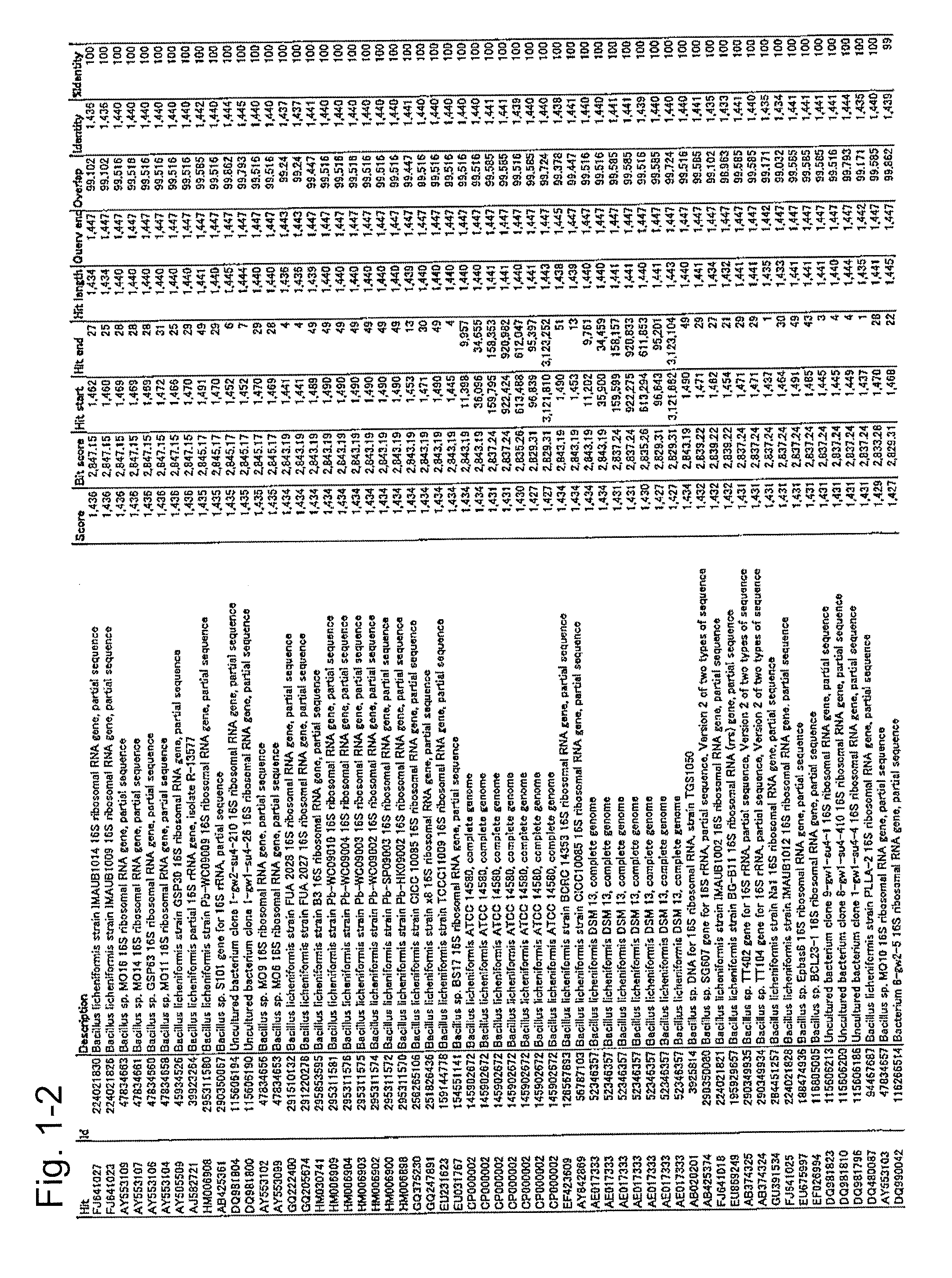
[0032]The bacteriological properties of TAB7 strain were investigated using the methods described in “BERGEY'S...
example 2
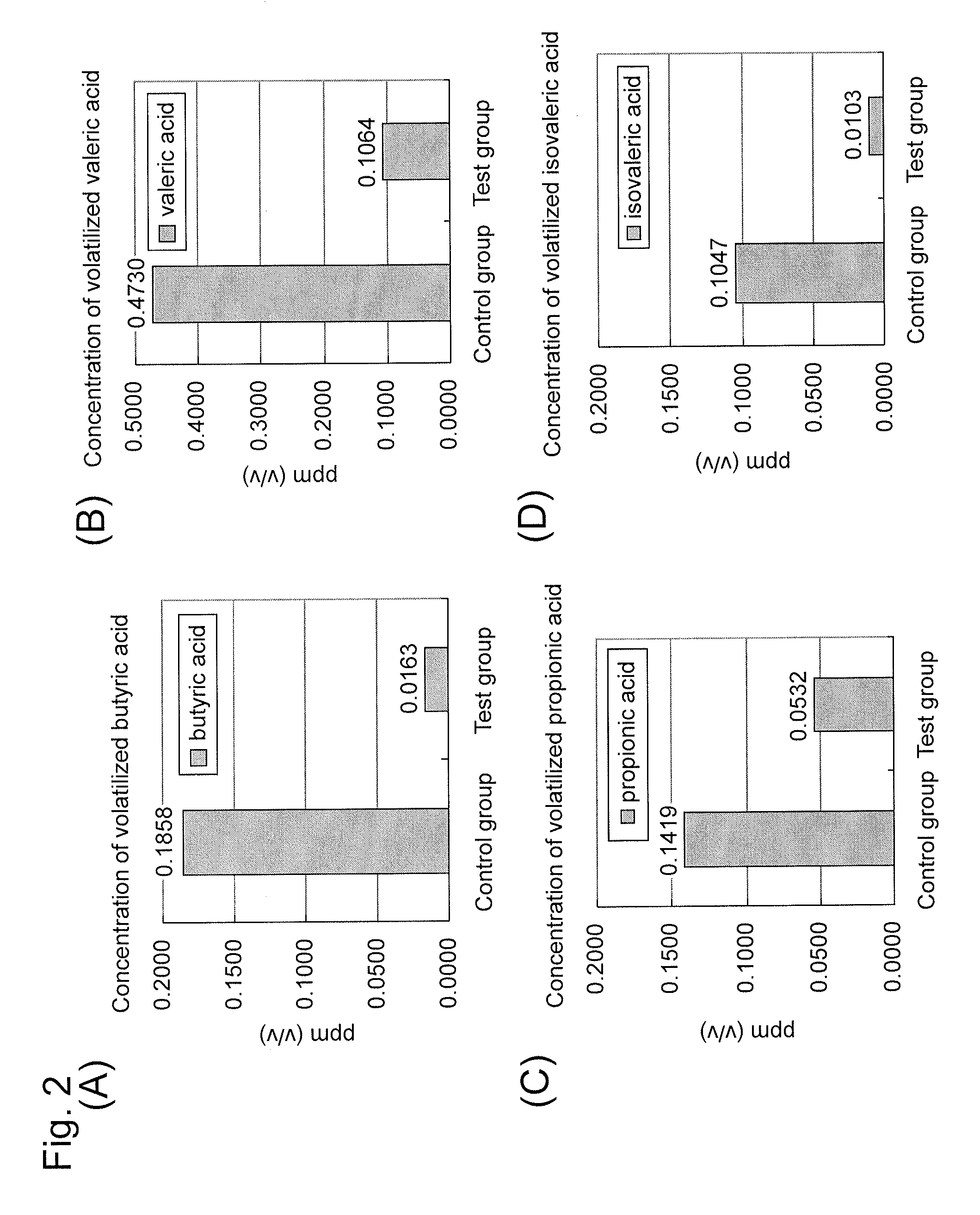
Decomposition of Short Chain Fatty Acids in Livestock Excrement by TAB7 Strain
[0043]2-1. Culture of TAB7 Strain
[0044]The necessary amount of TAB7 strain was cultured and proliferated in a culture medium containing the components as shown in Table 2 below.
TABLE 2Culture medium components:(1) glucose1%(2) yeast extract1%(3) Na2HPO40.1%(4) (NH4)2SO40.1%
The above culture medium components were dissolved in purified water and the pH was adjusted to 7.0, and the resulting solution was kept at 121 degrees C. for 15 minutes using an autoclave for sterilization.
[0045]Subsequently, 300 mL of the medium thus produced was added to a 500 ml baffled flask, into which a small amount of TAB7 strain was seeded from the glycerol stock that was produced in advance. After culturing at 50 degrees C. for 16 hours while stirring, a culture liquid of TAB7 strain with an absorbance value of approximately 2.0 (OD 660 nm) was obtained.
[0046]2-2. Attachment of TAB7 Strain to Microorganism Carriers
[0047]To 1 kg...
PUM
| Property | Measurement | Unit |
|---|---|---|
| water content ratio | aaaaa | aaaaa |
| OD | aaaaa | aaaaa |
| water content ratio | aaaaa | aaaaa |
Abstract
Description
Claims
Application Information
 Login to View More