
Anti-pd-l1 antibodies and uses thereof
a technology of anti-pdl1 antibodies and antigen binding fragments, which is applied in the direction of antibody medical ingredients, peptide/protein ingredients, animal cells, etc., can solve the problems of t-cell activation, significant unmet medical needs, and inherently short life span of most virgin lymphocytes
- Summary
- Abstract
- Description
- Claims
- Application Information
AI Technical Summary
Benefits of technology
Problems solved by technology
Method used
Image

Examples
Embodiment Construction
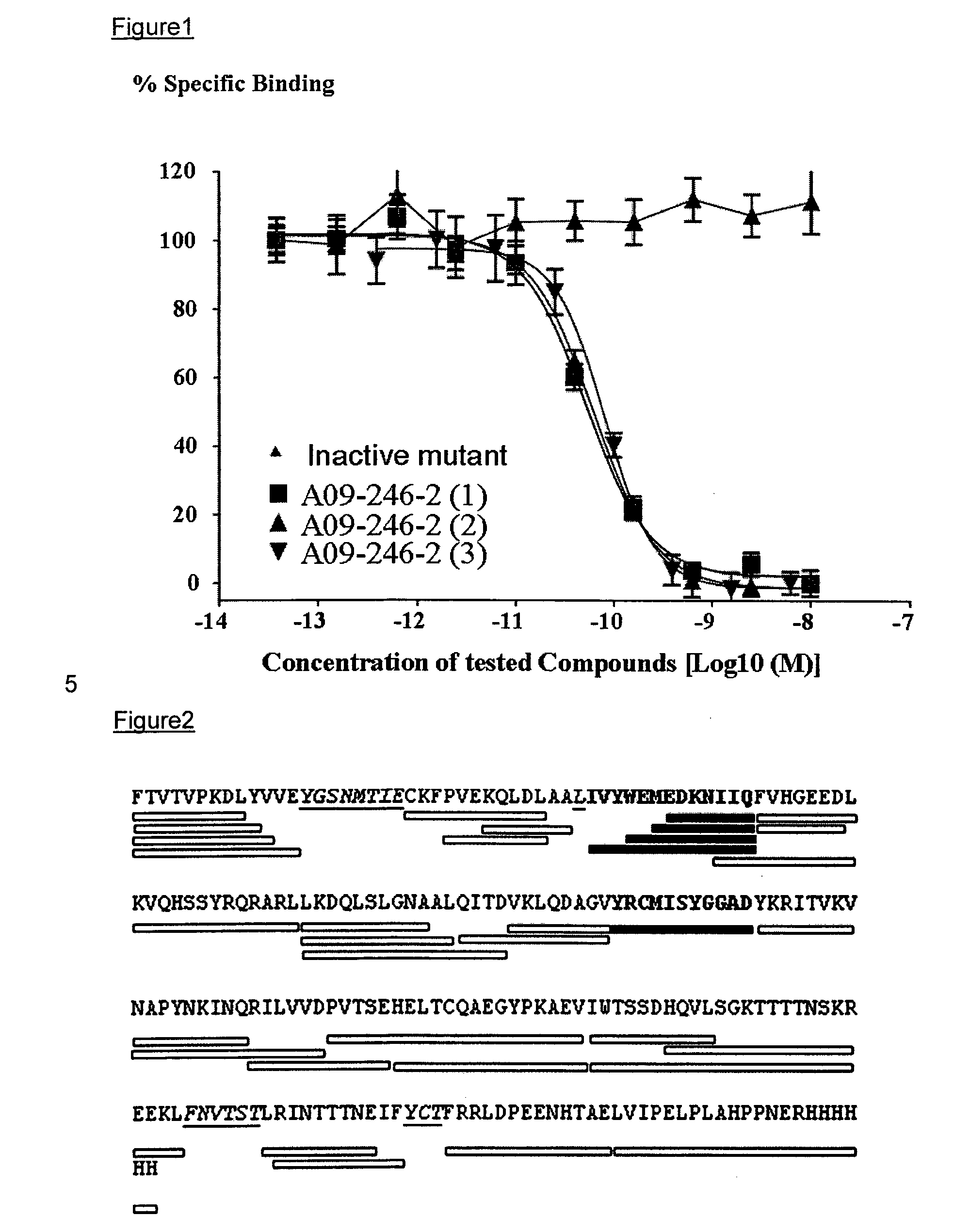
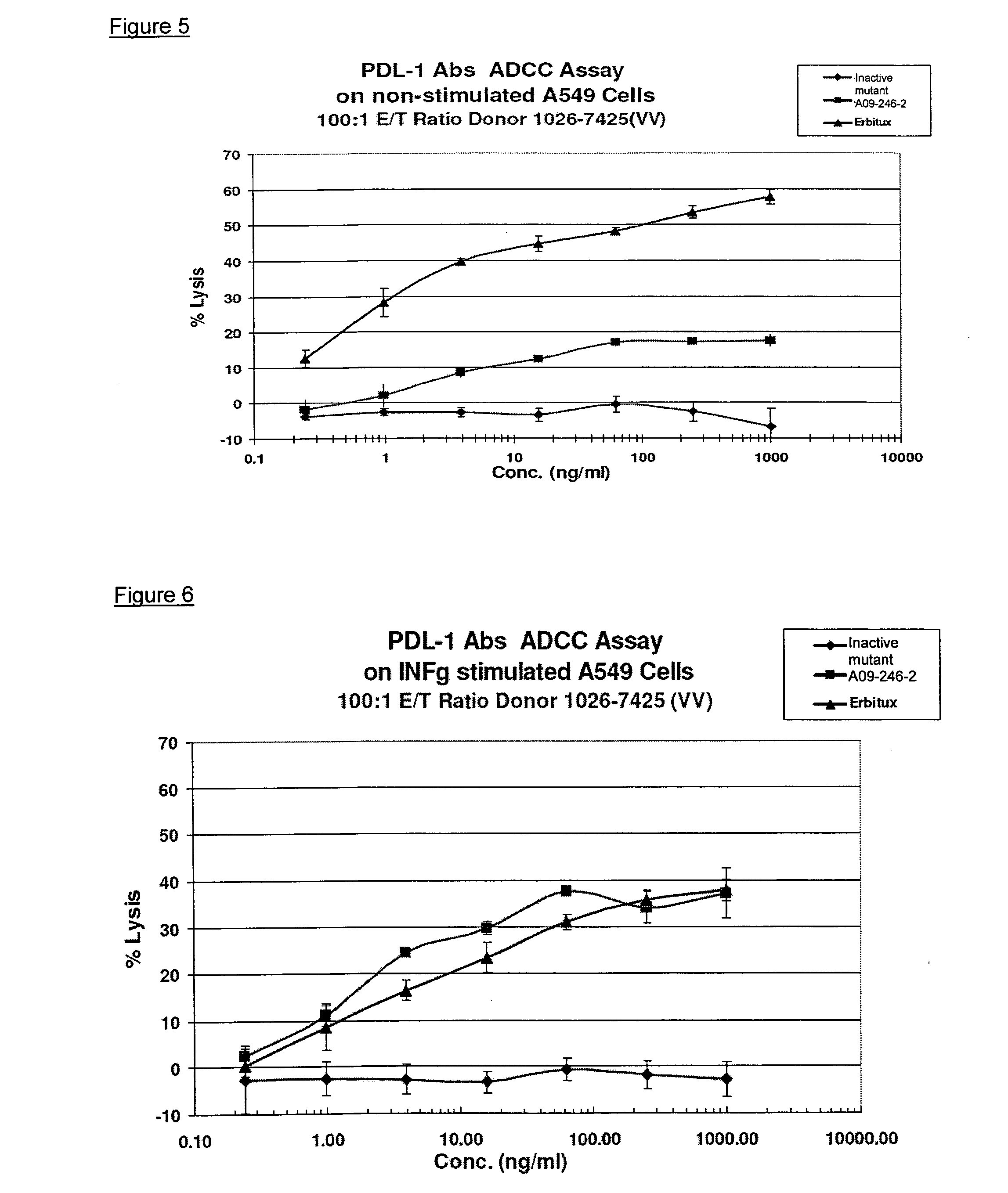
[0016]It is an objective of the present invention to provide for anti-PD-L1 antibodies, including nucleic acids encoding and compositions containing such antibodies, and for their use to enhance T-cell function to upregulate cell-mediated immune responses and for the treatment of T cell dysfunctional disorders, such as tumor immunity. Surprisingly, it was found that the anti-PD-L1 antibodies according to the present invention, which have antibody dependent cell-mediated cytotoxicity (ADCC) activity, directly act on PD-L1 bearing tumor cells by inducing their lysis without showing any significant toxicity. Moreover, the antibodies do not only block the interaction between human PD-L1 and human PD-1, but also the interactions between the respective mouse and cynomolgus monkey proteins.
[0017]In one embodiment, the invention provides for an isolated heavy chain variable region polypeptide comprising an HVR-H1, HVR-H2 and HVR-H3 sequence, wherein:
(a) the HVR-H1 sequence is X1YX2MX3 (SEQ ...
PUM
| Property | Measurement | Unit |
|---|---|---|
| molecular weight | aaaaa | aaaaa |
| molecular weight | aaaaa | aaaaa |
| temperature | aaaaa | aaaaa |
Abstract
Description
Claims
Application Information
 Login to View More