Method for preparing a three-dimensionally cultured skin comprising dermis and epidermis, and the cultured skin made therefrom
Active Publication Date: 2017-09-14
JEON SAEWHA
View PDF0 Cites 2 Cited by
Summary
Abstract
Description
Claims
Application Information
AI Technical Summary
This helps you quickly interpret patents by identifying the three key elements:
Problems solved by technology
Method used
Benefits of technology
Benefits of technology
The present invention is a three-dimensional skin model that can be used for toxicity and efficacy tests of pharmaceutical drugs or cosmetics. It is made by using a mixture of atelocollagen and native collagen with murine 3T3 cells, which can form a structure similar to human skinlayers. The model has no contraraction and degradation of collagen, making it an excellent alternative to animal experimentation. This technology can provide a more reliable and accurate testing method for the safety and efficacy of various products.
Problems solved by technology
However, the three-dimensionally cultured skins developed so far have disadvantages in that a basement membrane is not fully formed between the dermis prepared with collagen and the epidermis and that dermal contraction takes place during the culture process.
Method used
the structure of the environmentally friendly knitted fabric provided by the present invention; figure 2 Flow chart of the yarn wrapping machine for environmentally friendly knitted fabrics and storage devices; image 3 Is the parameter map of the yarn covering machine
View more
Image
Smart Image Click on the blue labels to locate them in the text.
Viewing Examples
Smart Image
Click on the blue label to locate the original text in one second.
Reading with bidirectional positioning of images and text.
Smart Image
Examples
Experimental program
Comparison scheme
Effect test
example 1
Used for the Preparation of a Three-Dimensionally Cultured Skin Model Comprising Dermis and Epidermis
[0063]In the present invention, experiments were performed for the preparation of a three-dimensionally cultured skin model comprising dermis and epidermis and possessing characteristics that are closest to the human skin. The materials used for the preparation of a basic three-dimensionally cultured skin model are as follows.
[0064]Experimental Materials
[0065]Murine fibroblasts (3T3 cell line) or Human fibroblasts
[0066]Human Keratinocytes
[0067]Collagen (atelocollagen and / or native collagen)
[0072]A three-dimensionally cultured skin model comprising dermis and epidermis was prepared using the above materials.
example 2
on of a Three-Dimensionally Cultured Skin Model Comprising Dermis and Epidermis
[0073]2-1. Preparation of Dermis (Collagen Dermis)
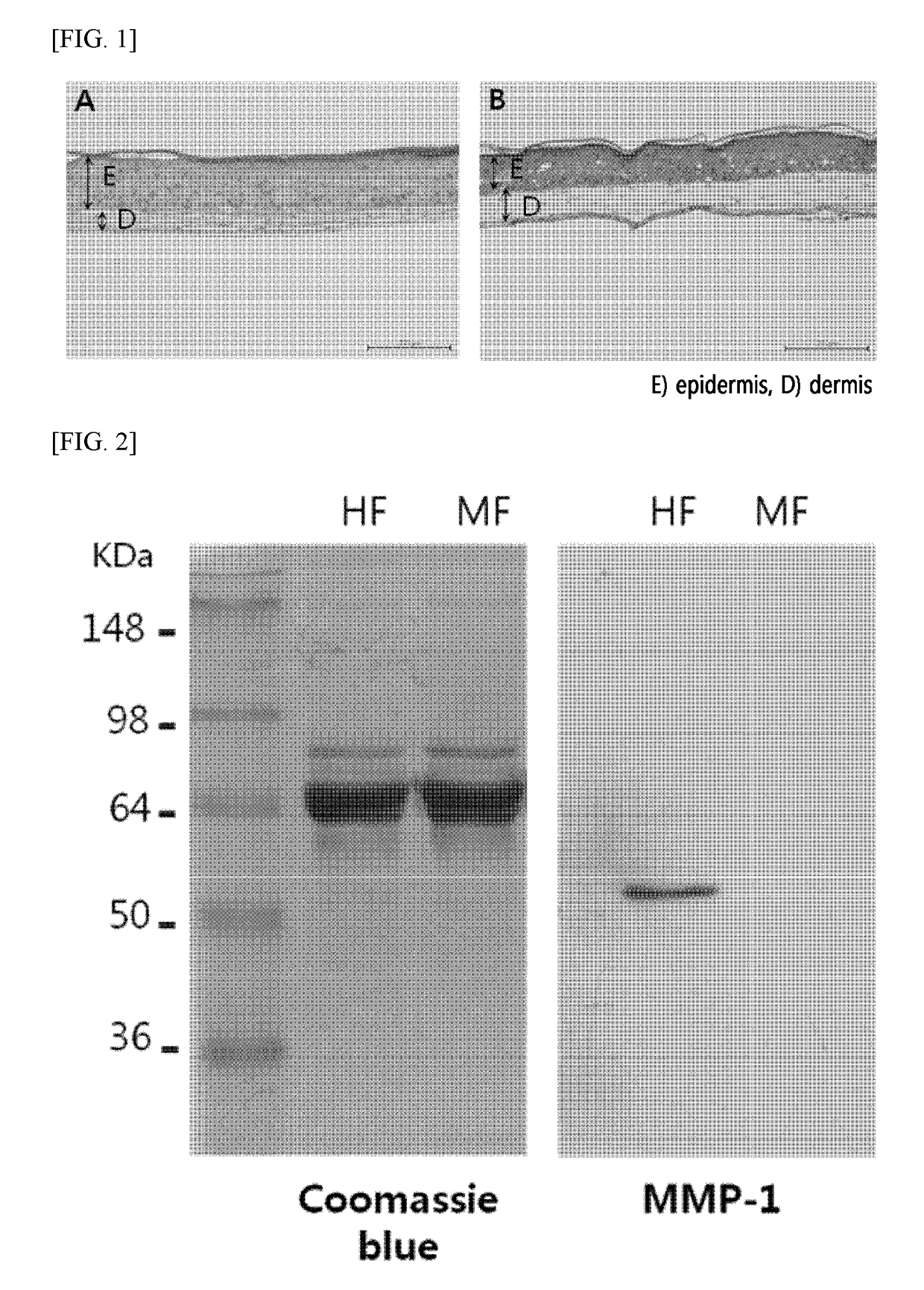
[0074]Murine fibroblast 3T3 cells or human fibroblasts were mixed with a 2.0 mg / mL collagen solution and 10× reconstruction buffer (0.2 M sodiumbicarbonate, 0.2 M HEPES, 0.05 N NaOH) to prepare a cell mixture solution to a concentration of 1×10⁵ cells / mL. The cell mixture solution was added into a 6-well transwell insert in an amount of 2 mL per well. The mixture solution was solidified in an incubator (37° C., 10% CO2) overnight (1 hour to 24 hours).
[0075]2-2. Preparation of Epidermis (Epidermis Setting)
[0076]Keratinocytes were inoculated in a concentration of 2.5×10⁵ cells on the dermis prepared in Example 2-1. The keratinocytes were cultured in an incubator (37° C., 10% CO2) for about 5 days to 6 days until the keratinocytes formed a sheet while replacing the medium with a fresh medium containing 10 ng / mL EGF at 2-day intervals. Upon formation of a she...
example 3
ion of the Preparation of a Three-Dimensionally Cultured Skin Model According to Collagen Types
[0097]In Example 2, the excellent effects of using murine fibroblasts in preparing the three-dimensionally cultured skin model of the present invention were confirmed. In addition, the present inventors attempted to optimize collagen, another dermis-forming factor, for optimizing the preparation of the three-dimensionally cultured skin model.
[0098]3-1. Optimization Using Native Collagen and Atelocollagen
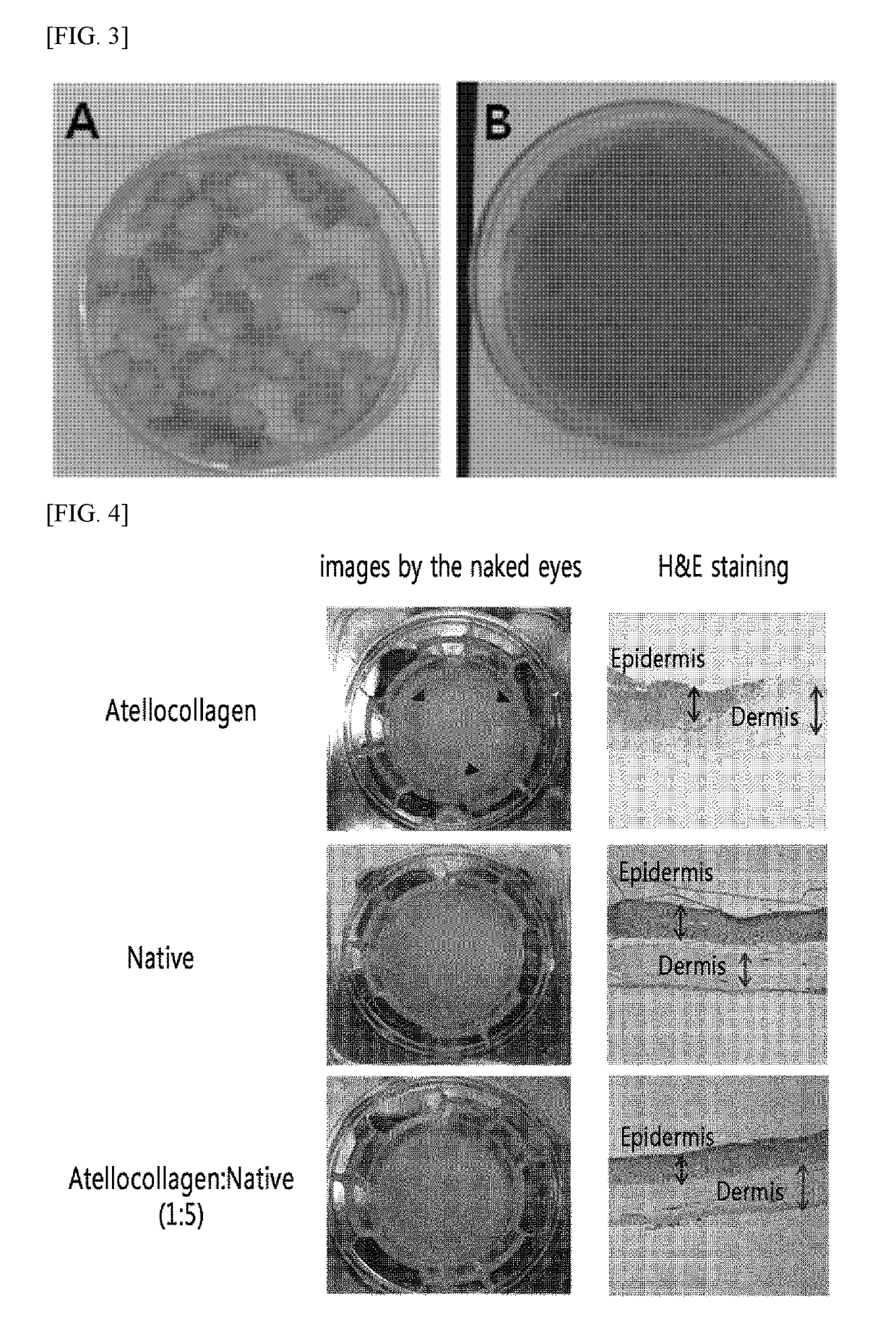
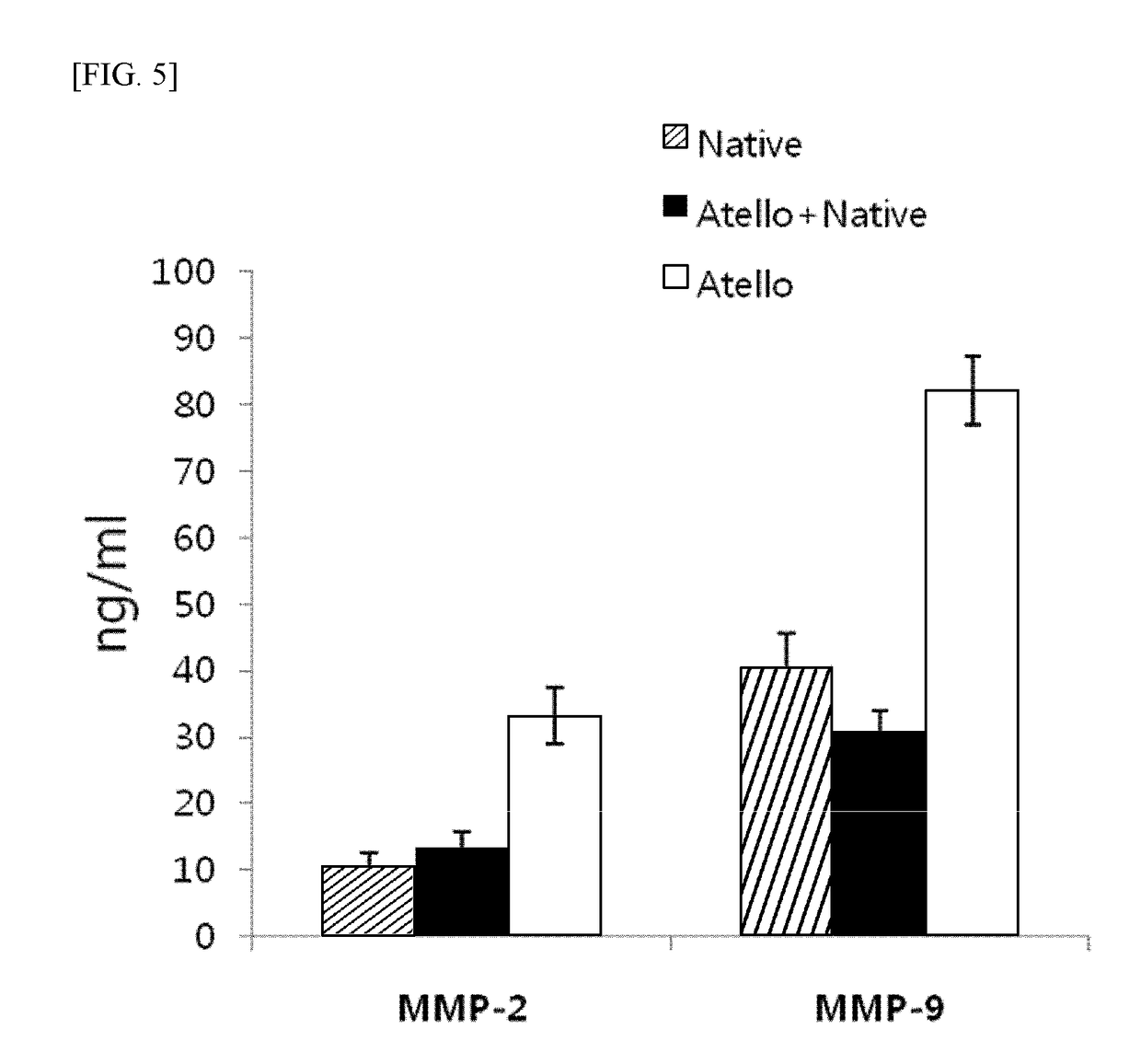
[0099]The collagen used includes native collagen and atelocollagen, which has lower immunogenicity compared to that of native collagen. Specifically, dermis was prepared in Experimental Group 1 (in which the dermis was prepared by using atelocollagen only), Experimental Group 2 (in which the dermis was prepared by using native collagen only), and Experimental Group 3 (in which the dermis was prepared by mixing atelocollagen with native collagen at a 1:5 ratio) and compared.
[0100]As a result...
the structure of the environmentally friendly knitted fabric provided by the present invention; figure 2 Flow chart of the yarn wrapping machine for environmentally friendly knitted fabrics and storage devices; image 3 Is the parameter map of the yarn covering machine
Login to View More
PUM
Property
Measurement
Unit
Time
aaaaa
aaaaa
Time
aaaaa
aaaaa
Time
aaaaa
aaaaa
Login to View More
Abstract
The present invention relates to a method for preparing a three-dimensionally cultured skin model comprising dermis and epidermis, which comprises: a step of preparing the dermis using a composition comprising murine fibroblasts; and native collagen or a combination of native collagen and atelocollagen; and a step of forming the epidermis using keratinocytes. Also, the present invention relates to a three-dimensionally cultured skin model which comprises: a dermis prepared by a composition comprising murine fibroblasts, native collagen, or a combination of native collagen and atelocollagen; and epidermis formed from keratinocytes. The three-dimensionally cultured skin model of the present invention may be used widely in toxicity and efficacy experiments of medicines or cosmetics, and in the field of alternative experiments for animal experiments since the three-dimensionally cultured skin model is excellent in formation and differentiation of dermis and epidermis using murine 3T3 cells for preparing the skin model and a mixture of atelocollagen and native collagen, and has a structure similar to the human skin layer by inhibiting dermal contraction and collagen degradation in the dermis.
Description
TECHNICAL FIELD OF THE INVENTION[0001]The present invention relates to a method for preparing a three-dimensionally cultured skin model comprising dermis and epidermis and includes a step of preparing the dermis with murine fibroblasts and either native collagen alone or a combination of native collagen and atelocollagen, and a step of forming the epidermis using keratinocytes. The present invention also relates to a three-dimensionally cultured skin model composed of dermis, which is prepared using a composition containing murine fibroblasts and either native collagen alone or a combination of native collagen and atelocollagen, and epidermis, which is formed from keratinocytes.BACKGROUND OF THE INVENTION[0002]The human skin is the largest organ that covers the entire surface of the body. The skin has various functions including temperature control, protection from external environments, etc., and has a surface area of about 1.2 m2 to about 2.3 m2 in adults. The skin is composed of ...
Claims
the structure of the environmentally friendly knitted fabric provided by the present invention; figure 2 Flow chart of the yarn wrapping machine for environmentally friendly knitted fabrics and storage devices; image 3 Is the parameter map of the yarn covering machine
Login to View More
Application Information
Patent Timeline
Application Date:The date an application was filed.
Publication Date:The date a patent or application was officially published.
First Publication Date:The earliest publication date of a patent with the same application number.
Issue Date:Publication date of the patent grant document.
PCT Entry Date:The Entry date of PCT National Phase.
Estimated Expiry Date:The statutory expiry date of a patent right according to the Patent Law, and it is the longest term of protection that the patent right can achieve without the termination of the patent right due to other reasons(Term extension factor has been taken into account ).
Invalid Date:Actual expiry date is based on effective date or publication date of legal transaction data of invalid patent.


 Login to View More