
Implant
a technology of implants and osseointegration, applied in the field of implants, can solve the problems of requiring extended healing times, adding additional cost and time to the procedure of dental implants, and suffering from a high risk of rejection, so as to improve the integration into soft tissue, improve the osseointegration, and improve the long-term stability
- Summary
- Abstract
- Description
- Claims
- Application Information
AI Technical Summary
Benefits of technology
Problems solved by technology
Method used
Image

Examples
Embodiment Construction
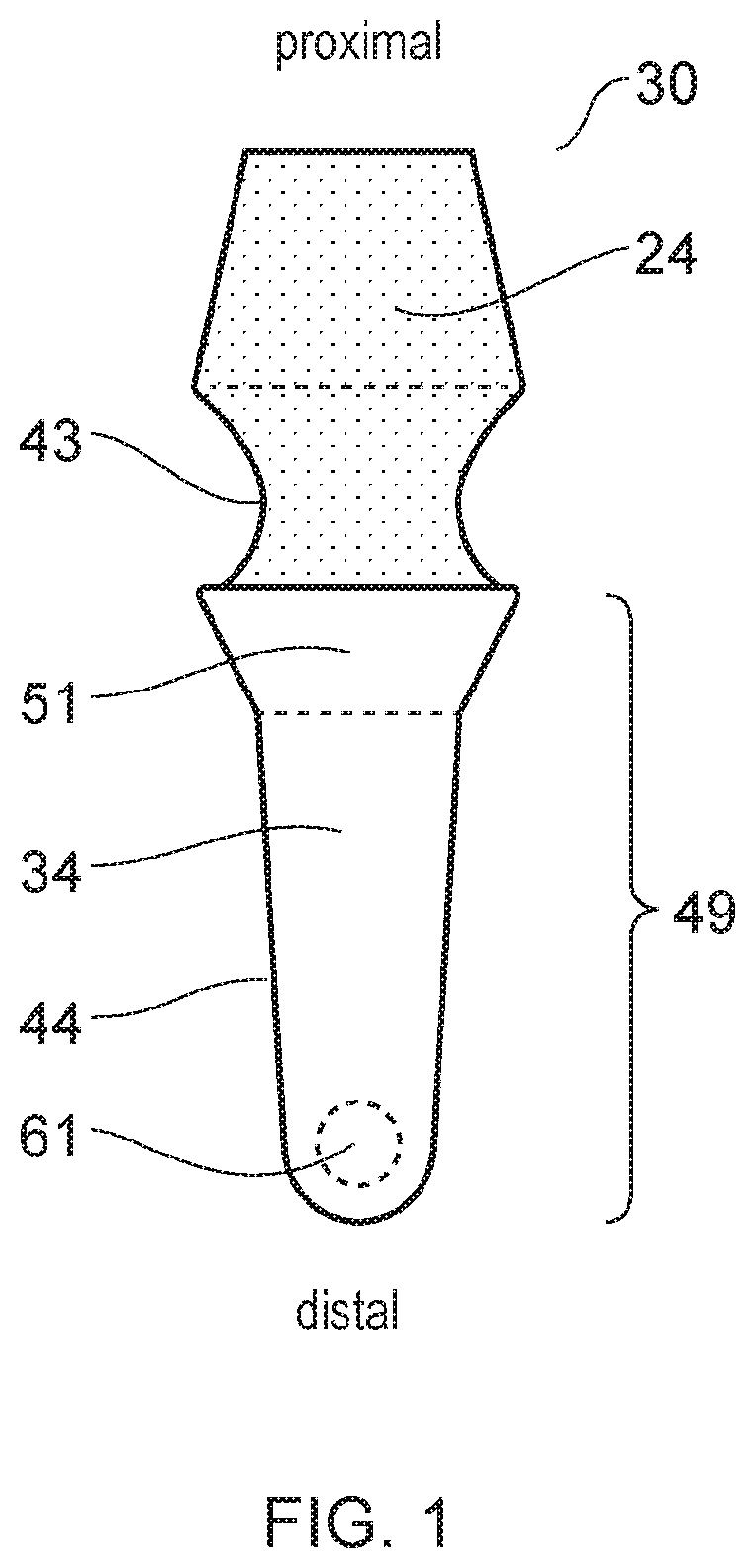
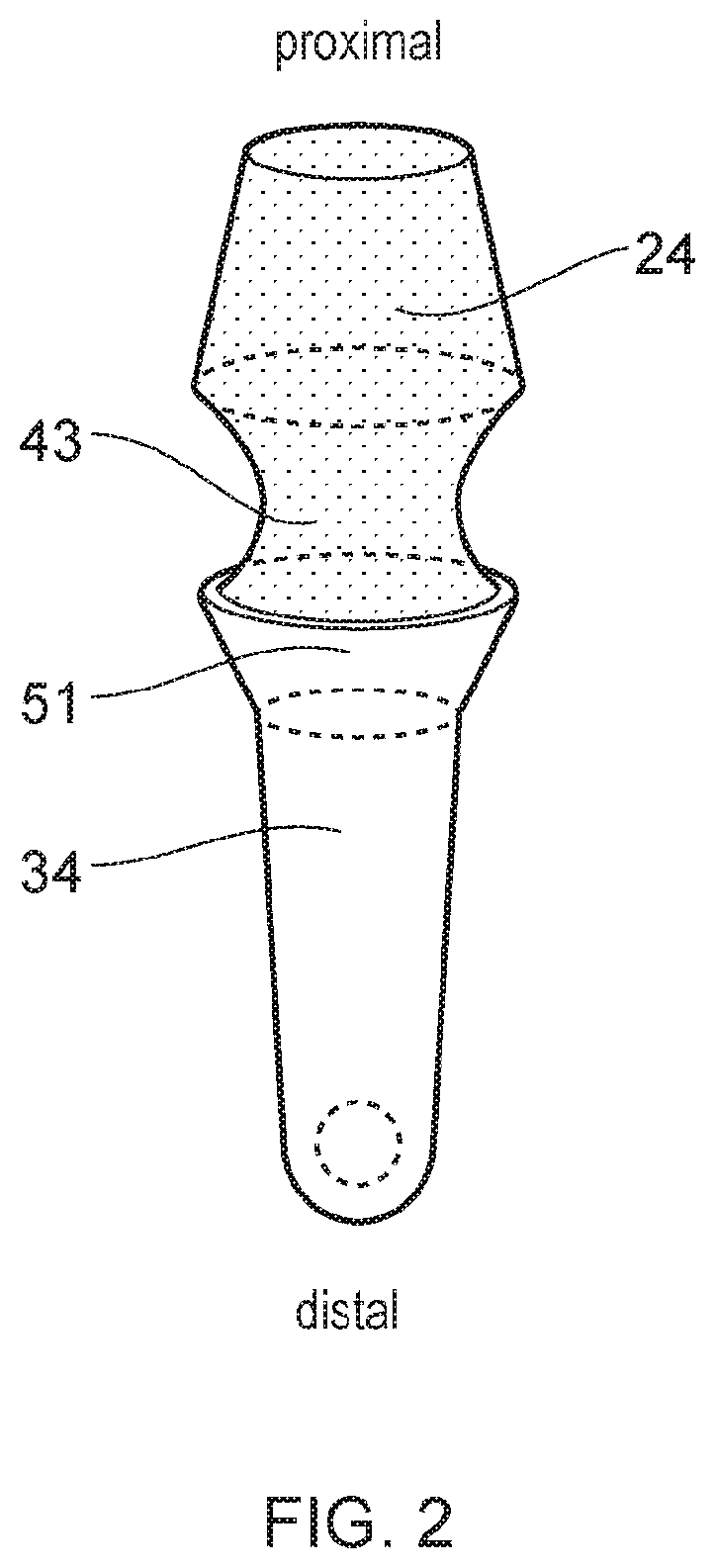
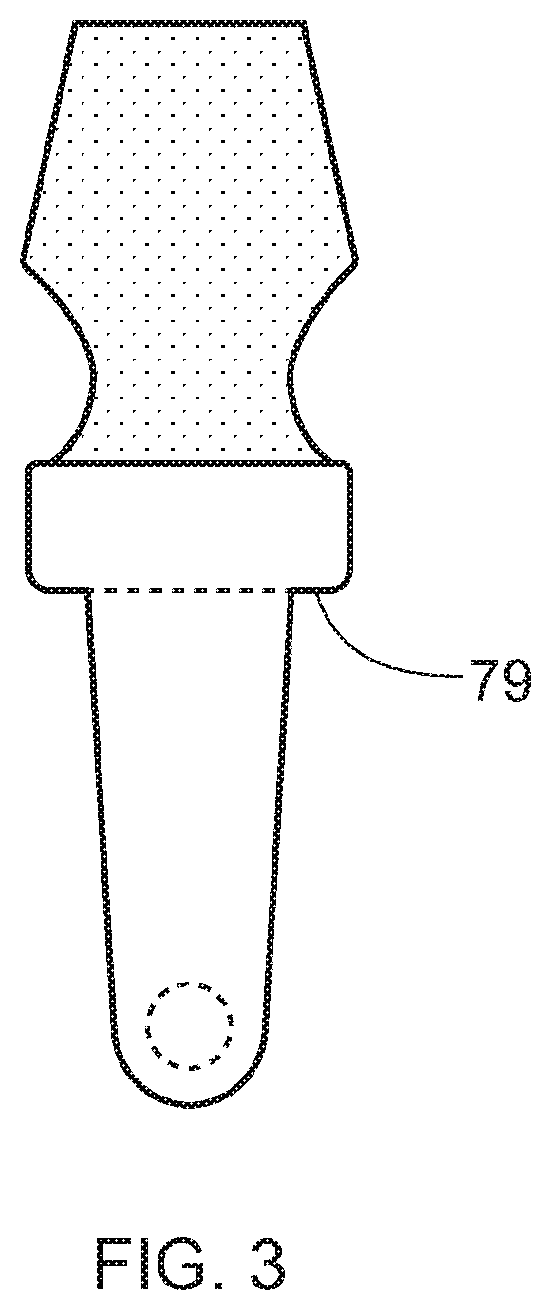
[0202]In the following detailed description, reference is made to the accompanying drawings, which form a part hereof. In the drawings, similar symbols typically identify similar components, unless context dictates otherwise. The illustrative embodiments described in the detailed description, drawings, and claims are not meant to be limiting. Other embodiments may be utilised, and other changes may be made, without departing from the spirit or scope of the subject matter presented herein. In the drawings, and in the following description, the term “proximal” should be understood as referring to the end of the implant 30 that is closer to the clinician or dentist during proper use, while the term “distal” should be understood as referring to the end of the implant that is furthest from the clinician or dentist during proper use. The proximal end is generally orientated towards soft tissue (for example, the gum).
[0203]The distal end is generally orientated towards bone.
[0204]As used h...
PUM
 Login to View More
 Abstract
Description
Claims
Application Information
 Login to View More