Check patentability & draft patents in minutes with Patsnap Eureka AI!

Evaluating Autonomous Vehicle Algorithms

a technology for autonomous vehicles and algorithms, applied in the field of autonomous vehicles, can solve the problems of manual, labor-intensive, limited by an engineer's ability to design challenging scenarios, manual parsing test result data, etc., and achieves the effect of reducing labor intensity and manual parsing of test result data

Active Publication Date: 2020-03-12
FORD GLOBAL TECH LLC
View PDF0 Cites 8 Cited by
  • Summary
  • Abstract
  • Description
  • Claims
  • Application Information

AI Technical Summary

Benefits of technology

The present invention relates to methods, systems, and computer programs for evaluating autonomous vehicle algorithms. The invention uses machine learning techniques to analyze the performance of autonomous vehicle algorithms on simulated data. The invention addresses the challenge of manually testing and validating autonomous vehicle algorithms, which is time-consuming, complex, and does not scale well. The invention uses supervised learning techniques, such as Support Vector Machines, to identify scenario features that influence algorithm performance and consolidate insights to automate the generation of relevant test cases over multiple iterations. The invention also uses a database of feature combinations for a scenario to identify the importance of different features on algorithm success or failure. The invention allows for automated testing and evaluation of autonomous vehicle algorithms, reducing the risk of safety risks and improving testing efficiency.

Problems solved by technology

Defining testing scenarios, for example, to train autonomous vehicles, is manual, labor-intensive, and limited by an engineer's ability to design challenging scenarios.
Manually parsing test result data is also a manual, labor-intensive activity.

Method used

the structure of the environmentally friendly knitted fabric provided by the present invention; figure 2 Flow chart of the yarn wrapping machine for environmentally friendly knitted fabrics and storage devices; image 3 Is the parameter map of the yarn covering machine
View more

Image

Smart Image Click on the blue labels to locate them in the text.
Viewing Examples
Smart Image
  • Evaluating Autonomous Vehicle Algorithms
  • Evaluating Autonomous Vehicle Algorithms
  • Evaluating Autonomous Vehicle Algorithms

Examples

Experimental program
Comparison scheme
Effect test

Embodiment Construction

[0009]The present invention extends to methods, systems, and computer program products for evaluating autonomous vehicle algorithms.

[0010]One challenge in developing production level code for autonomous vehicles is validating performance over millions of miles of road testing. As such, automotive manufacturers use simulation tools, including gaming engines, to manually generate scenarios, collect simulated sensor data, and validate autonomous vehicle algorithm performance. In other aspects, automotive manufacturers use real world data as a component of autonomous vehicle algorithm validation. After initially testing an algorithm, an engineer derives a hypothesis about how different parameters affect algorithm performance. To confirm the hypothesis, the engineer executes additional rounds of testing to identify parameter trends in error-prone scenarios. As algorithms become more complex and scenarios scale (e.g., including 100s of parameters) blind spots become inevitable and lead to...

the structure of the environmentally friendly knitted fabric provided by the present invention; figure 2 Flow chart of the yarn wrapping machine for environmentally friendly knitted fabrics and storage devices; image 3 Is the parameter map of the yarn covering machine
Login to View More

PUM

No PUM Login to View More

Abstract

The present invention extends to methods, systems, and computer program products for evaluating autonomous vehicle algorithms. Aspects use (e.g., supervised) machine learning techniques to analyze performance of autonomous vehicle algorithms on real world and simulated data. Machine learning techniques can be used to identify scenario features that are more likely to influence algorithm performance. Machine learning techniques can also be used to consolidate insights and automate the generation of relevant test cases over multiple iterations to identify error-prone scenarios.

Description

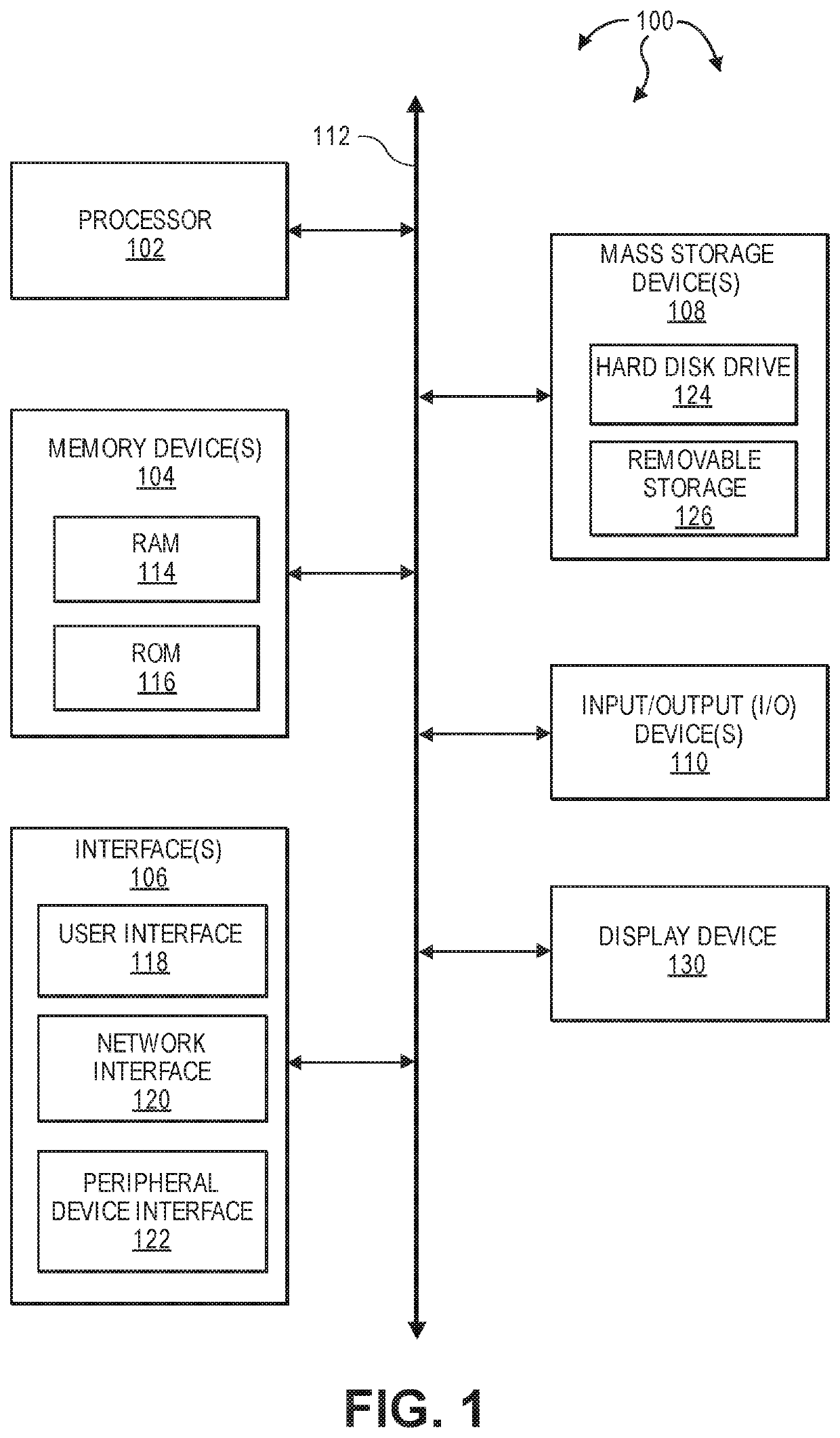
CROSS-REFERENCE TO RELATED APPLICATIONS[0001]Not applicable.BACKGROUND1. Field of the Invention[0002]This invention relates generally to the field of autonomous vehicles, and, more particularly, to evaluating autonomous vehicle algorithms.2. Related Art[0003]Defining testing scenarios, for example, to train autonomous vehicles, is manual, labor-intensive, and limited by an engineer's ability to design challenging scenarios. The manual process can obscure failure modes for algorithm performance as the number of parameters and number of possible parameter values scales up. Additionally, algorithms can be tested across numerous interactions generating large quantities of test results data. Manually parsing test result data is also a manual, labor-intensive activity.BRIEF DESCRIPTION OF THE DRAWINGS[0004]The specific features, aspects and advantages of the present invention will become better understood with regard to the following description and accompanying drawings where:[0005]FIG. ...

Claims

the structure of the environmentally friendly knitted fabric provided by the present invention; figure 2 Flow chart of the yarn wrapping machine for environmentally friendly knitted fabrics and storage devices; image 3 Is the parameter map of the yarn covering machine
Login to View More

Application Information

Patent Timeline
no application Login to View More
Patent Type & Authority Applications(United States)
IPC IPC(8): G06F17/50G06N99/00
CPCG06F30/20G06N20/00G06N20/10G06F30/15G06F30/27G06N5/01G06N7/01G06F11/3684G06F11/3664
Inventor SHOLINGAR, GAUTHAMYAJAMANAM KIDAMBI, SRAVANINARIYAMBUT MURALI, VIDYAJAIN, JINESH
Owner FORD GLOBAL TECH LLC
Features
  • R&D
  • Intellectual Property
  • Life Sciences
  • Materials
  • Tech Scout
Why Patsnap Eureka
  • Unparalleled Data Quality
  • Higher Quality Content
  • 60% Fewer Hallucinations
Social media
Patsnap Eureka Blog
Learn More