Method and apparatus for integrating competency measures in compensation decisions

a technology of competency and compensation decision, applied in the field of tools, can solve the problems of difficult identification of correlation between different pay ranges and competency measures, difficulty in determining the appropriate pay level for an individual, and difficulty in adjusting pay levels

US6338042B1Inactive Publication Date: 2002-01-08UNIFY INC
5 Cites 121 Cited by

Patent Information

Authority / Receiving Office
US · United States
Current Assignee / Owner
Publication Date
2002-01-08
Estimated Expiration
Not applicable · inactive patent

Smart Images

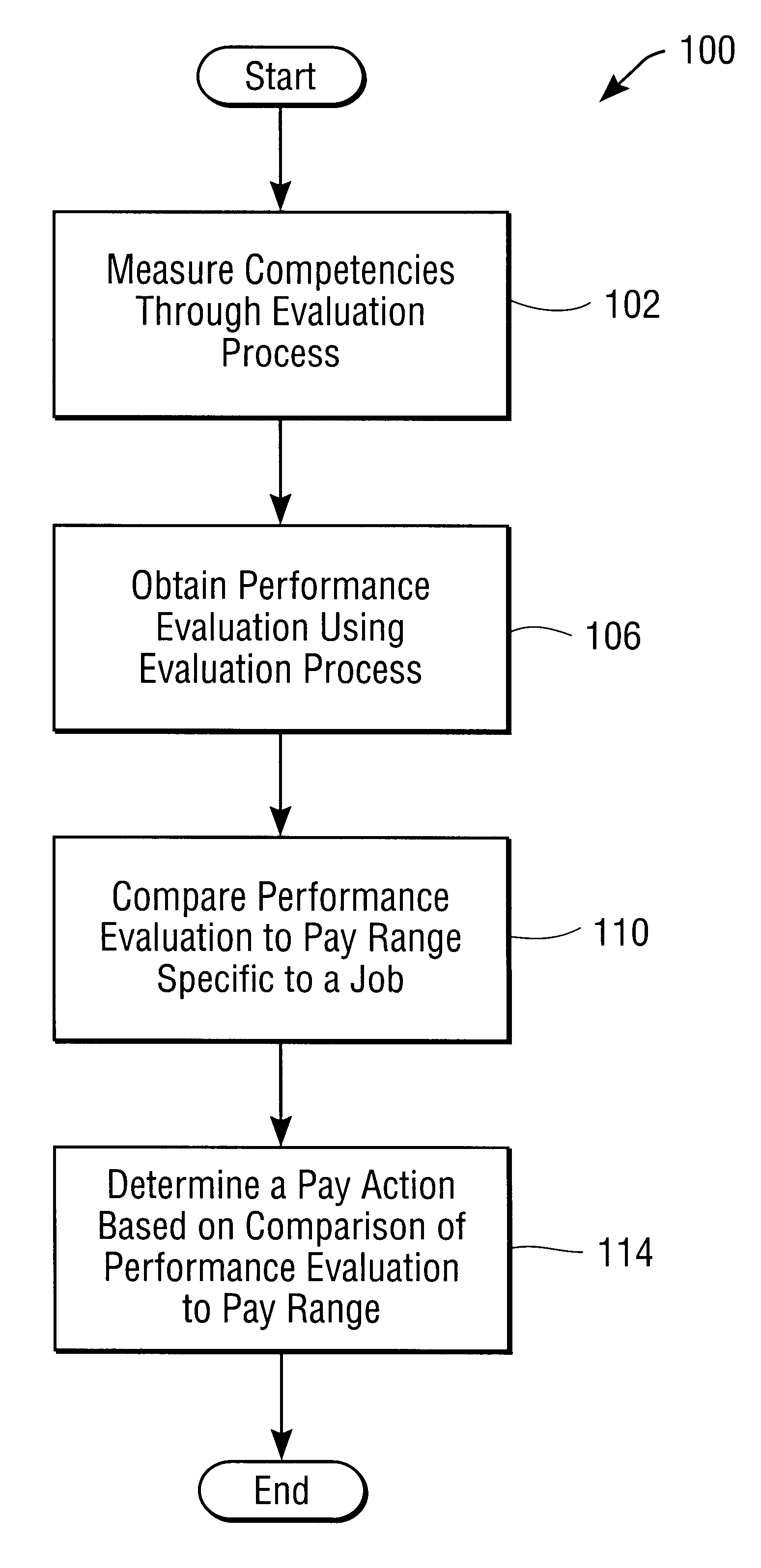
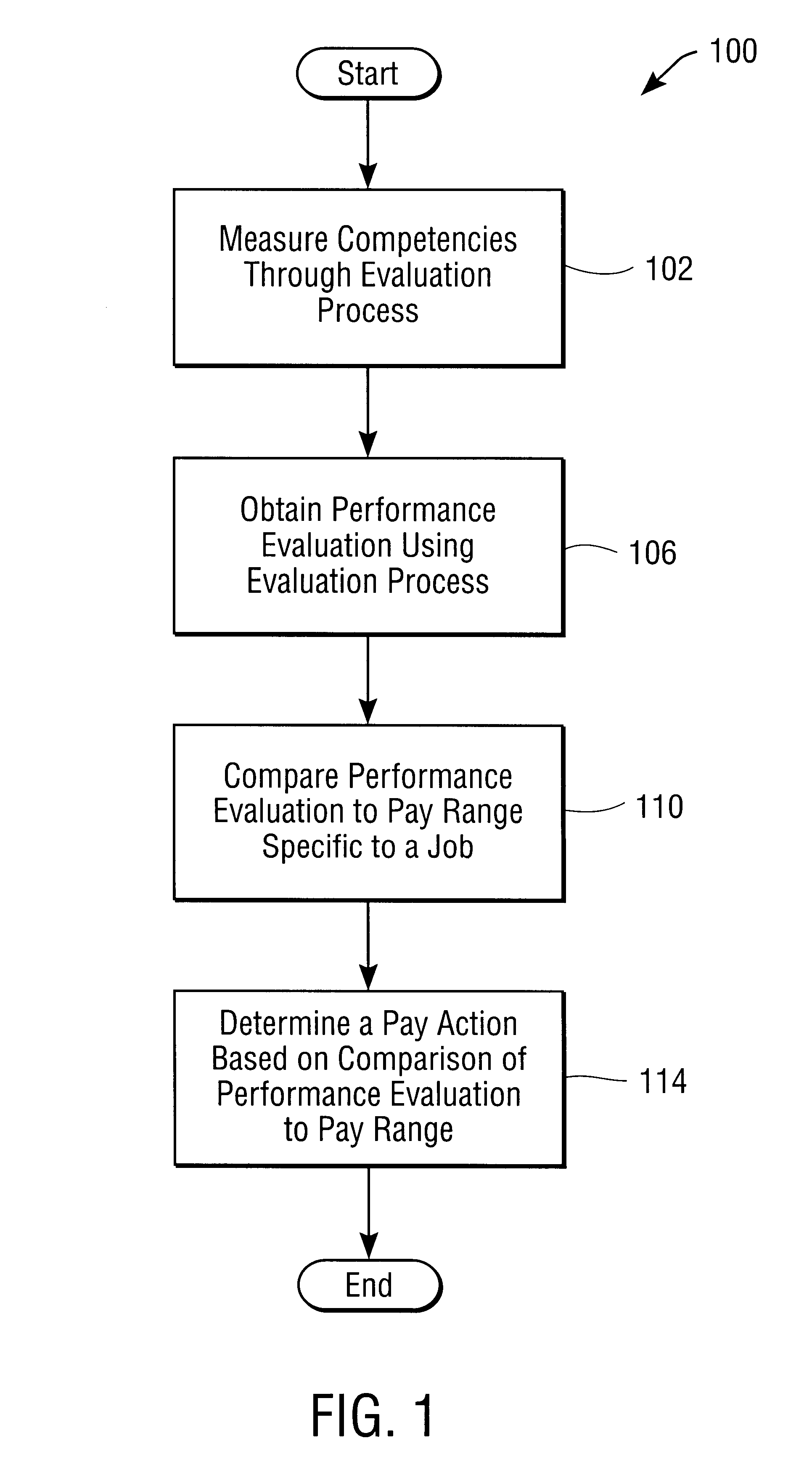
  • Figure 1
    Figure 1
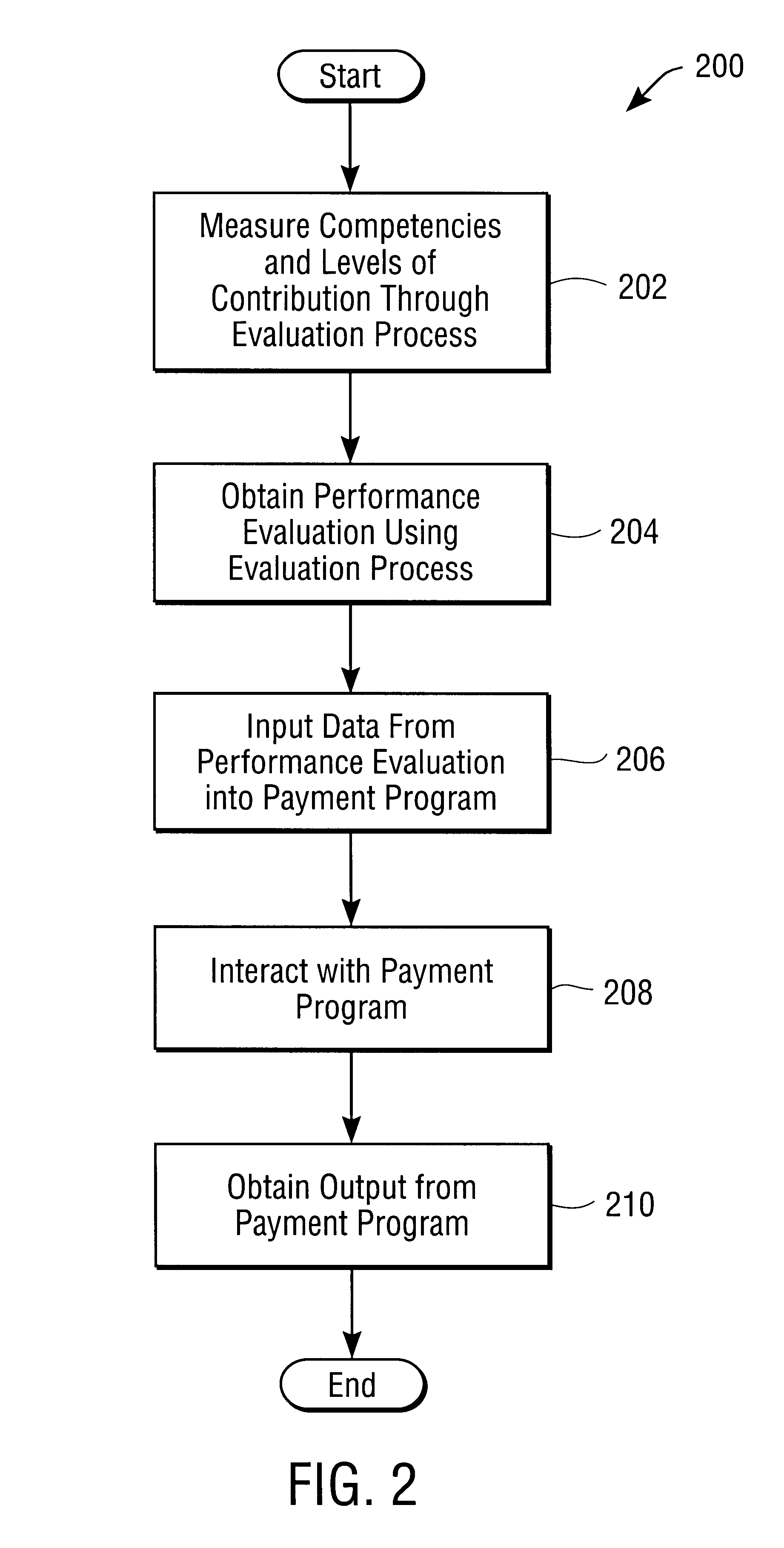
  • Figure 2
    Figure 2
  • Figure 3
    Figure 3
Patent Text Reader

Abstract

Methods and apparatus for incorporating measures of competency and contribution into pay decisions are disclosed. According to one aspect of the present invention, a computer-implemented method for automating compensation decisions includes obtaining indications of performance for a group of individuals in a common role. Relative rankings are produced for the group of individuals based at least in part upon an analysis of the indications of performance, and are compared to distribution data that is relevant to the common role. The comparison of the relative rankings to the distribution data is used to determine a suggested level of compensation for each individual in the group of individuals. In one embodiment, obtaining indications of performance for the group of individuals includes obtaining quantifications of competency and contribution for each of the individuals.
Need to check novelty before this filing date? Find Prior Art

Description

1. Field of InventionThe present invention relates generally to tools which may be used in payment decisions. More particularly, the present invention relates to software applications which incorporate measures of competency and market data for use in payment decisions.2. Description of the Related ArtIn many organizations, the compensation of employees of the organization is assessed periodically in an effort to account for general employee performance, changes in the cost of living, and the seniority of the employees. Compensation systems are typically based on "salary grades," or predetermined pay ranges. Such compensation systems are often "seniority-based," as they are arranged primarily to reward individuals based upon their relative seniority in a position. In other words, a senior individual with a given job position will generally have a higher pay range and, hence, pay level, than a junior individual in the same type of job position. As a result, the competency of each ind...

Examples

Embodiment Construction

Market data regarding pay levels is generally provided without a clear correlation between different pay ranges, measures of competency, and levels of contribution. As a result, the adjustment of pay levels based upon the measures of competency and levels of contribution is difficult, since the value placed by the market on particular competencies and levels of contribution associated with a position is essentially unknown. Particular competencies and levels of contribution may be valued more than others in the market. However, since the valuation of the competencies and contribution is uncertain with respect to market data, determining an appropriate pay level for an individual based on the market valuation for specific competencies and levels of contribution, is not an easy task. Hence, the pay levels chosen may not accurately reflect the market valuations for specific competencies and contributions.

Comparing a ranking distribution, which is created using performance evaluations o...