Method and apparatus for gauging cardiac status using post premature heart rate turbulence

US7079887B2Active Publication Date: 2006-07-18MEDTRONIC INC
6 Cites 29 Cited by

Patent Information

Authority / Receiving Office
US · United States
Patent Type
Patents(United States)
Current Assignee / Owner
Publication Date
2006-07-18

Smart Images

  • Figure 1
    Figure 1
  • Figure 2
    Figure 2
  • Figure 3
    Figure 3
Patent Text Reader

Abstract

A hemodynamic status of a patient is determined in an implanted medical device (IMD) by observing a perturbation of the patient's heart, measuring heart rate turbulence resulting from the perturbation, and quantifying the heart rate turbulence to determine the hemodynamic status. The perturbation may be naturally-occurring, or may be generated by the implantable medical device. The patient's response to heart rate turbulence may also be used to provide a response to the patient, such as providing an alarm and / or administering a therapy. Heart rate turbulence may also be used to tune and / or optimize a device parameter such as A-V or V—V pacing intervals.
Need to check novelty before this filing date? Find Prior Art

Description

FIELD OF INVENTION

[0001] The invention relates to cardiac health and, more particularly, to devices and techniques for gauging cardiac and / or hemodynamic status.BACKGROUND OF INVENTION

[0002] Hemodynamics is the study of the physical force generated by the heart to pump blood through the cardiovascular system, including such factors as blood pressure, blood flow and the like. A patient's hemodynamic status is known to be related to the overall health of the cardiovascular system, and a degraded hemodynamic status may be indicative of heart disease, hypertension, and / or other cardiac disorders. Hemodynamic status may also be important in evaluating a patient's pharmacological regimen, pacemaker performance, and / or general health.

[0003] Although many techniques of gauging hemodynamic status have existed for some time, these techniques have typically required the patient to consult a health care provider to be effective. Hemodynamic status has traditionally been monitored with a pulmonary ...

Examples

Embodiment Construction

[0005]According to various exemplary embodiments, hemodynamic status of a patient may be determined in an implanted medical device (IMD) by observing a perturbation of the patient's heart rate, measuring heart rate turbulence resulting from the perturbation, and quantifying the heart rate turbulence to determine the hemodynamic status. The perturbation may be naturally-occurring, or may be generated by the implantable medical device (IMD). The patient's response to heart rate turbulence may also be used to provide a response to the patient, such as providing an alarm and / or administering a therapy. Heart rate turbulence may be further used to tune and / or optimize a pacing parameter such as A-V or V—V pacing intervals.

BRIEF DESCRIPTION OF DRAWINGS

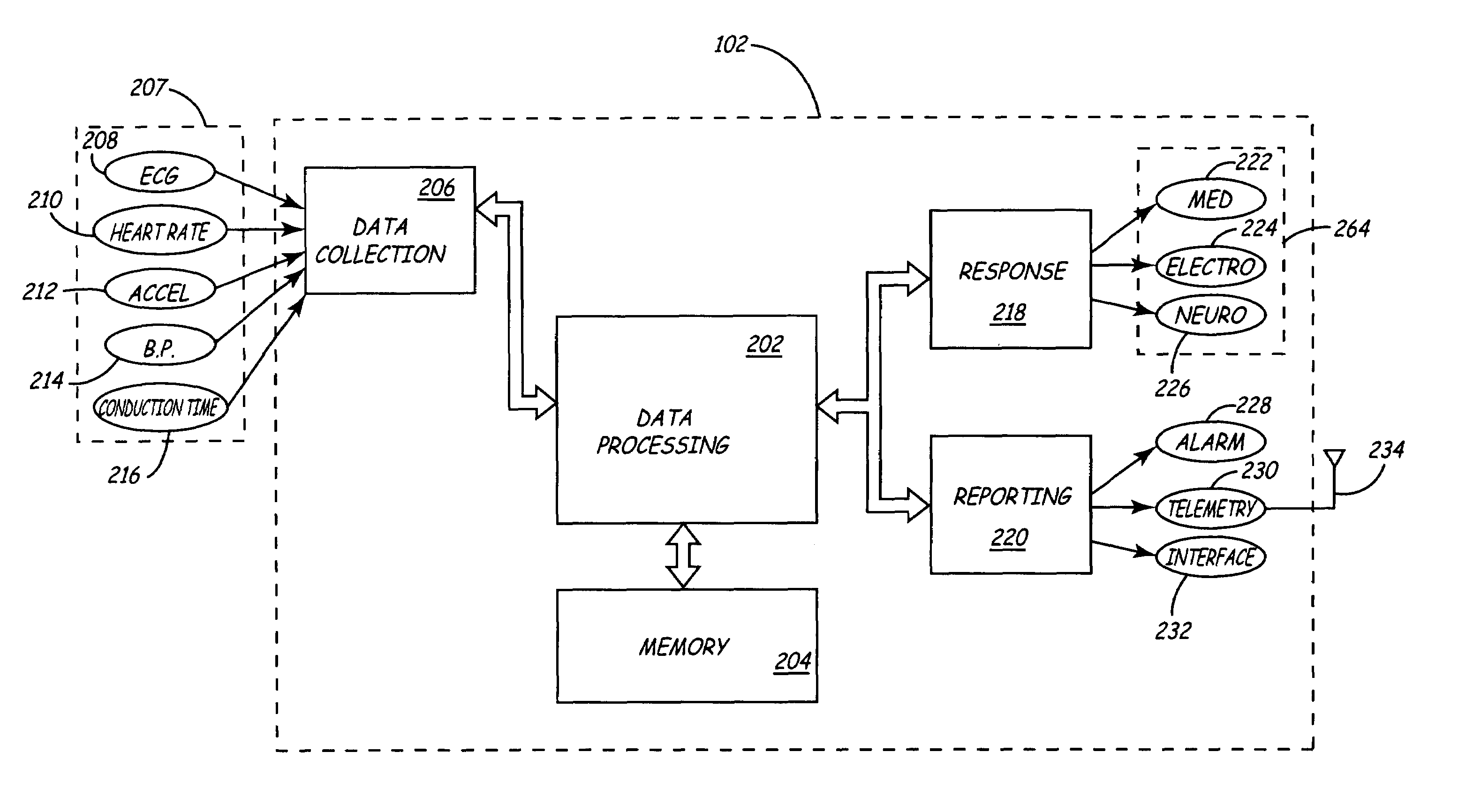
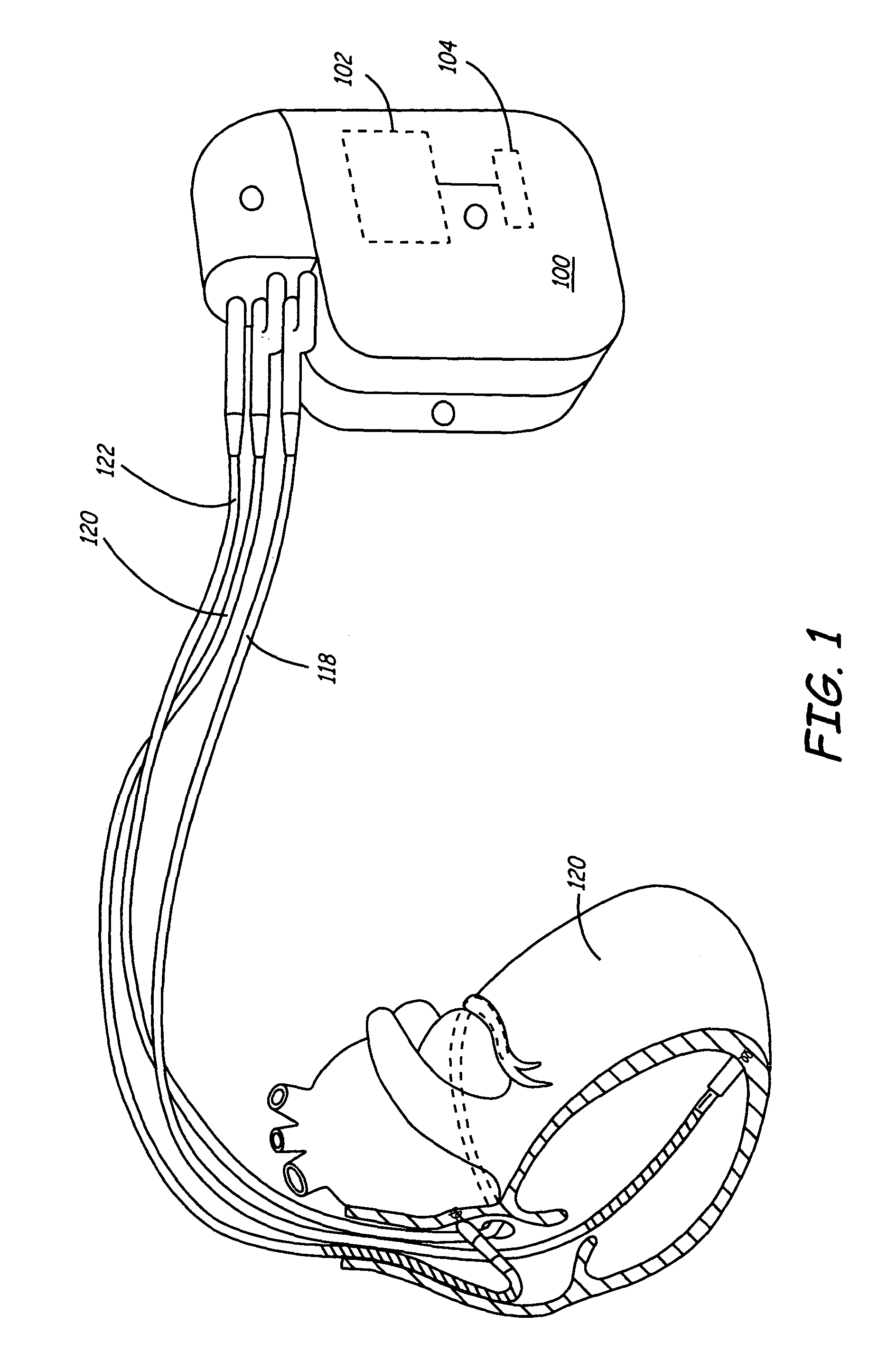
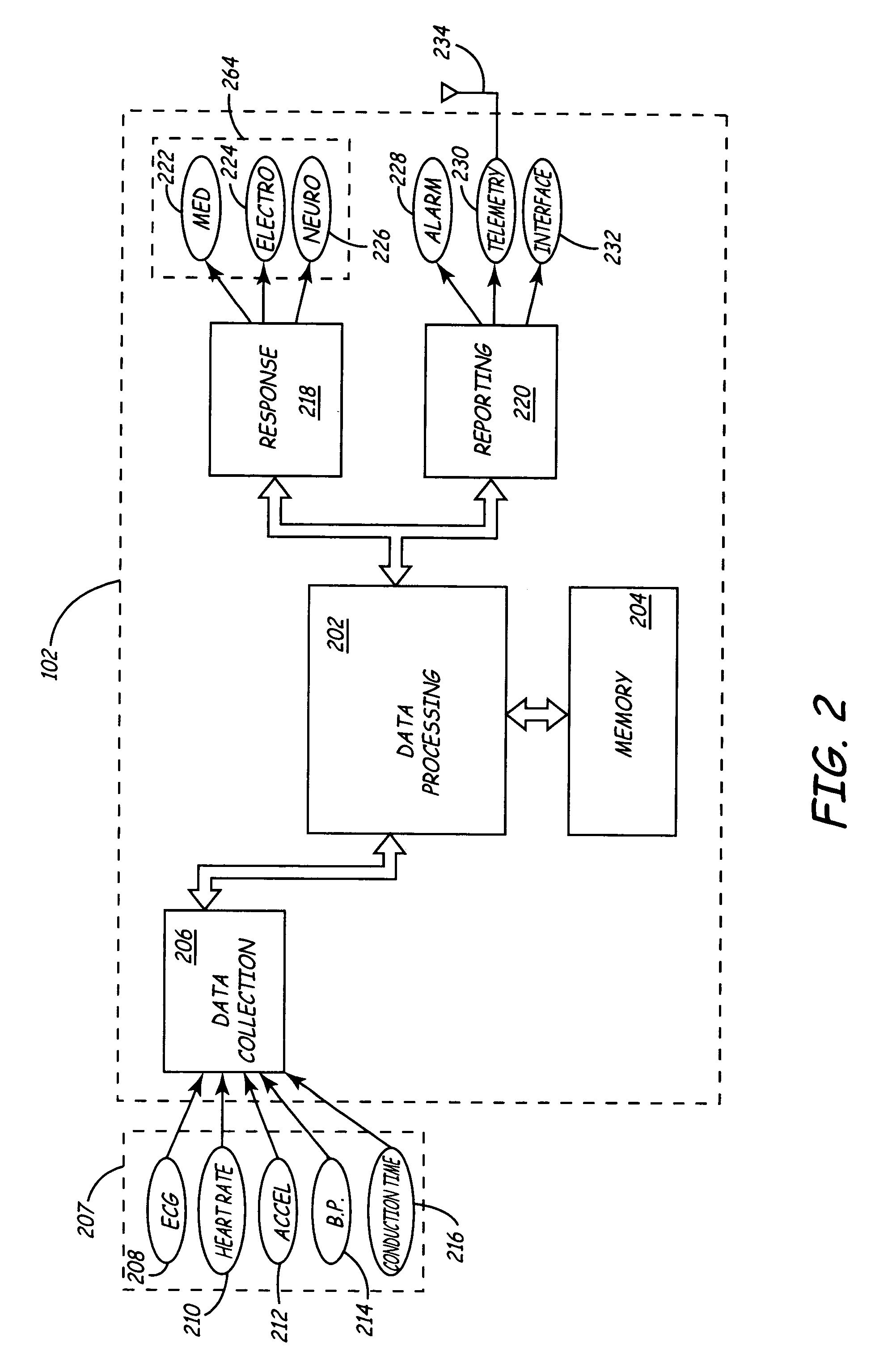
[0006]Various exemplary embodiments will hereinafter be described in conjunction with the following drawing figures, wherein like numerals denote like elements, and:

[0007]FIG. 1 is a diagram illustrating an exemplary implantable medical devi...