

Ad-hoc network routing protocol including the use of forward and reverse multi-point relay (MPR) spanning tree routes
a network routing and forward-reverse multi-point relay technology, applied in the field of communication, can solve problems such as problems that can aris
- Summary
- Abstract
- Description
- Claims
- Application Information
AI Technical Summary
Problems solved by technology
Method used
Image

Examples
Embodiment Construction
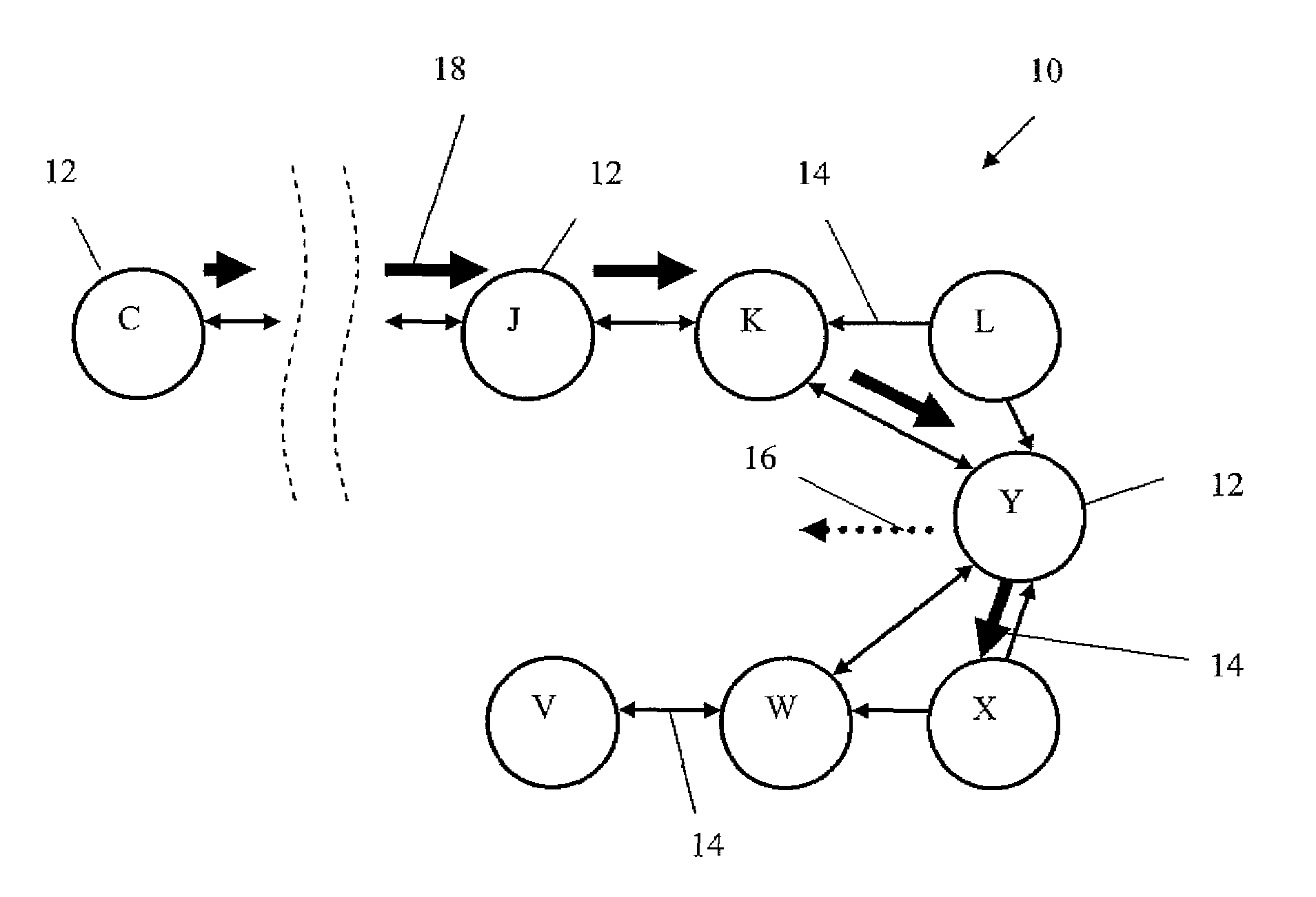
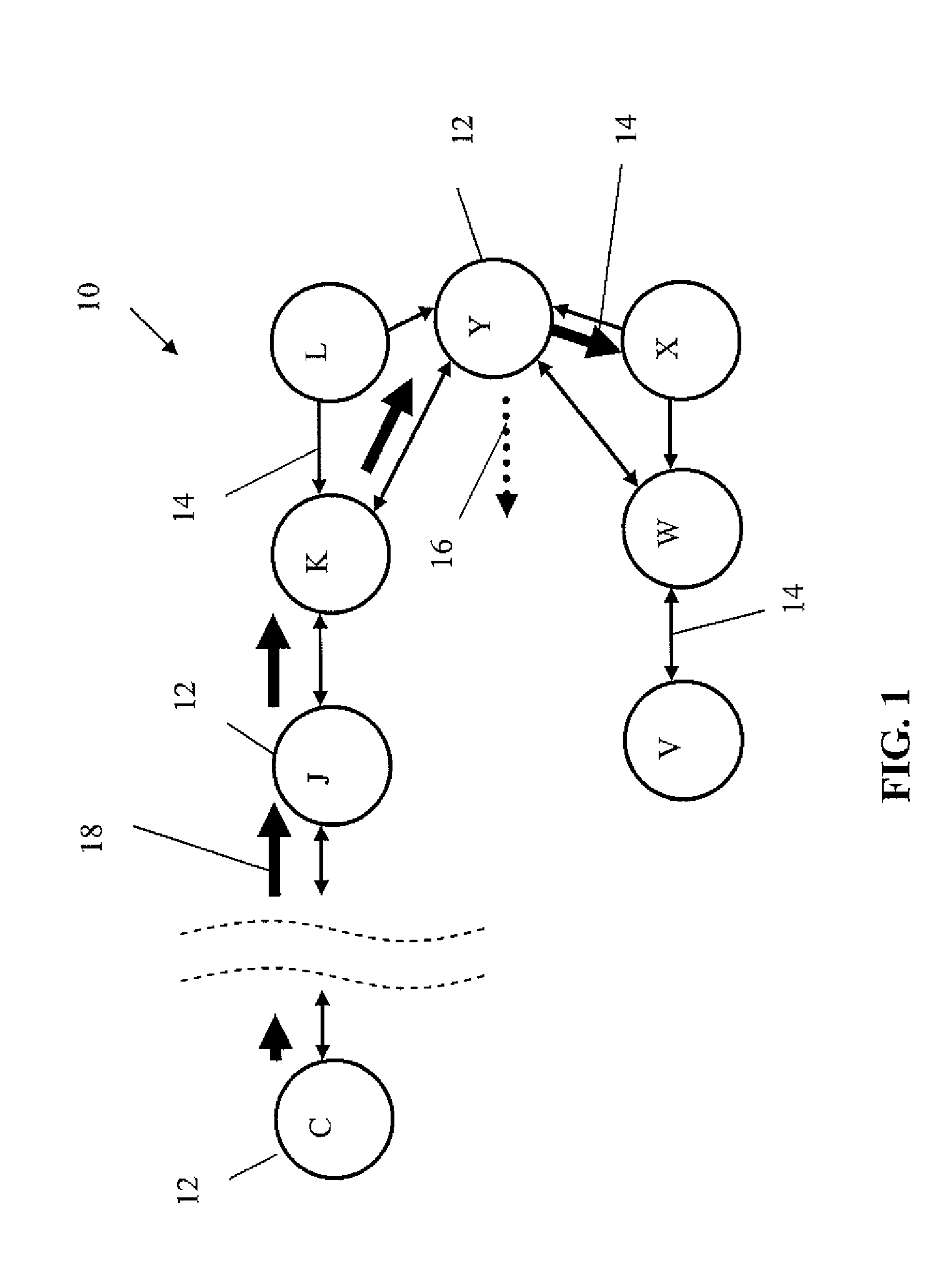
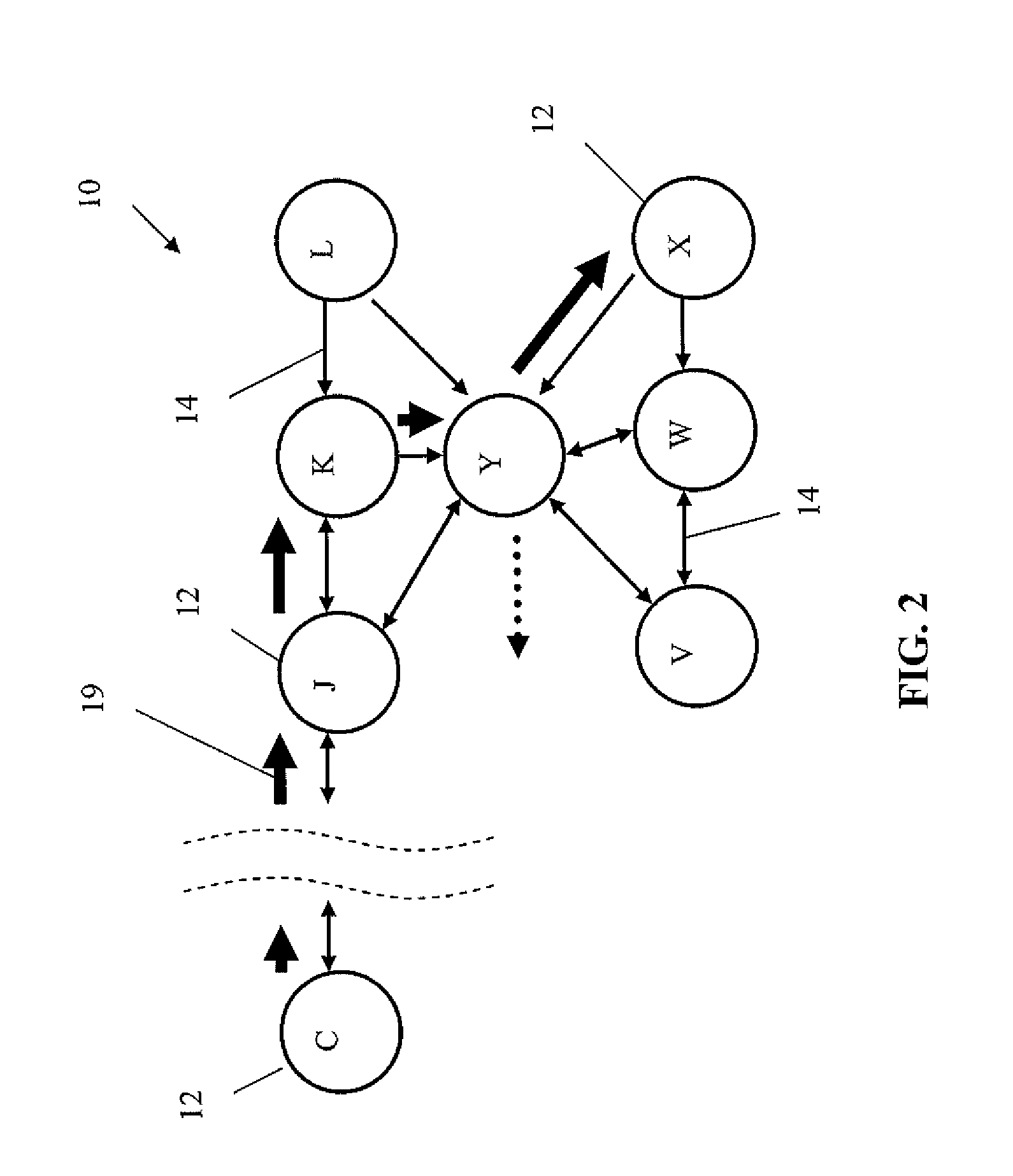
[0018]The present invention will now be described more fully hereinafter with reference to the accompanying drawings, in which preferred embodiments of the invention are shown. This invention may, however, be embodied in many different forms and should not be construed as limited to the embodiments set forth herein. Rather, these embodiments are provided so that this disclosure will be thorough and complete, and will fully convey the scope of the invention to those skilled in the art. Like numbers refer to like elements throughout.
[0019]It is appreciated by one skilled in the art that the embodiments described herein are not limited for use with any particular communication standard (wireless or otherwise) and can be adapted for use with numerous wireless (or wired) communications standards such as Enhanced Data rates for GSM Evolution (EDGE), General Packet Radio Service (GPRS) or Enhanced GPRS (EGPRS), extended data rate Bluetooth, Wideband Code Division Multiple Access (WCDMA), W...
PUM
 Login to View More
 Abstract
Description
Claims
Application Information
 Login to View More