
Simplified self-powered attitude survival indicator
a self-powered, survival indicator technology, applied in the direction of vehicle position/course/altitude control, process and machine control, instruments, etc., can solve the problem that failure of any of these power sources can render a gyroscopic attitude indicator inoperative, and achieve the effect of easy interpretation of aircraft attitude indication
- Summary
- Abstract
- Description
- Claims
- Application Information
AI Technical Summary
Benefits of technology
Problems solved by technology
Method used
Image

Examples
Embodiment Construction
Indicators and Operation
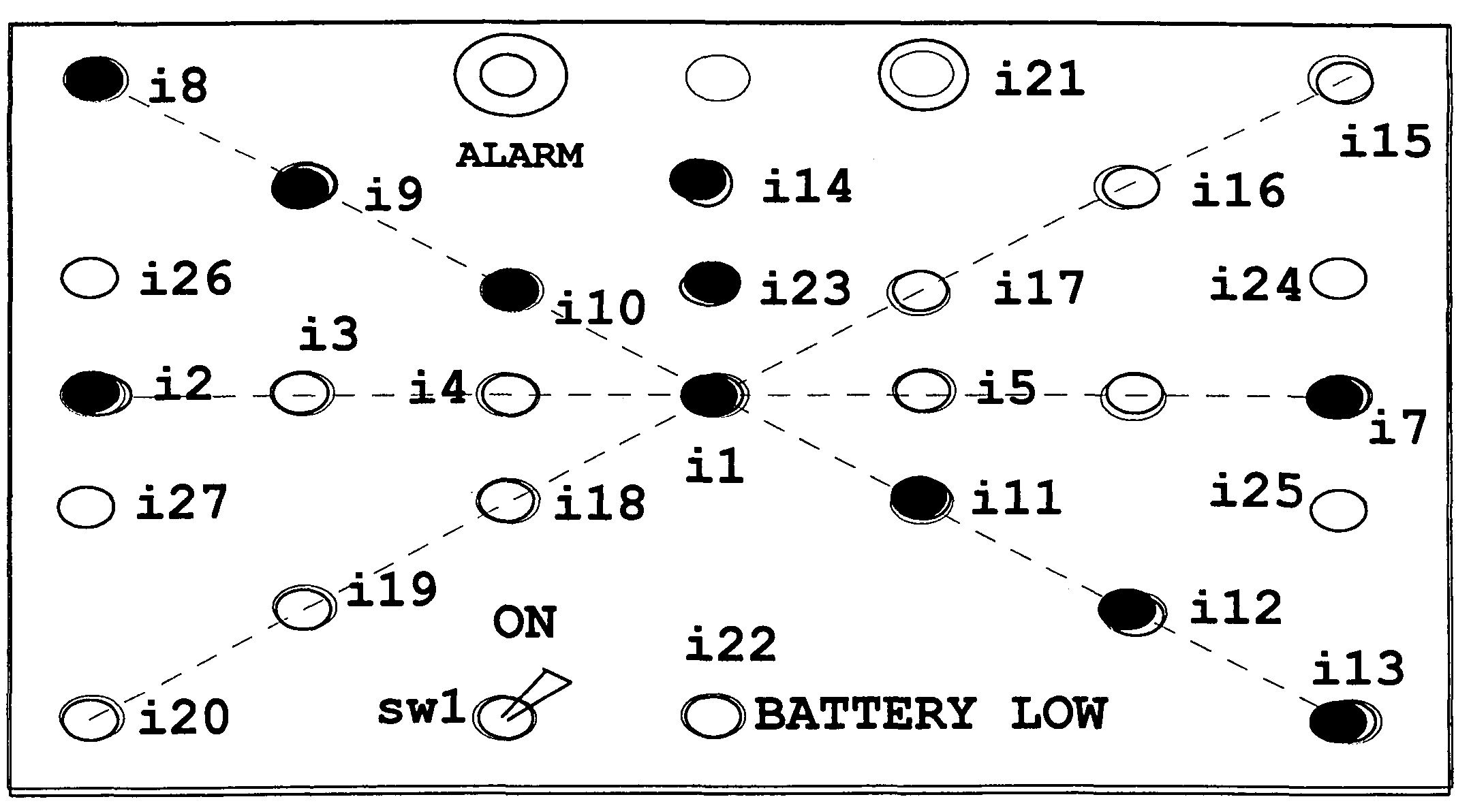
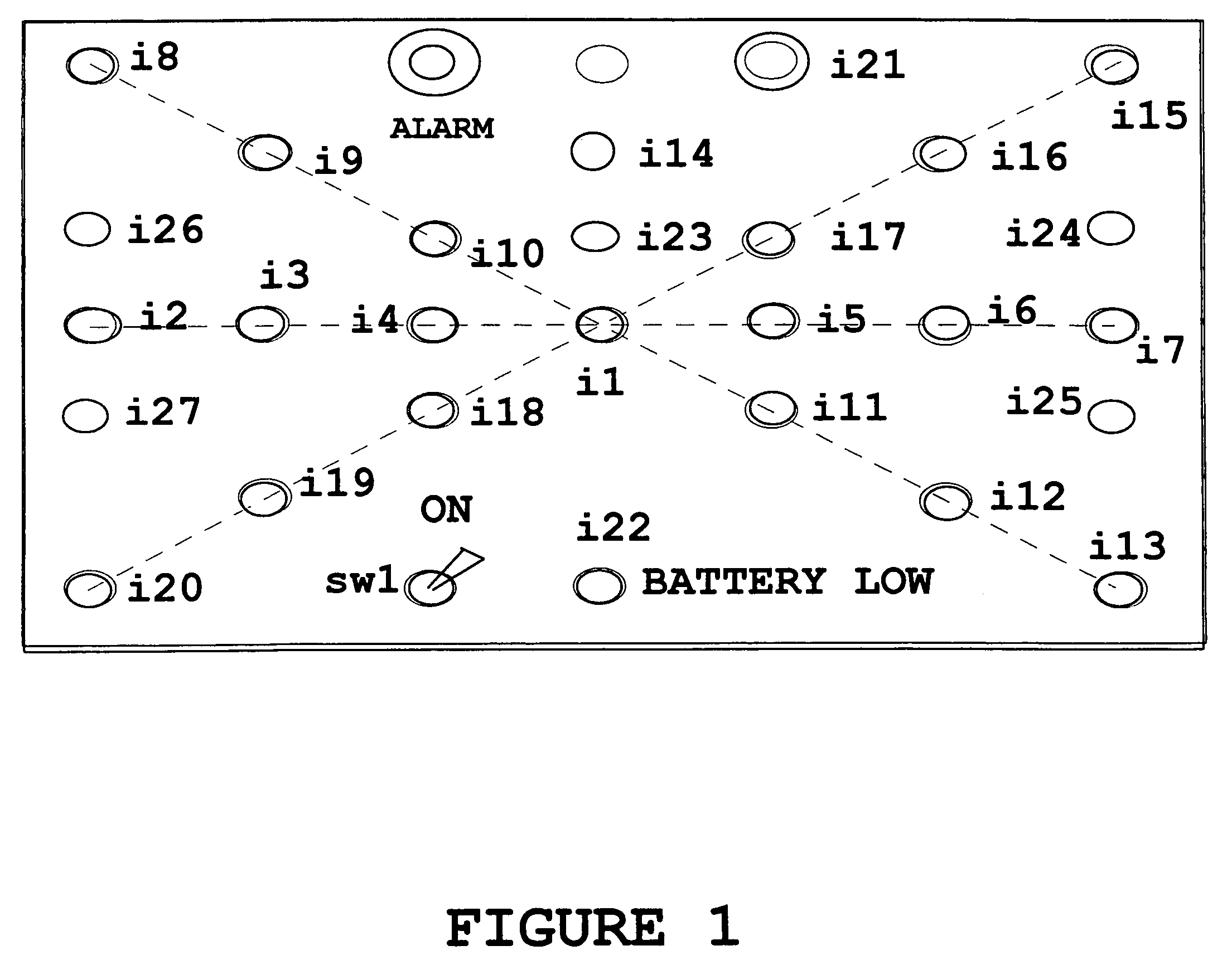
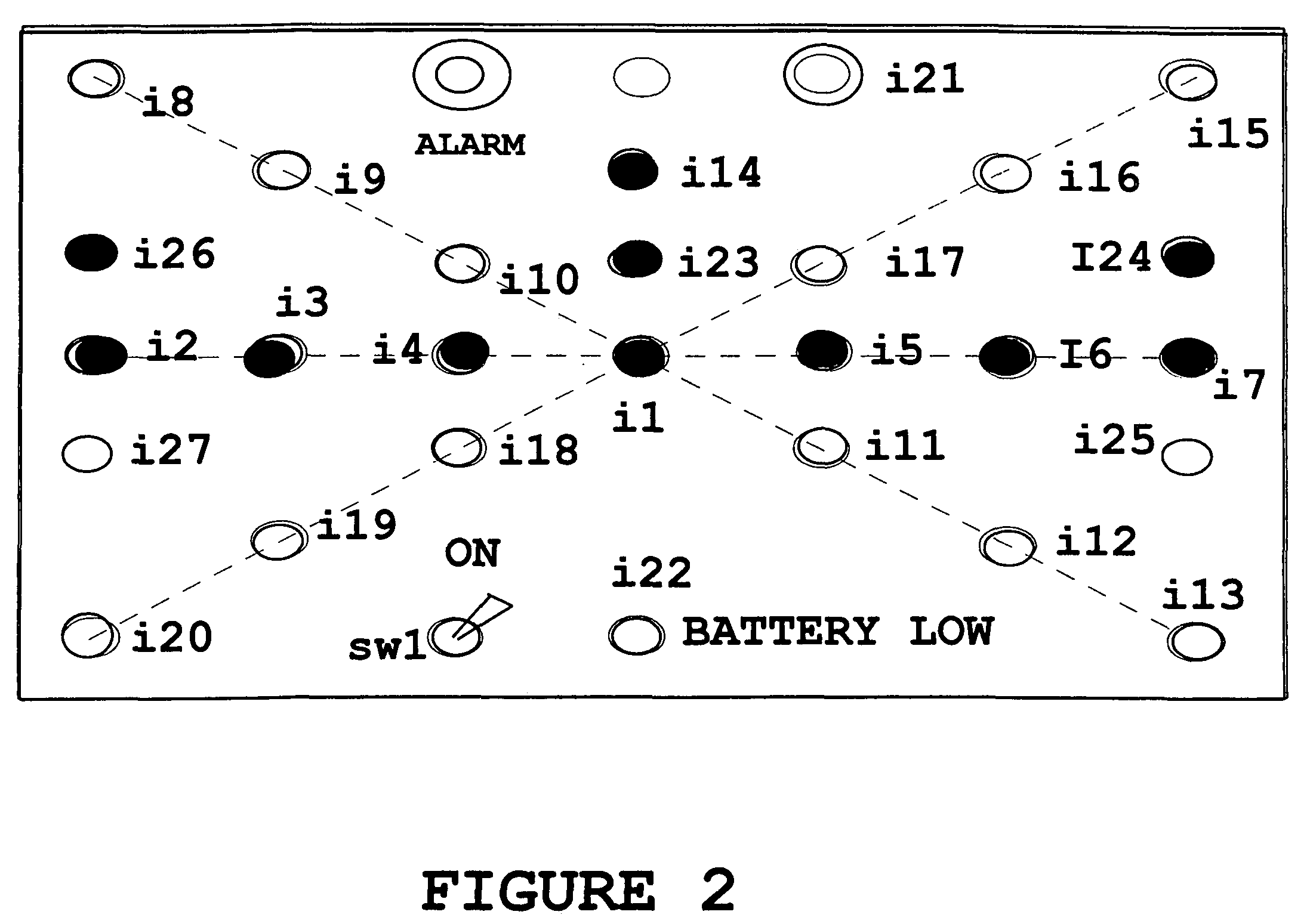
[0023]Referring to FIG. 1, there is illustrated the front panel display of the aircraft attitude indicator device of the present invention identifying the location of the different indicators, which are not numbered sequentially. When power is applied by the operation of SWI, the GREEN indicators (i14, i23, i1, i2, and i7) are illuminated. i2 and i7 represent a display of the reference attitude and i22 shows that the power is applied, but is of low voltage. This indicates that it is time to replace the internal batteries, or apply external power through J1, J2, and / or J3. Indicators i1, i23, and i14 represent the normal position of the rudder. The display of these indicators (i1, i23, and i14) is static when the aircraft changes attitude. Indicators i2 and 17 are fixed horizontal references. When the aircraft is flying straight and level, a plurality of GREEN indicators (i3, i4, i1, i5, i6 and i7), illustrated in FIG. 1, are presented as a full horizontal lin...
PUM
 Login to View More
 Abstract
Description
Claims
Application Information
 Login to View More