
Winding mechanism with tension control function and trawling apparatus
a technology of tension control and winding mechanism, which is applied in the direction of towing/pushing equipment, hoisting equipment, vessel construction, etc., can solve the problems of excessive tension, inability to control the etc., to achieve favorable responsiveness, reduce the effect of consumption energy and constant tension of the winding mechanism
- Summary
- Abstract
- Description
- Claims
- Application Information
AI Technical Summary
Benefits of technology
Problems solved by technology
Method used
Image

Examples
first embodiment
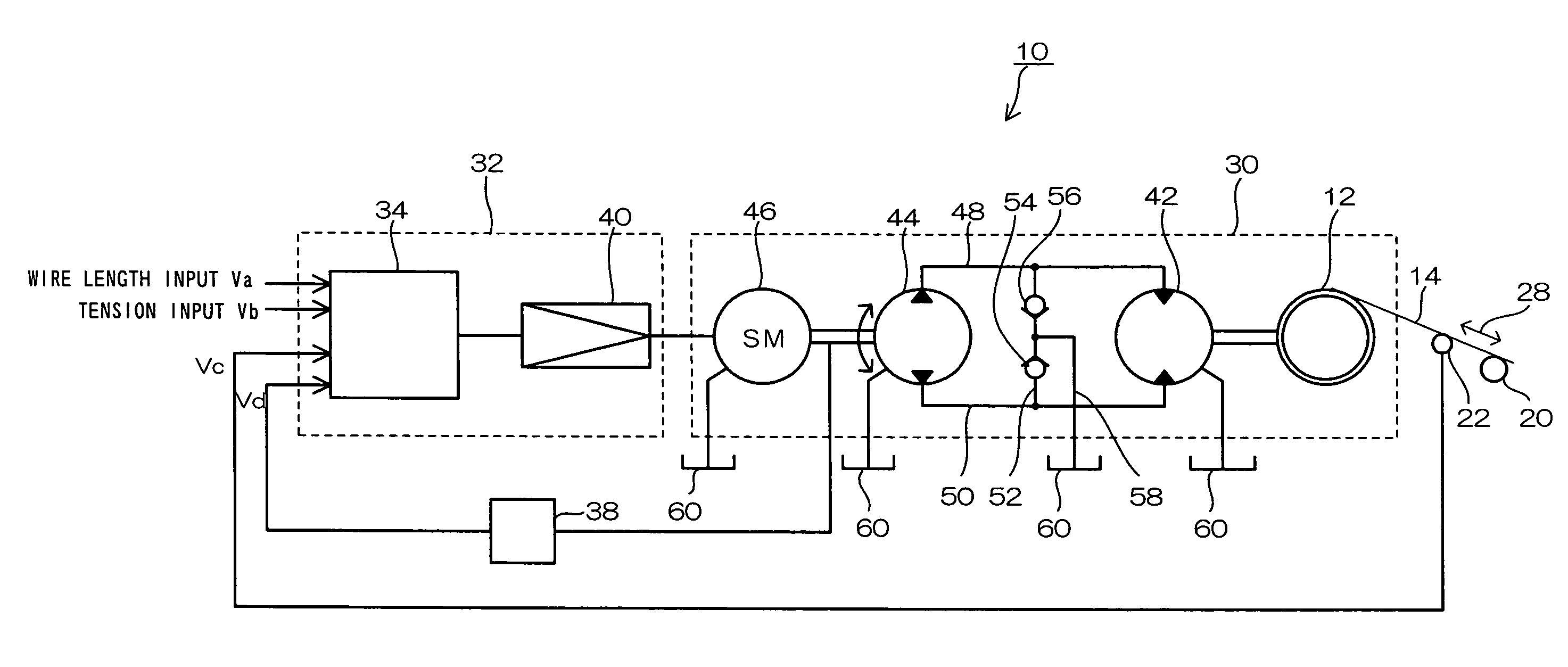
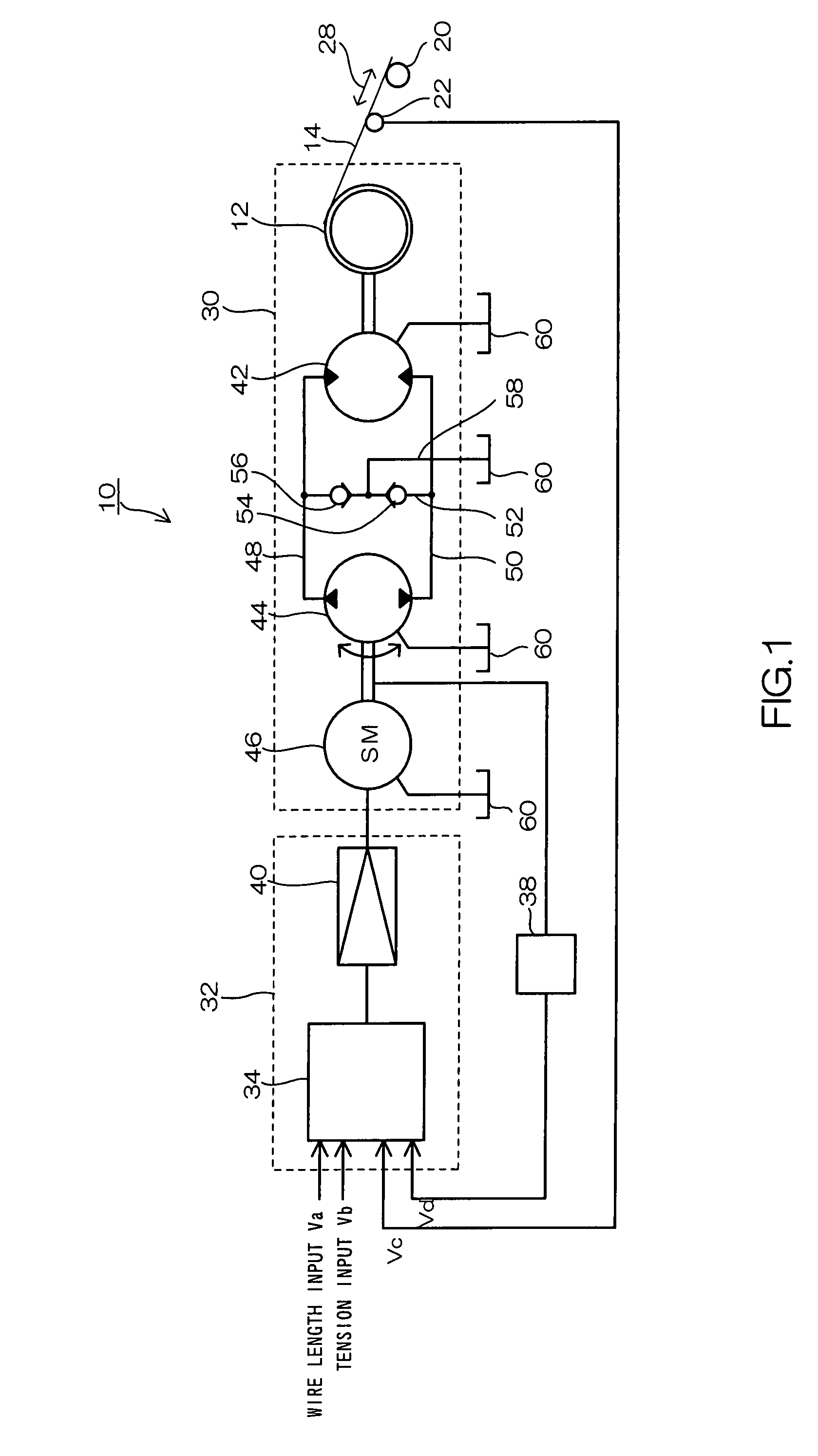
[0031]Embodiments of a winding mechanism with tension control function and a trawling apparatus according to the present invention will be described in detail along with the attached drawings. FIG. 1 is a view showing a schematic structure of a winding mechanism with tension control function according to the present invention.
[0032]A winding mechanism with tension control function 10 (hereinafter called the “winding mechanism”) includes, as shown in FIG. 1, a winding apparatus 30 winding off and winding up a wire 14 and a control unit 32 controlling the winding apparatus 30. The control unit 32 includes a comparator 34 and a servo amplifier 40.
[0033]A set wire length Va and a set tension Vb of the wire 14 are inputted into the comparator 34. Further, a detected signal Vc of a later-described wire length measure 22 and a detected signal Vd of a later-described current detector 38 are inputted into the comparator 34 as feedback signals. In the comparator 34, a difference between the s...
second embodiment
[0055]Furthermore, the oil-pressure pump 74 of the two-way discharge variable volume type of the second embodiment can be used as well.
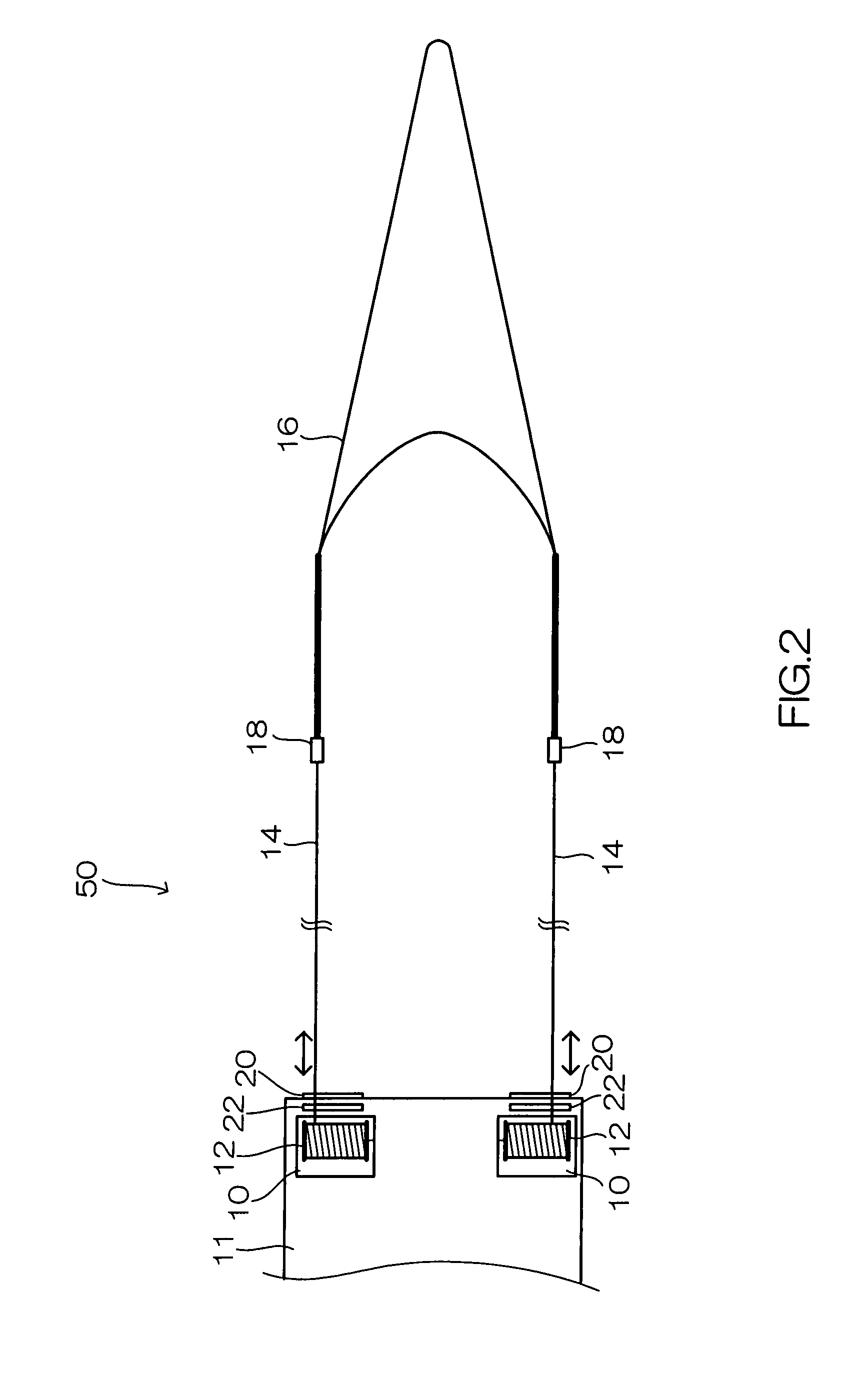
[0056]The winding mechanism with tension control function and the trawling apparatus according to the present invention can keep the tension of the wire constant even when the excessive tension or slack is generated in the wire wound around the drum by winding up or winding off the wire, allowing themselves to be used for a towing work of the fishing net, or the trawl fishing.
PUM
 Login to View More
 Abstract
Description
Claims
Application Information
 Login to View More