Metallic insulator coating for high capacity spark plug

a technology of high capacitance spark plugs and insulators, which is applied in the manufacture of spark plugs, spark plugs, machines/engines, etc., can solve the problems of not being able to meet the expectations of real-world applications, failing to increase the spark intensity of capacitors within spark plugs, and not being able to stand up to the effect of integrating capacitors

US8278808B2Active Publication Date: 2012-10-02PASSAIC RIVER CO INC
36 Cites 18 Cited by

Patent Information

Authority / Receiving Office
US · United States
Patent Type
Patents(United States)
Current Assignee / Owner
Publication Date
2012-10-02

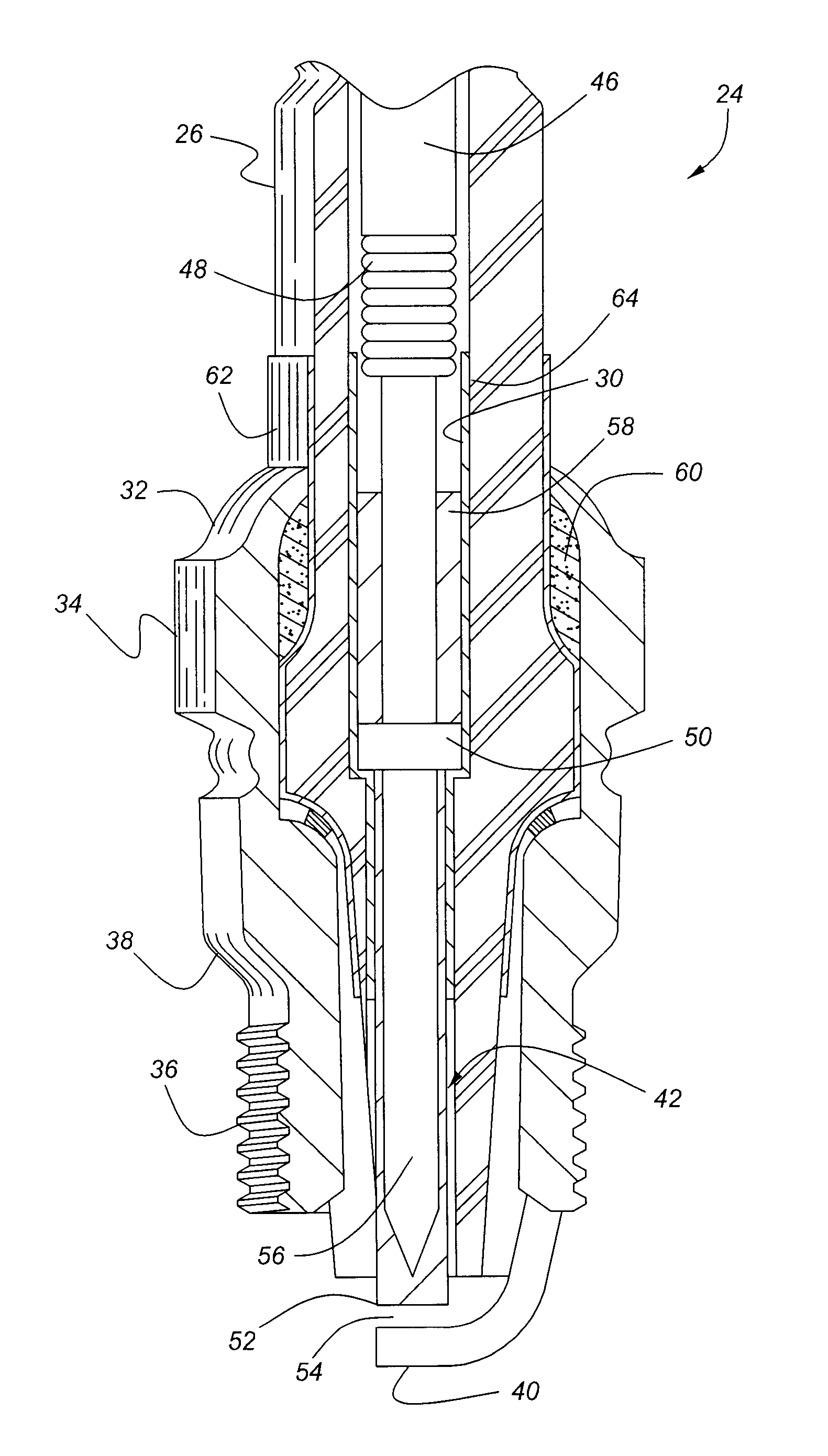
Smart Images

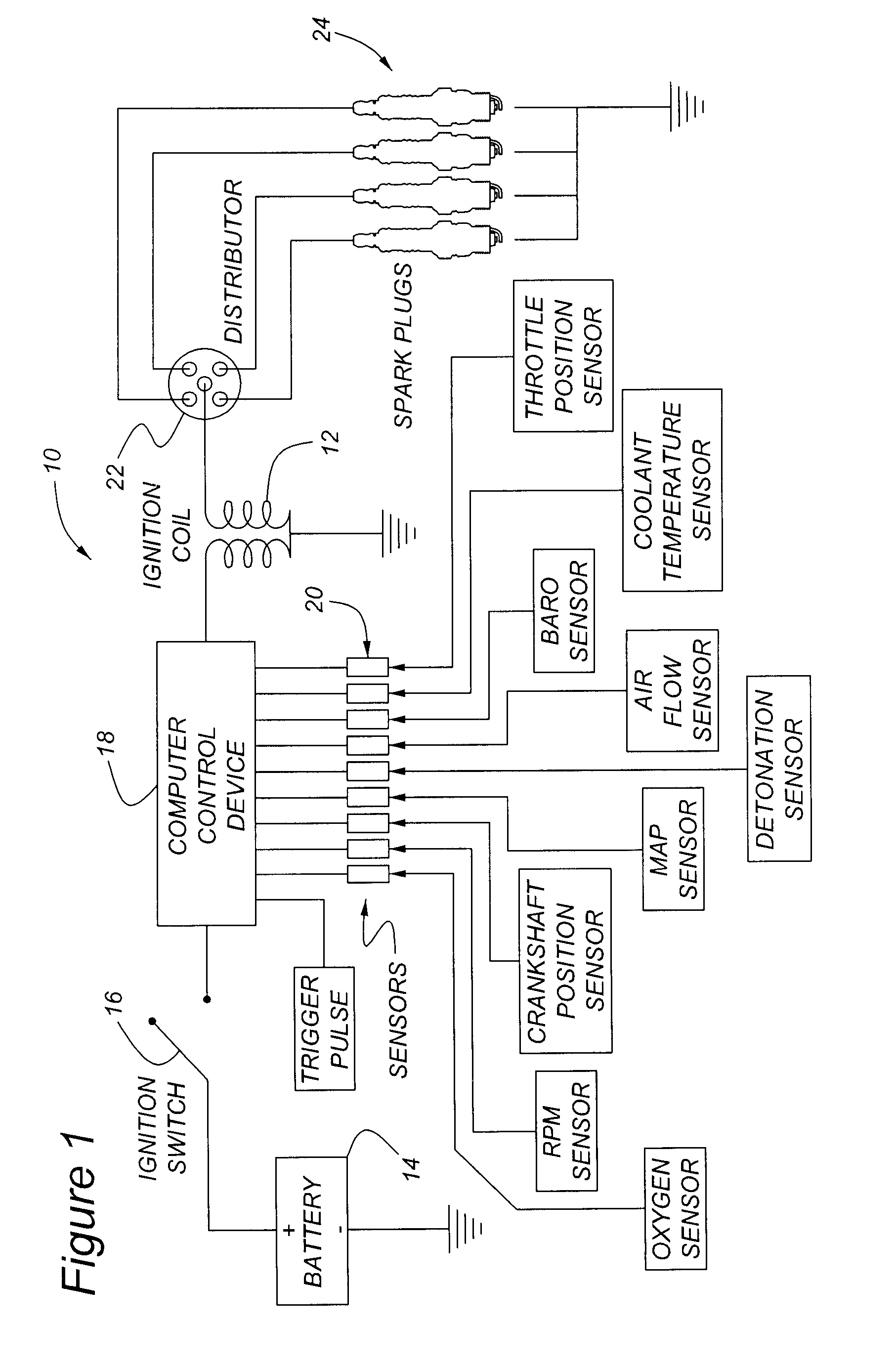
  • Figure 1
    Figure 1
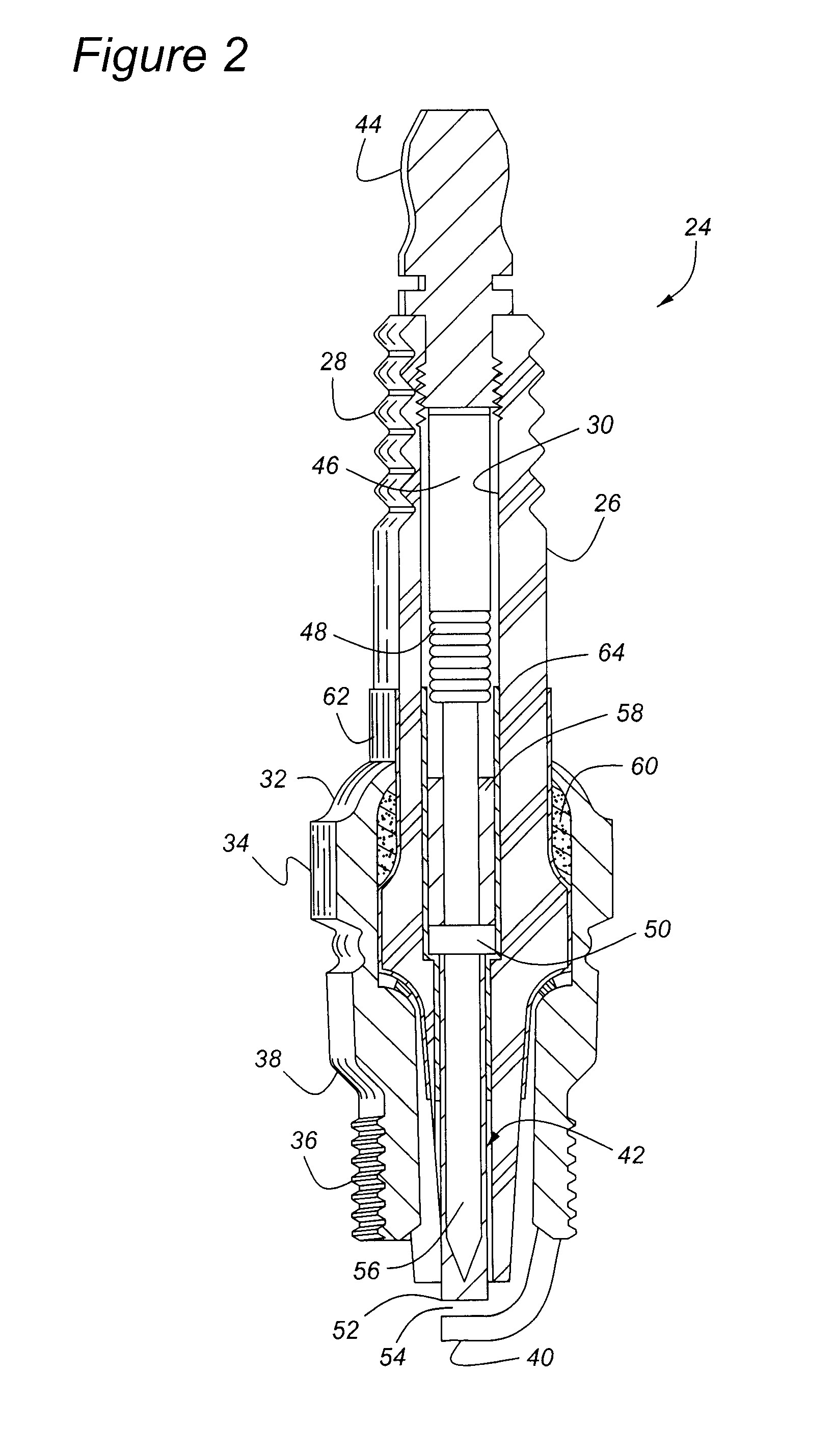
  • Figure 2
    Figure 2
  • Figure 3
    Figure 3
Patent Text Reader

Abstract

A spark plug (24) is used in an ignition system (10) of the type for creating a precisely timed spark to ignite an air / fuel mixture in an internal combustion engine. The spark plug (24) is provided with an integrated capacitor feature to increase the intensity of its spark. The capacitor feature is formed by applying metallic film (62, 64) to the inner (30) and outer surfaces of a tubular insulator (26). The insulator (26), made from an alumina ceramic material, forms a dielectric and sustains an electrical charge when an electrical differential is established between the inner (64) and outer (62) metallic films. The stored electrical charge is discharged with the firing of a spark in the spark gap (54). The inner (64) and outer (62) metallic films can be applied as a paint or ink directly to the surfaces of the insulator (26), or can be mixed with a glazing compound to form conductive coatings simultaneous with the glazing operation. Ganged (62′) or serpentine (62″) micro-plates can be formed within either or both of the inner and outer metallic films to increase the charge-carrying surface area. The metallic film (62, 64) is specially selected from materials that will not migrate into the porous matrix of the ceramic insulator (26). The metallic film (62, 64) is preferably gold, platinum, copper, or a platinum group metal.
Need to check novelty before this filing date? Find Prior Art

Description

CROSS REFERENCE TO RELATED APPLICATIONS

[0001] The present application is a Continuation-in-Part of and claims priority to U.S. patent application entitled METALLIC INSULATOR COATING FOR HIGH CAPACITY SPARK PLUG having Ser. No. 11 / 352,708 and filed on Feb. 13, 2006 now abandoned, the entire disclosure of which is hereby incorporated by reference.BACKGROUND OF THE INVENTION

[0002] 1. Field of the Invention

[0003] The invention relates to an ignition system for a spark-ignited internal combustion engine, and more particularly to a spark plug having high capacitance features.

[0004] 2. Related Art

[0005] Ignition systems for spark-ignited internal combustion engines rely on a spark plug to produce a spark of sufficiently robust discharge so as to ignite a compressed air / fuel mixture. Often, more efficient ignition can be achieved by increasing the intensity of the spark.

[0006] The prior art has taught to incorporate a capacitor into the spark plug to increase the intensity of its spark. Various m...

Examples

Embodiment Construction

[0023]Referring to the Figures, wherein like numerals indicate like or corresponding parts throughout the several views, an exemplary ignition system for a spark-ignited internal combustion engine is generally shown at 10 in FIG. 1. The ignition system 10 can be of any known type, including the standard ignition system with contact points, a breakerless electronic ignition system, a capacitor discharge ignition system, or the like. In the example of FIG. 1, a computer controlled ignition system is depicted, whose primary purpose is to provide a timed electrical discharge of sufficient energy to ignite a compressed air / fuel mixture in the individual cylinders of an internal combustion engine. The voltage needed to produce this electrical discharge is most often generated by means of an auto-transformer where the current in the primary of an ignition coil 12 is interrupted at the desired time of ignition. This is accomplished by a circuit in which the relatively low voltage in a batte...