
Non-ablative radio-frequency treatment of skin tissue
a radio-frequency treatment and skin tissue technology, applied in the field of bipolar electrosurgical instruments, can solve the problems of affecting the beauty of natural healthy skin, affecting the appearance of skin laxity, and the efficacy of such systems in cases with severe skin laxity, etc., to achieve the effect of reducing skin conditions, reducing skin conditions, and increasing the temperature of surface skin
- Summary
- Abstract
- Description
- Claims
- Application Information
AI Technical Summary
Benefits of technology
Problems solved by technology
Method used
Image

Examples
Embodiment Construction
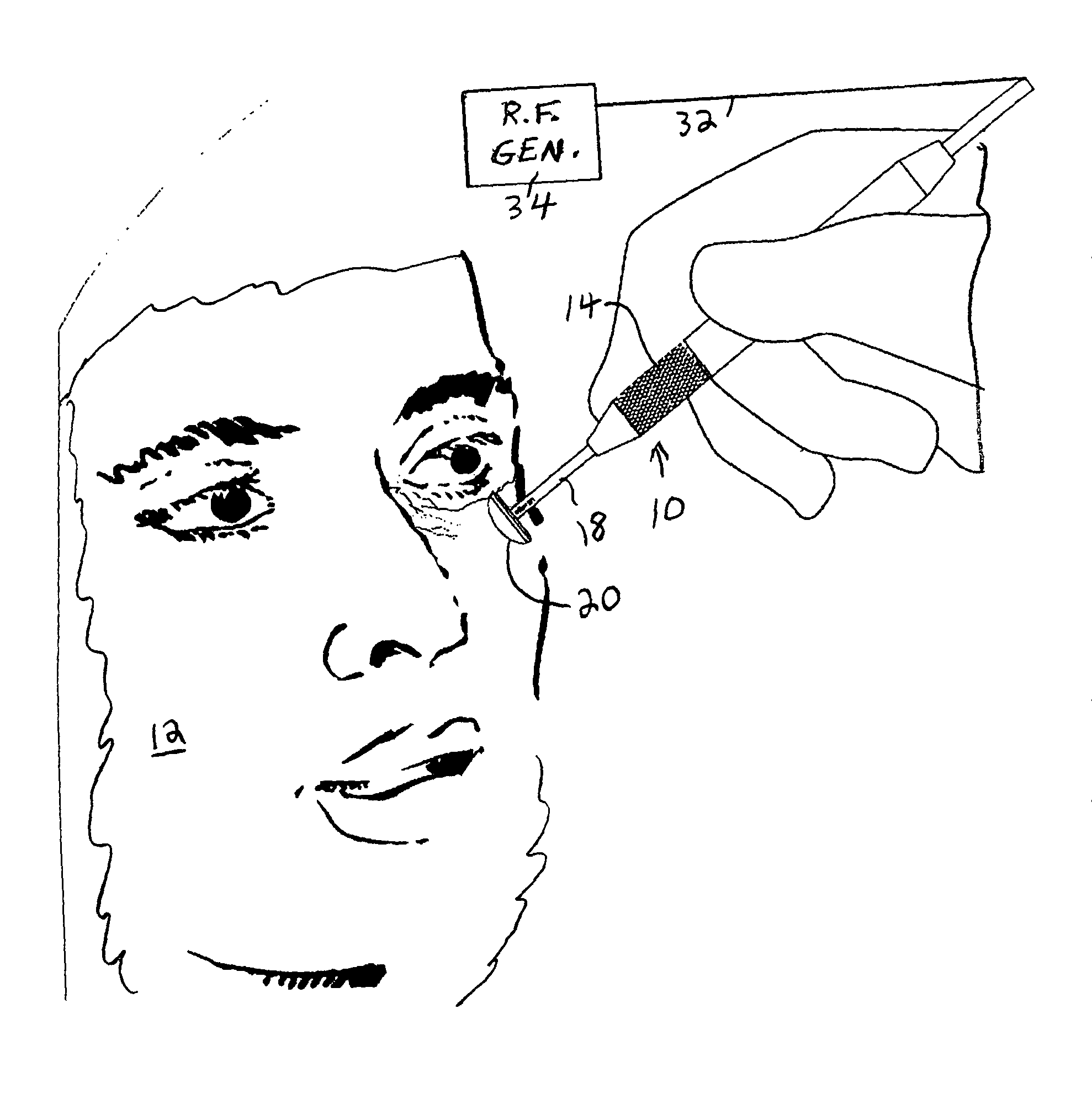
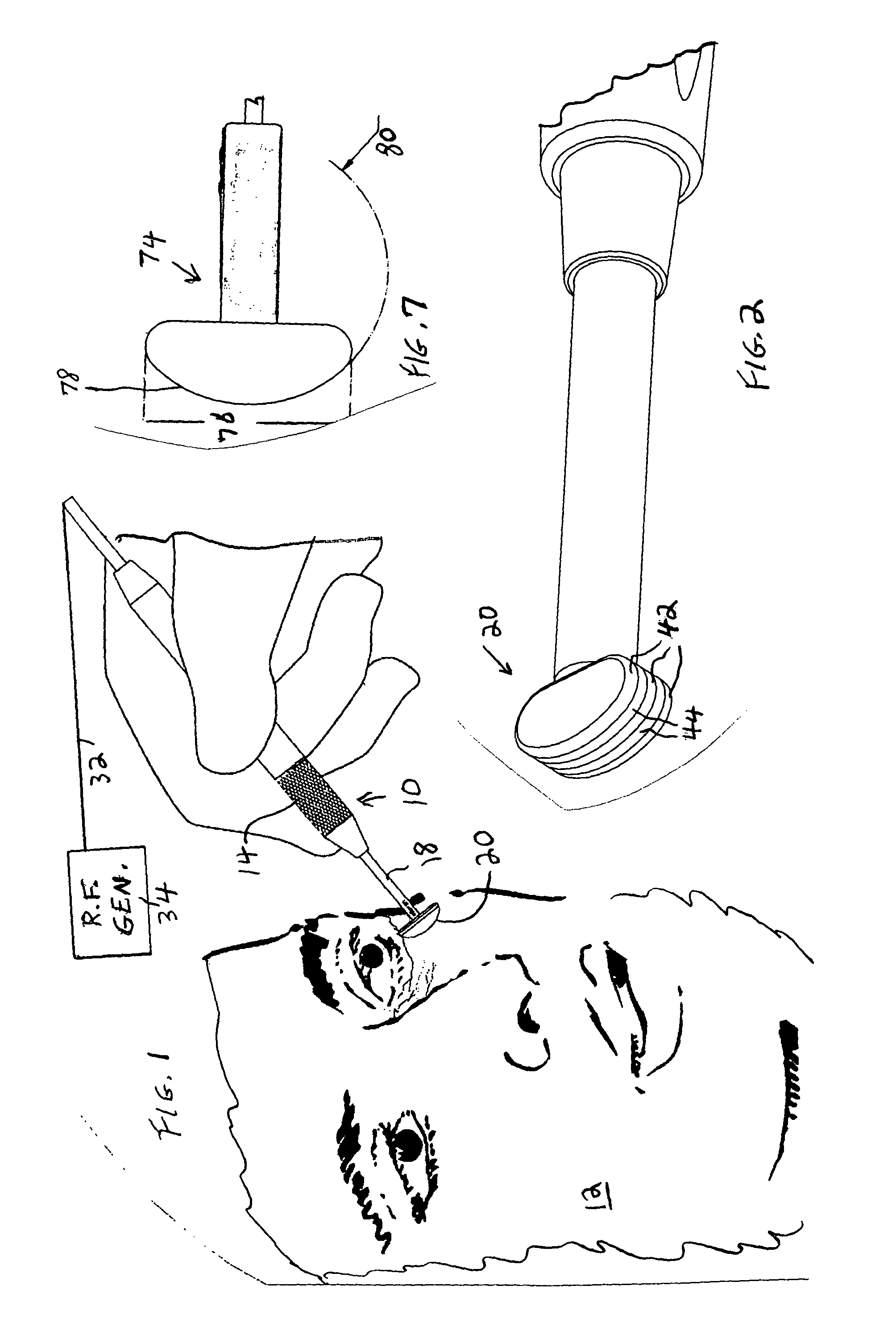
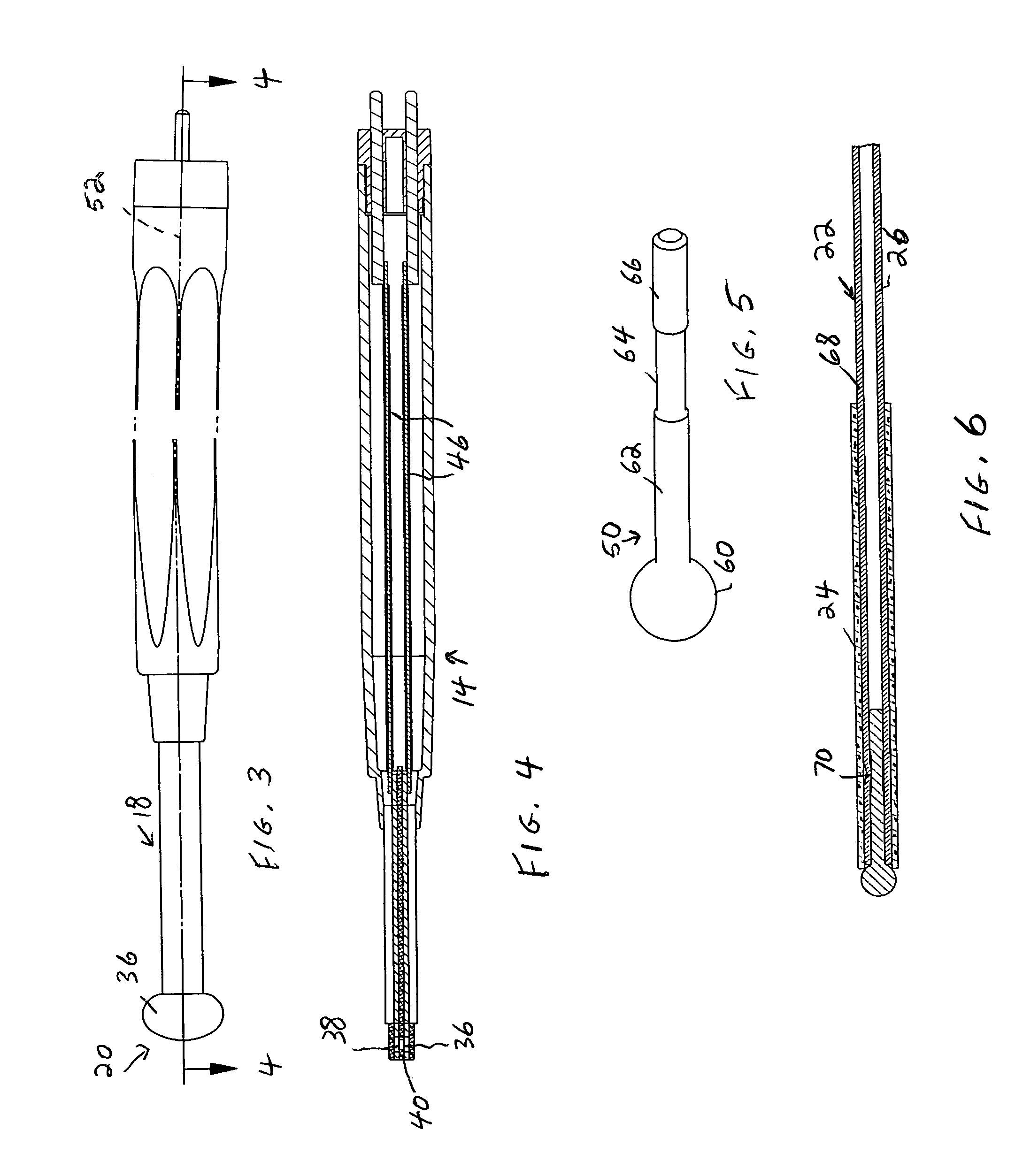
[0021]In the present application, FIG. 1 is a schematic view of one form of radio-frequency generating instrument 10 in accordance with the invention shown being applied to the face 12 of a patient. It comprises a handle or handpiece 14 with a conventional front end adapted to receive and hold rigidly the shank end (not shown in FIG. 1) of an elongated electrode 18 whose working end 20 is shown at the left. The handle or handpiece 14 is electrically-insulating or if conductive is covered with an electrically-insulating coating. Similarly, the electrode's elongated shaft 22 (the FIG. 2 embodiment is bipolar but the FIG. 6 embodiment is monopolar and has a similar external construction) is partly coated with an electrically-insulating coating 24, leaving bare the shank end 26 for electrically-conductive engagement with the handle or handpiece and the active electrode(s) at the working end 20. The electrode 18 is long enough to be applied by the surgeon so as to readily contact any sur...
PUM
 Login to View More
 Abstract
Description
Claims
Application Information
 Login to View More