
Crystal form of prostaglandin analogue, and preparation method and use thereof
a prostaglandin and analogue technology, applied in the field of chemical pharmaceutical fields, can solve the problems of difficult filtering of reaction liquids, increased pulmonary vascular resistance, and death of right ventricular failure and death
- Summary
- Abstract
- Description
- Claims
- Application Information
AI Technical Summary
Benefits of technology
Problems solved by technology
Method used
Image

Examples
example 1
Preparation of the Crude Compound I
[0097]The crude compound I (41 g) without purification can be prepared by the method reported in J. Org. Chern. 2004, 69, 1890-1902, and using (1R,2R,3aS,9aS)-2,3,3a,4,9,9a-hexahydro-1-[(3S)-3-hydroxyoctyl]-1H-phenyl[f]indene-2,5-diol as a starting material.
example 4
Preparation of Crystalline Form B of Compound I
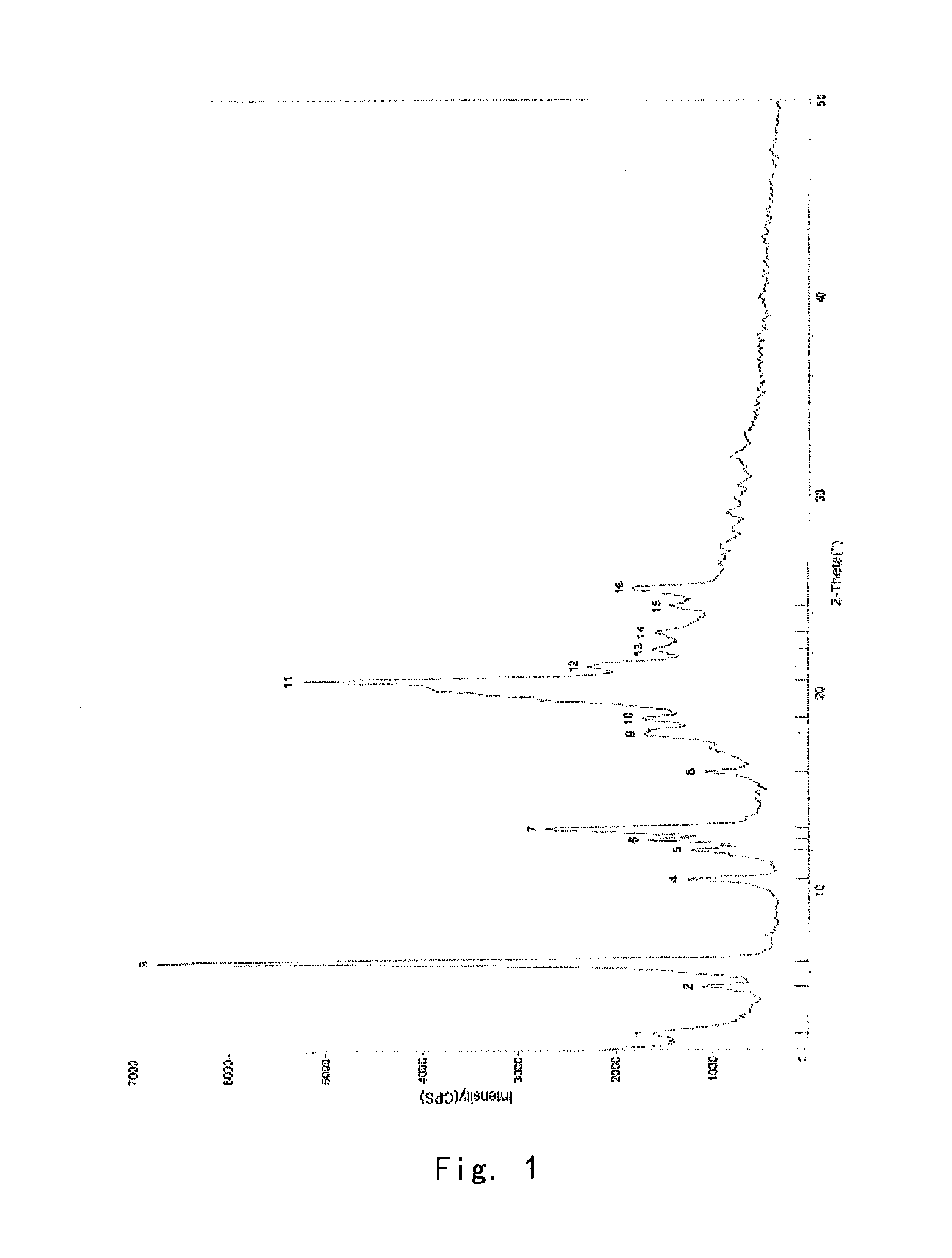
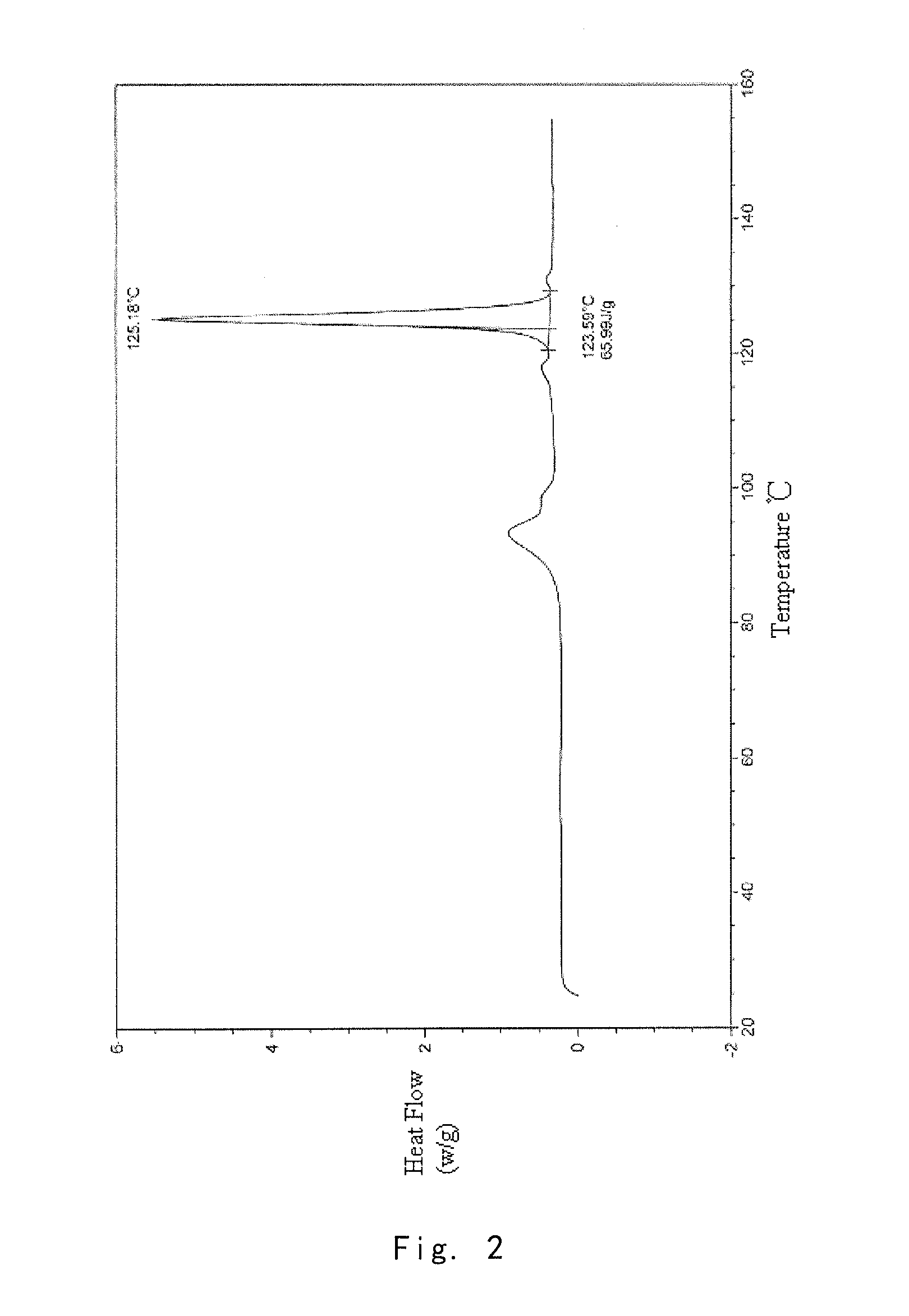
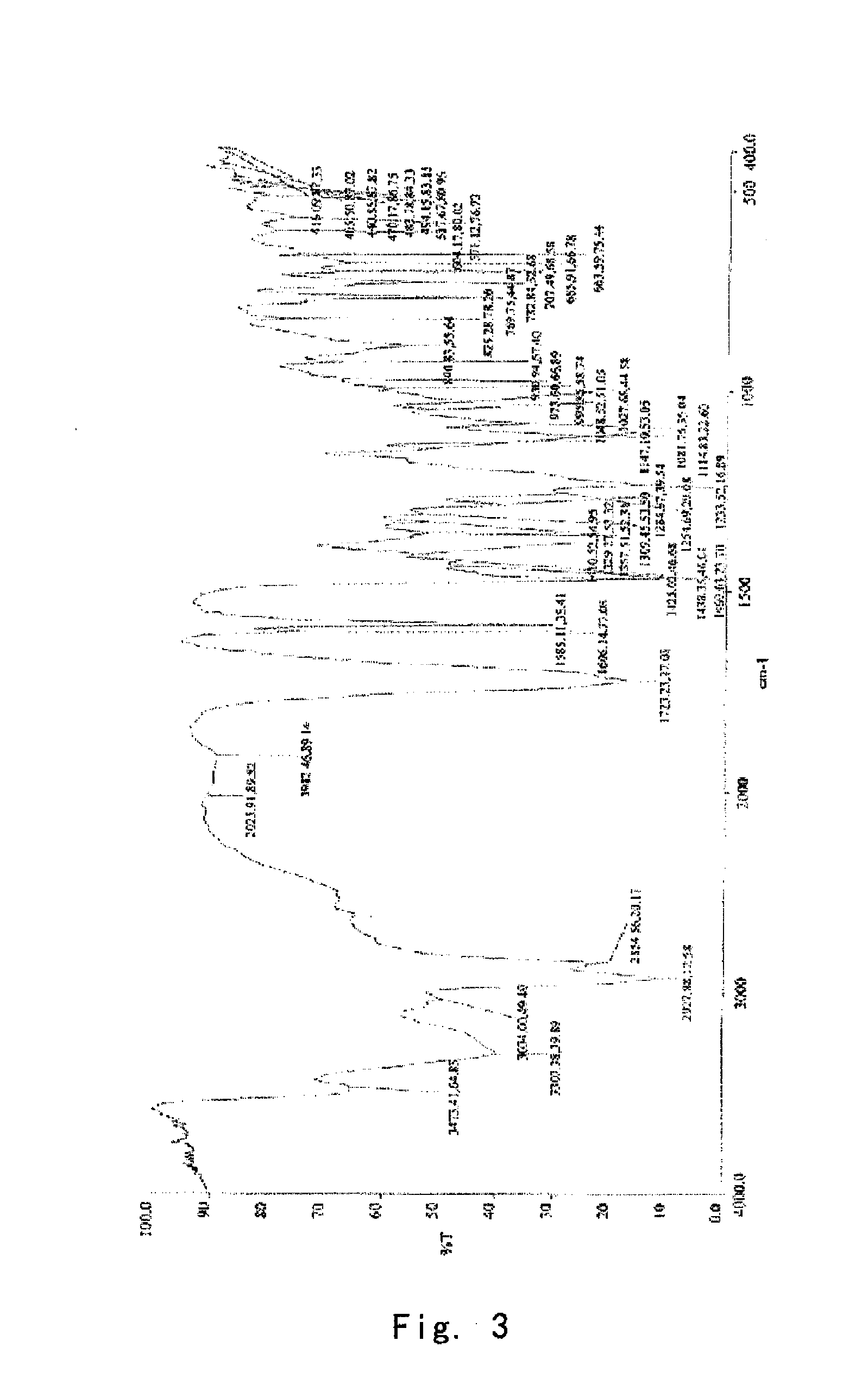
[0100]Into a 25 ml eggplant shaped bottle, was added the crude compound I obtained in Example 1 (1.0 g) and acetone (1.5 ml). The temperature was increased to 40° C. for dissolving the crude compound to give a homogeneous solution. The solution was gradually cooled to 5° C. and stirred for 10 h. The precipitate was filtered off, washed by acetone for 2-3 times at 5° C., and dried to give 0.91 g of crystalline solid. For the solid, X-ray powder diffraction pattern is consistent with FIG. 1, Differential Scanning calorimetry (DSC) is consistent with FIG. 2, and Infrared Spectrometry is consistent with FIG. 3, and HPLC purity is 99.90%. Organic residue: acetone 0.05% (yield: 91%).
example 5
Preparation of Crystalline Form B of Compound I
[0101]Into a 25 ml eggplant shaped bottle, was added the crude compound I obtained in Example 1 (1.0 g) and isopropanol (1.0 ml). The temperature was increased to 50° C. for dissolving the crude compound to give a homogeneous solution. Pure water (1.0 ml) was slowly added. And the resulting mixture was cooled to −5° C. and stirred for 10 h. The precipitate was filtered off, washed by 20% aqueous solution of isopropanol for 2-3 times at −5° C., and dried to give 0.88 g of crystalline solid. For the solid, X-ray powder diffraction pattern is consistent with FIG. 1, Differential Scanning calorimetry (DSC) is consistent with FIG. 2, and Infrared Spectrometry is consistent with FIG. 3, and HPLC purity is 99.41%. Organic residue: isopropanol 0.10% (yield: 88%).
PUM
| Property | Measurement | Unit |
|---|---|---|
| temperature | aaaaa | aaaaa |
| weight | aaaaa | aaaaa |
| temperature | aaaaa | aaaaa |
Abstract
Description
Claims
Application Information
 Login to View More