
Methods of controlling an outdoor lighting system
a technology of outdoor lighting and control methods, applied in the direction of electric variable regulation, process and machine control, instruments, etc., can solve the problems that the activity information provided by the detection system is not immediately suitable and the information of the detection system is not yet used for controlling the outdoor lighting system
- Summary
- Abstract
- Description
- Claims
- Application Information
AI Technical Summary
Benefits of technology
Problems solved by technology
Method used
Image

Examples
Embodiment Construction
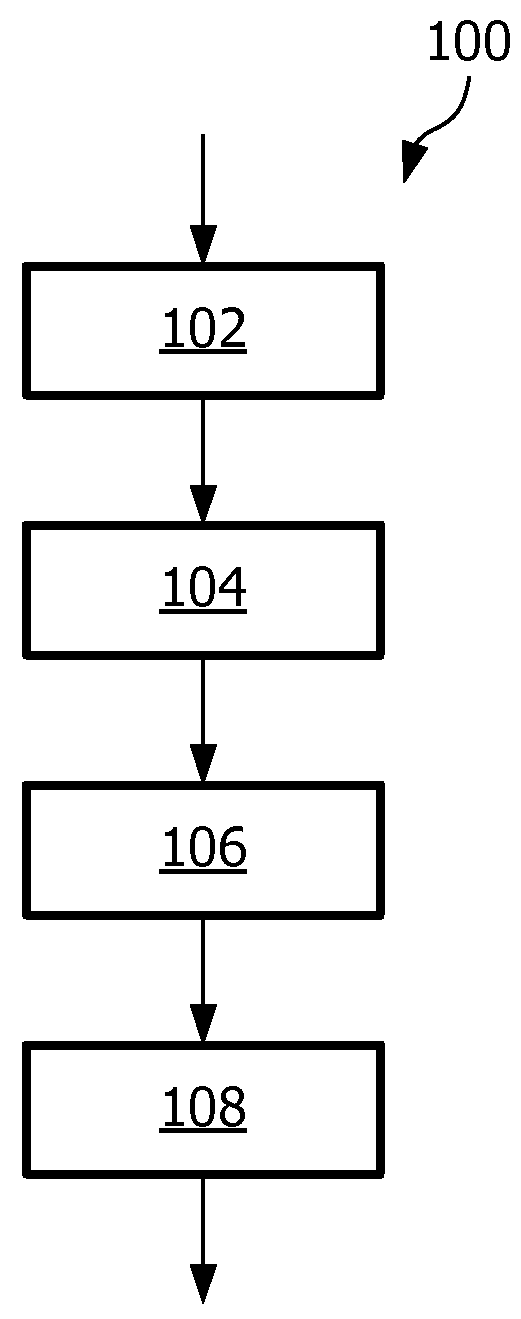
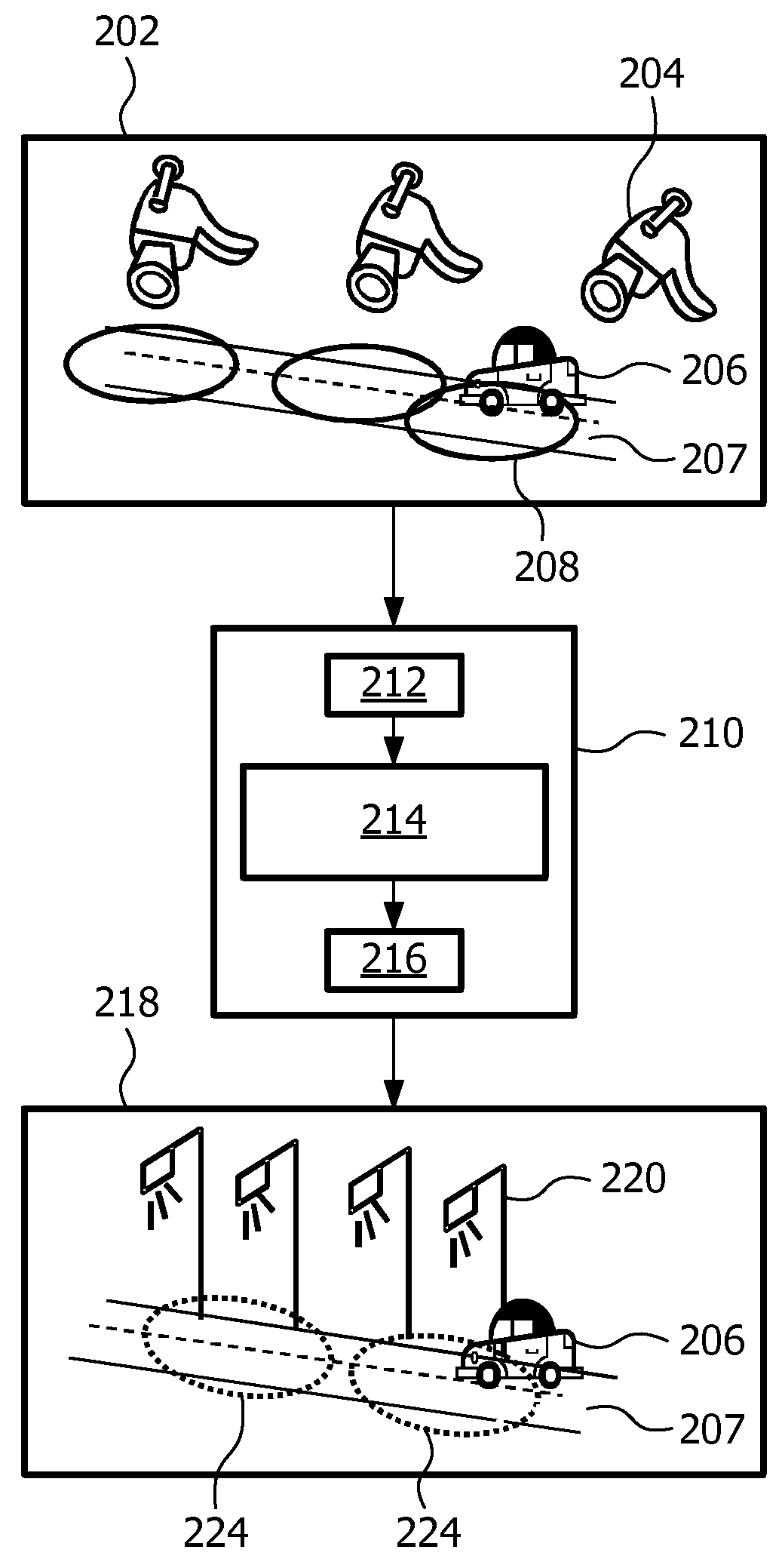
[0059]In FIG. 1 an embodiment of a method 100 according to the first aspect of the invention is shown. The method is suitable for controlling an outdoor lighting system. The outdoor lighting system comprises outdoor lamps which are distributed over spatial segments of an outdoor space. The outdoor lamps of a specific spatial segment illuminate the spatial segment with a controllable light intensity. In step 102 of the method an indication of a sub-area and an activity property for the sub-area are received from a detection system. The detection system detects activity in sub-areas of the outdoor space. At least one sub-area is different from all the spatial segments of the outdoor lighting system. In step 104 the indication of the sub-area is transformed to one or more indications of one or more spatial segments. In step 106 the light intensity level for each one of the one or more spatial segments is determined in dependence on the activity property. In step 108 the one or more ind...
PUM
 Login to View More
 Abstract
Description
Claims
Application Information
 Login to View More