This helps you quickly interpret patents by identifying the three key elements:
Problems solved by technology
Method used
Benefits of technology
Benefits of technology
The patent describes a technique for dynamically generating manifest files for video delivery to users. This is important because traditional manifest files are static, meaning they cannot be adjusted based on the bandwidth available to the video player or the performance of the video sources involved in the delivery. By dynamically generating manifest files, video delivery can be better maintained even if there are changes in bandwidth or server performance. This technique involves fetching a manifest file that lists a sequence of URLs to chunks, which the video player then fetches and stitches together to create a smooth stream for viewing.
Problems solved by technology
As the bandwidth available to a video player and the performance of video sources involved in the delivery of video chunks can vary significantly while video is playing, there are challenges in maintaining a good viewing experience
Method used
the structure of the environmentally friendly knitted fabric provided by the present invention; figure 2 Flow chart of the yarn wrapping machine for environmentally friendly knitted fabrics and storage devices; image 3 Is the parameter map of the yarn covering machine
View more
Image
Smart Image Click on the blue labels to locate them in the text.
Viewing Examples
Smart Image
Click on the blue label to locate the original text in one second.
Reading with bidirectional positioning of images and text.
Smart Image
Examples
Experimental program
Comparison scheme
Effect test
example environment
[0065]Additional detail regarding an example environment in which the techniques described above can be deployed are provided below.
[0066]FIG. 1E is an illustration of an environment in which content is distributed. In the example shown, clients 170-184 are used to access content, such as audiovisual content (e.g., movies, songs, television shows, sporting events, games, images, etc.) that is owned by content owners. The content is stored (or captured) at origin servers 196-198, then distributed via other servers, caches, content distribution networks (CDNs), proxies, etc. (collectively, “content sources”). Content sources employ a variety of technologies and include HTTP, Adobe Flash Media, and Microsoft Internet Information Service servers. In some embodiments content is also distributed by clients (e.g., using peer-to-peer techniques).
[0067]Examples of clients include personal computers (170), laptops (182), cellular phones / personal digital assistants (178), and other types of in...
[0102]“NetStreamProxy” wraps “NetStream,” but prohibits any calls that may adversely impact “NetStream”:[0103]var ns:NetStream=new NetStream( );[0104]var nsProxy:NetStreamProxy=new NetStreamProxy(ns);[0105]ns.play();[0106]LivePass.createMonitoringSession(nsProxy);
[0107]In a third embodiment, the monitoring module is built into the streamer module. The player uses the streamer module. The monitoring module within collects data.
[0110]As mentioned above, clients downloading / streaming content from content providers are also in communication with content distribution monitor 102 on a recurring, time-driven basis. Each heartbeat contains a snapshot of the session state at the time the heartbeat was sent out and a summary of the events and measurements since the last heartbeat or since the start of the session, as applicable. Examples of information that can be included in a heartbeat (thoug...
the structure of the environmentally friendly knitted fabric provided by the present invention; figure 2 Flow chart of the yarn wrapping machine for environmentally friendly knitted fabrics and storage devices; image 3 Is the parameter map of the yarn covering machine
Login to View More
PUM
Login to View More
Abstract
Some content players use manifest files to obtain and play video content. The manifest files include metadata information for obtaining video chunks that together constitute a full video, and can be used by content players to obtain the chunks, stitch them together, and render the video as a stream. Described herein are techniques for dynamically generating manifest files. A request for a manifest file is received, such as from a video player. Manifest file contents are retrieved, such as from an original manifest file. A manifest file to be used by a video player to fetch video chunks is then dynamically generated and returned.
Description
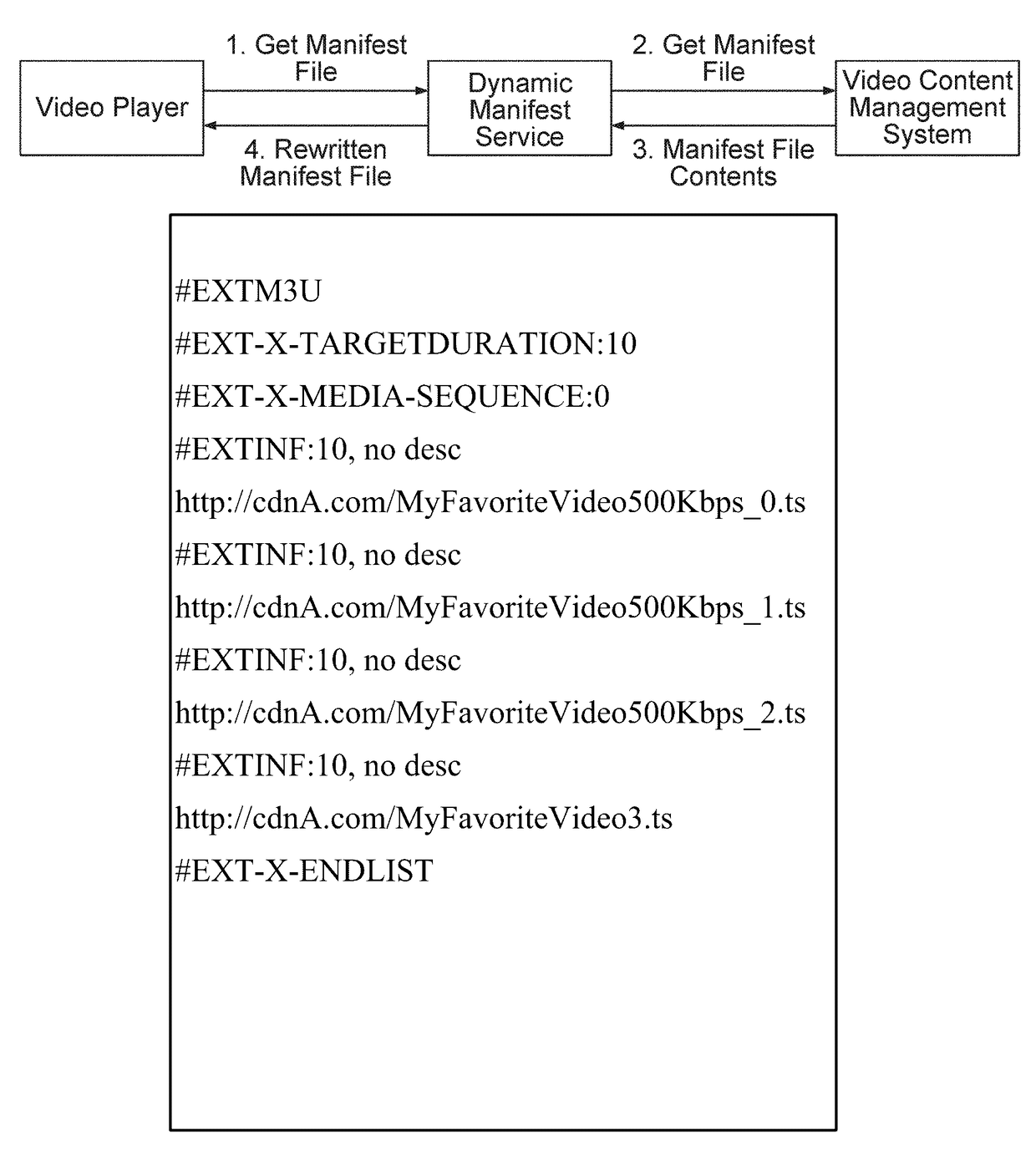
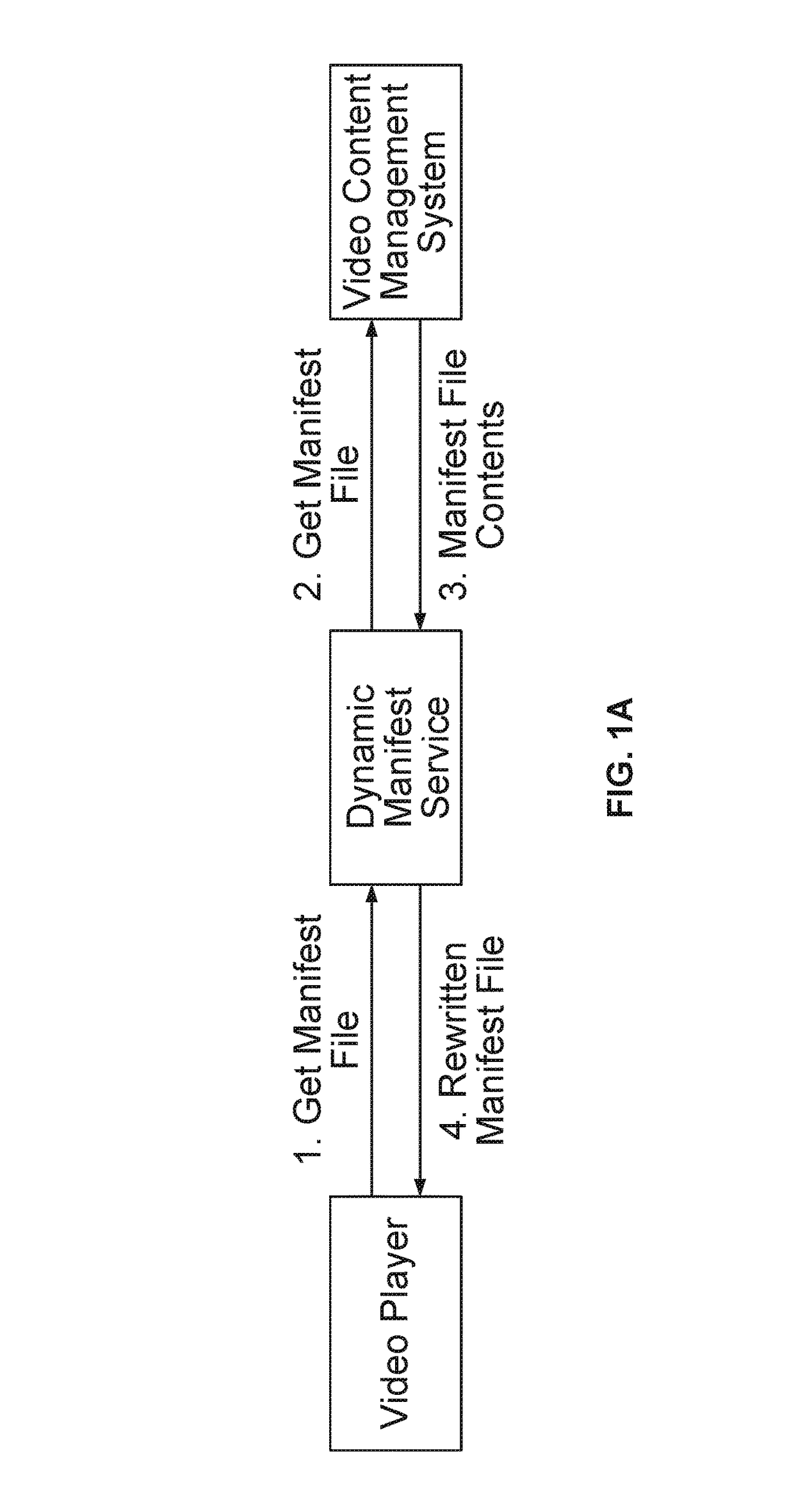
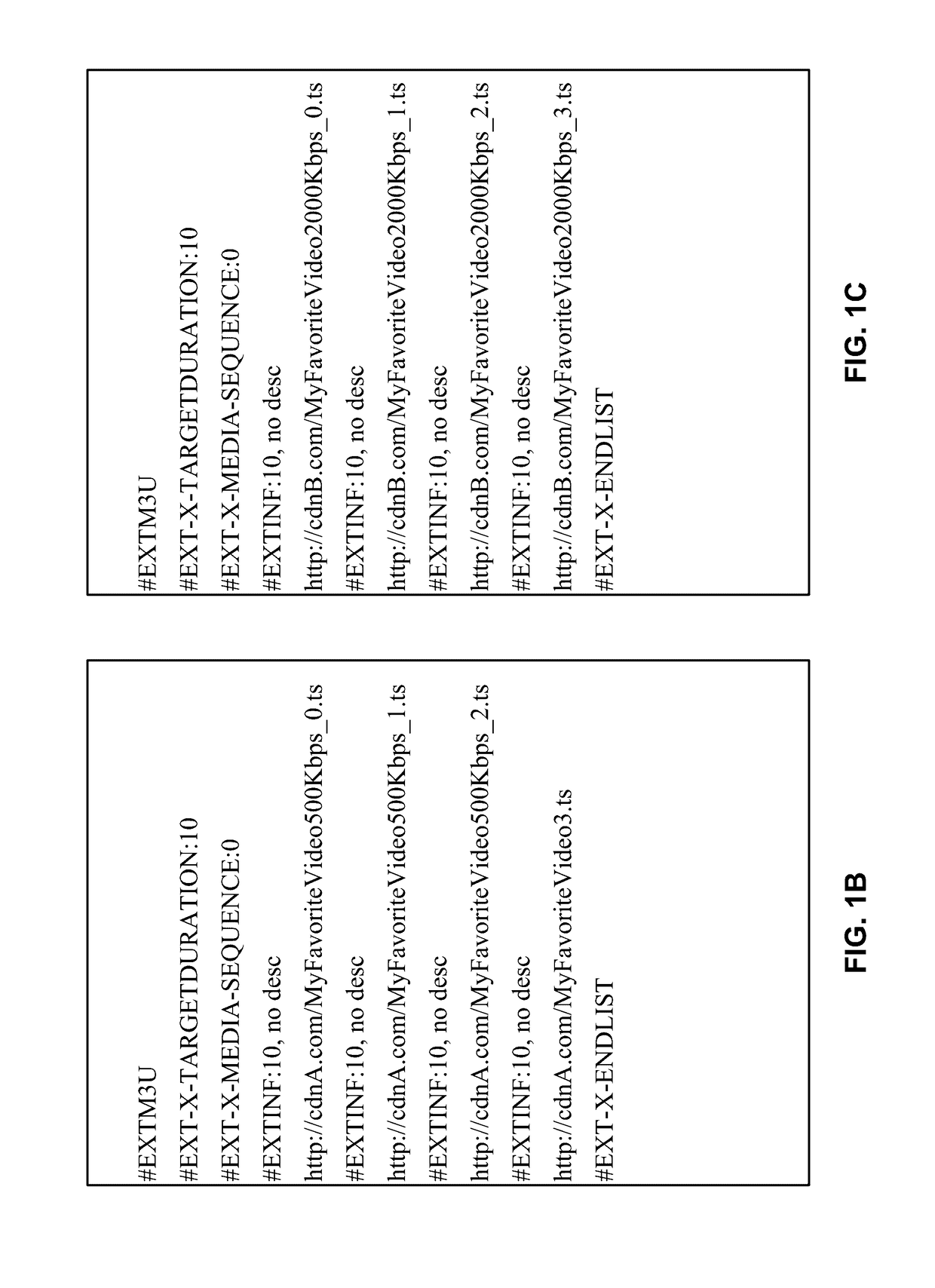
CROSS REFERENCE TO OTHER APPLICATIONS[0001]This application claims priority to U.S. Provisional Patent Application No. 61 / 621,973 entitled DYNAMIC GENERATION OF VIDEO MANIFEST FILES filed Apr. 9, 2012 which is incorporated herein by reference for all purposes.BACKGROUND OF THE INVENTION[0002]Chunk based protocols are used in online video delivery to various devices. As the bandwidth available to a video player and the performance of video sources involved in the delivery of video chunks can vary significantly while video is playing, there are challenges in maintaining a good viewing experienceBRIEF DESCRIPTION OF THE DRAWINGS[0003]Various embodiments of the invention are disclosed in the following detailed description and the accompanying drawings.[0004]FIG. 1A is an example illustration of a protocol to use dynamic manifest files.[0005]FIG. 1B is an example illustration of a static manifest file.[0006]FIG. 1C is an example illustration of a dynamically rewritten manifest file.[0007...
Claims
the structure of the environmentally friendly knitted fabric provided by the present invention; figure 2 Flow chart of the yarn wrapping machine for environmentally friendly knitted fabrics and storage devices; image 3 Is the parameter map of the yarn covering machine
Login to View More
Application Information
Patent Timeline
Application Date:The date an application was filed.
Publication Date:The date a patent or application was officially published.
First Publication Date:The earliest publication date of a patent with the same application number.
Issue Date:Publication date of the patent grant document.
PCT Entry Date:The Entry date of PCT National Phase.
Estimated Expiry Date:The statutory expiry date of a patent right according to the Patent Law, and it is the longest term of protection that the patent right can achieve without the termination of the patent right due to other reasons(Term extension factor has been taken into account ).
Invalid Date:Actual expiry date is based on effective date or publication date of legal transaction data of invalid patent.



 Login to View More
  Login to View More