
A method for removing the inner shielding layer of anodized aluminum channel
A technology of anodized aluminum and inner shielding layer, applied in the direction of anodic oxidation, coating, surface reaction electrolytic coating, etc., can solve the problems of unfavorable electroplating process, undisclosed etching method, non-uniform corrosion, etc., and achieve simple and easy positioning corrosion , good wash-off, high solubility
Patent Information
- Authority / Receiving Office
- CN · China
- Patent Type
- Patents(China)
- Current Assignee / Owner
- Publication Date
- 2021-01-15
Smart Images
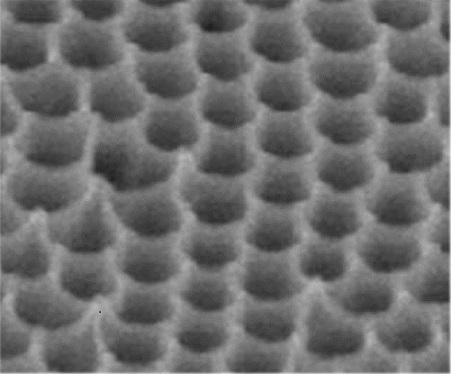
Figure 1 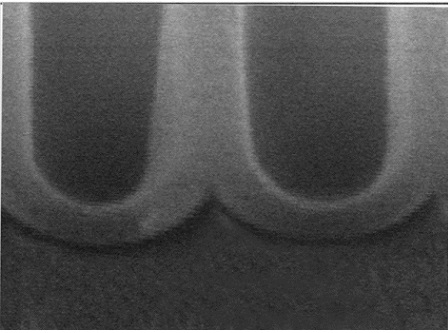
Figure 2 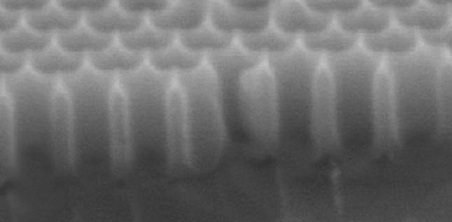
Figure 3
Abstract
Description
technical field
[0001] The invention relates to a method for fixed-point corrosion of the shielding at the bottom of an anodic oxidation channel by a chemical acid agent, which belongs to the field of electrochemically preparing anodic oxidation film aluminum materials without shielding layers, and is especially suitable for the application of improving the bonding force between aluminum materials and electroplated metals.
[0002] technical background
[0003] Aluminum or aluminum alloy anodizing refers to the process of immersing aluminum or aluminum alloy in a suitable electrolyte as an anode for electrification, and forming an oxide film (Al2O layer) on the surface of aluminum or aluminum alloy. The existence of this layer of oxide film can improve the corrosion resistance of aluminum alloy. At the same time, with the help of the special structure of the oxide film and the later treatment process, for example, the anodic oxide film can also be combined with surface paintin...
Examples
Embodiment 1
[0090] First, the preparation method of γ-chloropropyltrichlorosilane used in Example 1-3 is as follows: Take a 1000mL three-necked flask, mix 4.5M trichlorosilane and 3M 3-chloropropene in a constant pressure dropping funnel, Put about 25mL of feed liquid into reaction bottle earlier, then add 0.1mol / L chloroplatinic acid-isopropanol solution 0.15mL, cocatalyst 0.15mL, hydroquinone 0.25g, reaction is triggered rapidly at room temperature, is heated up to Start dropping the feed solution at 75°C, adjust the dropping rate and control the temperature at 80°C, complete the dropwise addition in about 2 hours, then reflux for 3 hours, and end the reaction when the reaction temperature finally rises to 90°C. The reaction mixture was fractionated under normal pressure, and the fraction at 182°C was collected, which was 3-chloropropyltrichlorosilane.
[0091] Secondly, the used pretreatment solution of embodiment 1-3 is consistent, all comprises mechanical polishing-degreasing-hot wat...
Embodiment 2
[0100] (2) Anodizing: use the aluminum material treated in step (1) as the anode, graphite as the cathode, immerse in the electrolyte, and connect the power supply through wires respectively. The electrolyte is a mixture of oxalic acid, phosphoric acid and sulfosalicylic acid , the concentration of oxalic acid is 0.275M, the concentration of phosphoric acid is 0.3M, the concentration of sulfosalicylic acid is 0.1M, the electrolysis parameters are as follows, the voltage is 25V, the temperature is 30 o C, current density 2.5A / dm 2 , time 25min; after anodizing, soak and clean in ethanol, and use vacuum drying to remove the electrolyte in the oxide film. The whole process strictly avoids the aluminum after anodizing from contacting air or water to avoid sealing holes.
[0101] (3) Protective film for positioning marks: Soak the aluminum material treated in step (2) in a toluene solution of γ-chloropropyltrimethylsilane, the concentration is 15wt.%, and the amount is 1% of the we...
Embodiment 3
[0104] (2) Anodizing: use the aluminum material treated in step (1) as the anode, graphite as the cathode, immerse in the electrolyte, and connect the power supply through wires respectively. The electrolyte is a mixture of oxalic acid, phosphoric acid and sulfosalicylic acid , the concentration of oxalic acid is 0.275M, the concentration of phosphoric acid is 0.3M, the concentration of sulfosalicylic acid is 0.1M, the electrolysis parameters are as follows, the voltage is 25V, the temperature is 30 o C, current density 2.5A / dm 2 , time 25min; after anodizing, soak and clean in ethanol, and use vacuum drying to remove the electrolyte in the oxide film. The whole process strictly avoids the aluminum after anodizing from contacting air or water to avoid sealing holes.
[0105] (3) Protective film for positioning marks: Soak the aluminum material treated in step (2) in a toluene solution of γ-chloropropyltrimethylsilane, the concentration is 15wt.%, and the amount is 1% of the we...