
Television control-oriented finger-mouse interaction method
A TV control and interactive method technology, applied in the field of TV remote control, can solve the problems of increasing buttons, not being able to highlight features, complicated remote control design, etc., and achieve the effects of reducing the impact of light changes, high detection rate, and low light impact
- Summary
- Abstract
- Description
- Claims
- Application Information
AI Technical Summary
Problems solved by technology
Method used
Image

Examples
Embodiment Construction
[0033] The implementation of the present invention will be further described below in conjunction with the accompanying drawings, but the implementation and protection scope of the present invention are not limited thereto.
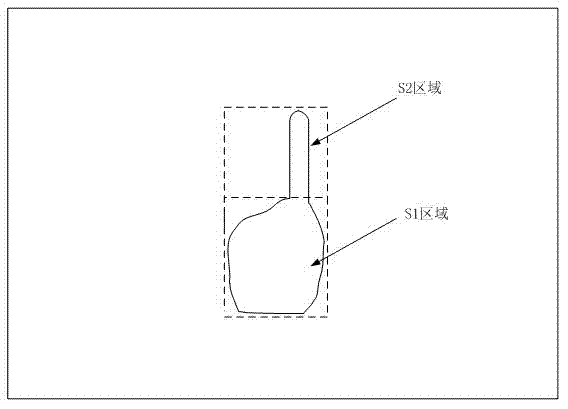
[0034] figure 1 Gesture schematic diagram of fingertip mouse interaction method, in which is an image model of a fist with an upright index finger. S1 refers to the fist area. The fist is detected by the template matching method, and then the coordinate value of the rectangular box around the fist is recorded. S2 refers to the index finger area above the fist. The index finger detection in the S2 area is based on the fist image in S1 and the index finger skin color distribution achieved in unison. The two rectangles surrounded by dotted lines in the figure are the areas for subsequent image processing after the fist detection is completed.
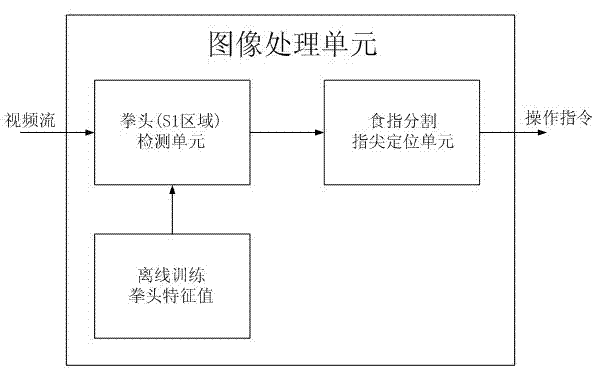
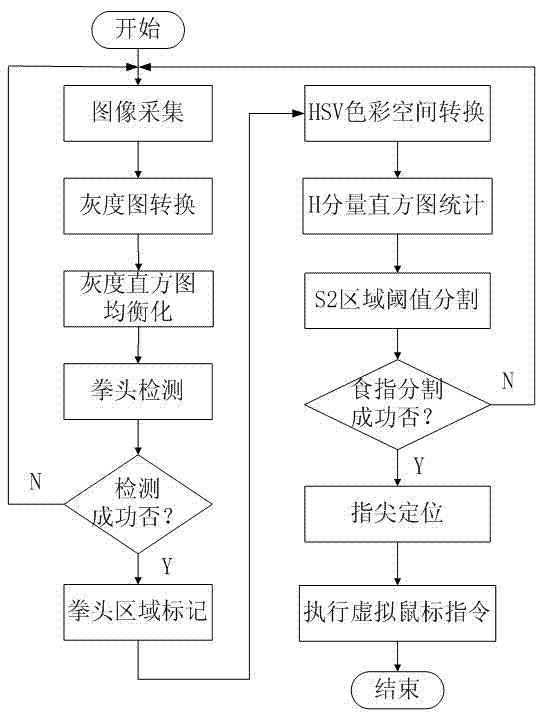
[0035] figure 2 The image processing unit includes three processes: fist detection, offline training of fist ei...
PUM
 Login to View More
 Abstract
Description
Claims
Application Information
 Login to View More