
Purposes of flavane derivatives
A use and pharmaceutical technology, applied in the field of pharmaceutical use of flavan derivatives, can solve the problems of unexplained anti-hypoxic active ingredients, anti-hypoxic activities of flavonoids and flavan compounds have not been reported, etc.
- Summary
- Abstract
- Description
- Claims
- Application Information
AI Technical Summary
Problems solved by technology
Method used
Image

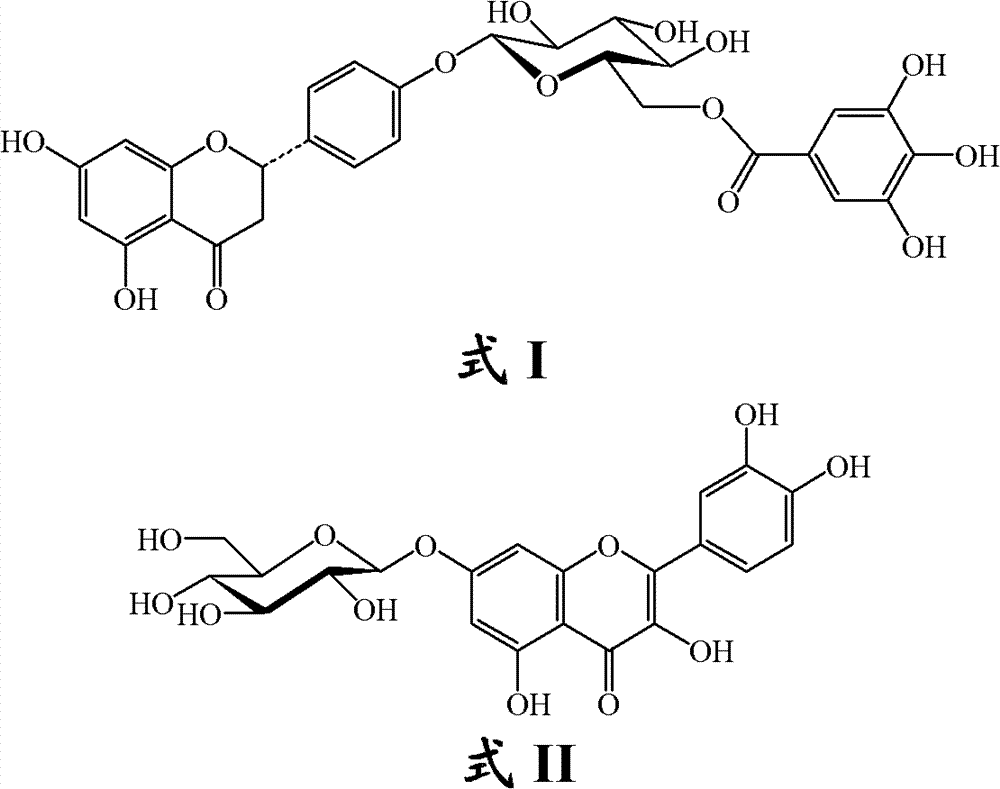
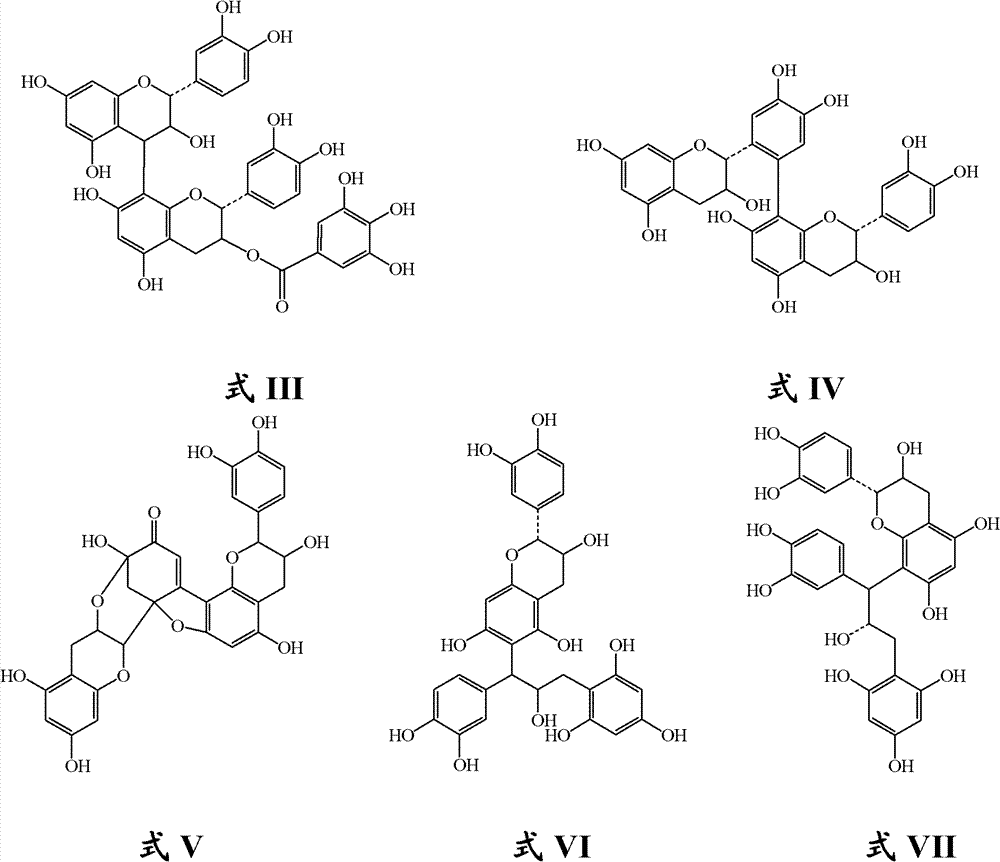
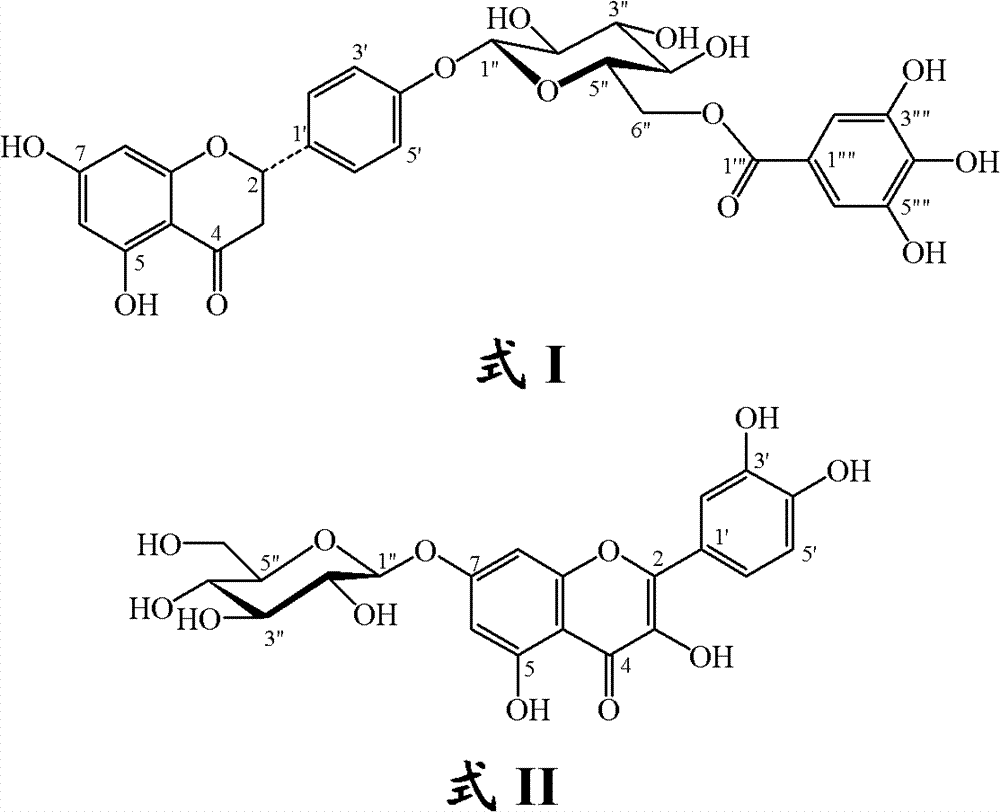
Examples
Embodiment 1
[0032] Embodiment 1. The separation and preparation of compound I
[0033] 3.2kg of dry bark of Choerospondias axillaries (Roxb.) Burtt. et Hill. (collected in August 1999 from Mengla, Yunnan) was pulverized and extracted with commercially available medical ethanol at room temperature, each time with 95% (V / V ) in 25 liters of aqueous ethanol soaked for 7 days, extracted 4 times altogether, combined extracts, concentrated and dried under reduced pressure to obtain 750 g of ethanol extract. 750 g of the ethanol extract was suspended in 3 liters of water, extracted successively with chloroform, ethyl acetate, and n-butanol, each solvent was used for 3 liters each, extracted 4 times respectively, the same extracts were combined, concentrated and dried under reduced pressure, and obtained 60 g of the chloroform extract, 310 g of the ethyl acetate extract, 300 g of the n-butanol extract, and 80 g of the aqueous layer residue.
[0034] Take 100g of ethyl acetate extract, dissolve i...
Embodiment 2
[0037] Embodiment 2. The separation and preparation of compound II and III
[0038] Dissolve 300 g of the n-butanol extract of Jujube jujube obtained in Example 1 with an appropriate amount of methanol, add an appropriate amount of macroporous resin AB-8 for adsorption, dry, and put on the macroporous resin AB-8 column (column bed 8.5 cm × 48cm in water), Gradient elution with water-ethanol (100:0 → 0:100) in different volume ratios, the combined eluents were collected according to the TLC test results, concentrated and dried under reduced pressure, and two water-washed fractions B- 1 (20 g), B-2 (38 g) and several subsequent eluting aqueous ethanol fractions B-3 (total 230 g, water-ethanol 90:10→0:100 elution fraction).
[0039] Component B-2 (38g) was dissolved in an appropriate amount of methanol, added an appropriate amount of polyamide for adsorption, dried, and applied to a polyamide column (column bed in water 7.5cm×18.5cm), and eluted with a gradient of water-acetone i...
Embodiment 3
[0043] Embodiment 3. The separation and preparation of compound IV and V
[0044] The medicinal dregs extracted by volume percentage 95% ethanol in Example 1 are further extracted with 60% volume percentage ethanol water at room temperature, soaked for 7 days with 25 liters of aqueous ethanol each time, and are extracted 3 times altogether, and the combined extracts are reduced. Concentrate and dry under pressure to obtain 90 g of aqueous ethanol extract.
[0045] Take 80g of the hydrous ethanol extraction extract, dissolve it with an appropriate amount of methanol, add 150g of polyamide to absorb, dry, put on a polyamide column (fill 250g of polyamide in water, column bed 8.5cm×22cm), and elute with water-ethanol-acetone system , according to the thin layer detection results, the combined eluate was collected, concentrated and dried under reduced pressure to obtain five components: WE-1 (10g, water eluted part), WE-2 (17g, water eluted part), WE-3 (2g, water-ethanol volume rat...
PUM
| Property | Measurement | Unit |
|---|---|---|
| melting point | aaaaa | aaaaa |
| melting point | aaaaa | aaaaa |
| melting point | aaaaa | aaaaa |
Abstract
Description
Claims
Application Information
 Login to View More