
Culture medium for common zinnia and cultivation method applying culture medium
A technology of cultivation substrate and cultivation method, which is applied in the field of plant cultivation substrate, can solve the problems of small and small zinnia leaves, affect the ornamental quality, and low germination rate, and achieve the effect of firm stems, rich trace elements, and simple and convenient use
- Summary
- Abstract
- Description
- Claims
- Application Information
AI Technical Summary
Problems solved by technology
Method used
Image

Examples
Embodiment 1
[0033] (Invention group): Pinshi No. 2 matrix soil and coconut wool and perlite volume ratio are 4: 2: 1.
[0034] (Control group): Ordinary garden soil
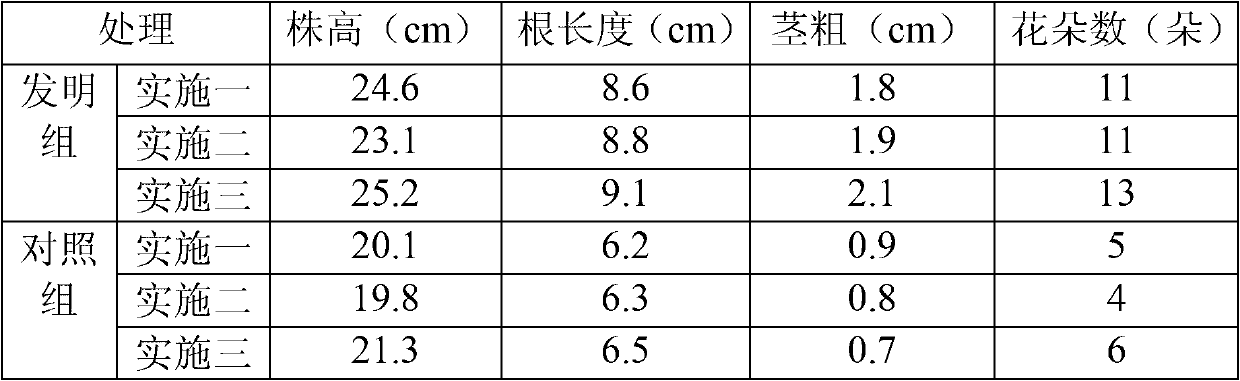
[0035] Both groups used the above method to cultivate zinnias. After 100 days of cultivation, the plants were observed, and after each treatment was averaged, the plant height, root length, stem diameter and flower number of each treatment substrate were recorded.
Embodiment 2
[0037] (Invention group): Pinshi No. 2 matrix soil and coconut wool and perlite volume ratio are 5: 3: 1.
[0038] (Control group): Ordinary garden soil
[0039] Both groups used the above method to cultivate zinnias. After 100 days of cultivation, the plants were observed, and after each treatment was averaged, the plant height, root length, stem diameter and flower number of each treatment substrate were recorded.
Embodiment 3
[0041] (Invention group): Pinshi No. 2 matrix soil and coconut wool and perlite volume ratio are 4.5: 2.5: 1.
[0042] (Control group): Ordinary garden soil
[0043] Both groups used the above method to cultivate zinnias. After 100 days of cultivation, the plants were observed, and after each treatment was averaged, the plant height, root length, stem diameter and flower number of each treatment substrate were recorded.
[0044] After 100 days of cultivation, the plants were observed, and after each treatment was averaged, the plant height, root length, stem thickness and flower number of each treatment substrate were recorded, and the record results were as follows:
[0045]
PUM
 Login to View More
 Abstract
Description
Claims
Application Information
 Login to View More