
HLA gene specific PCR amplification primer, HLA typing method and kit
A technology of amplification primers and genotyping, which is applied in biochemical equipment and methods, DNA/RNA fragments, and microbial determination/inspection. It can solve problems such as low resolution and inability to detect alleles. The effect of image quality improvement, reasonable and accurate judgment, and reliable data
- Summary
- Abstract
- Description
- Claims
- Application Information
AI Technical Summary
Problems solved by technology
Method used
Image

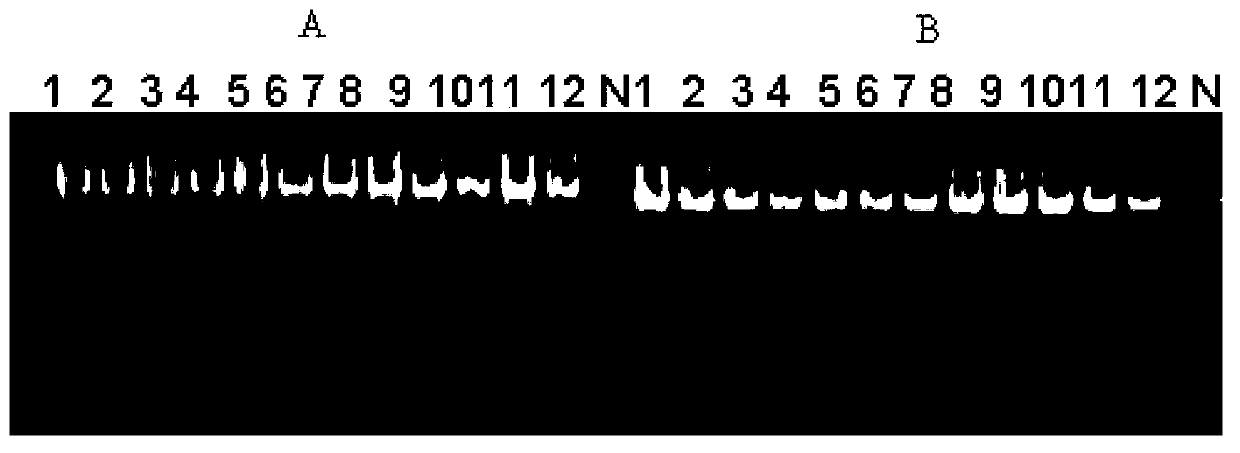
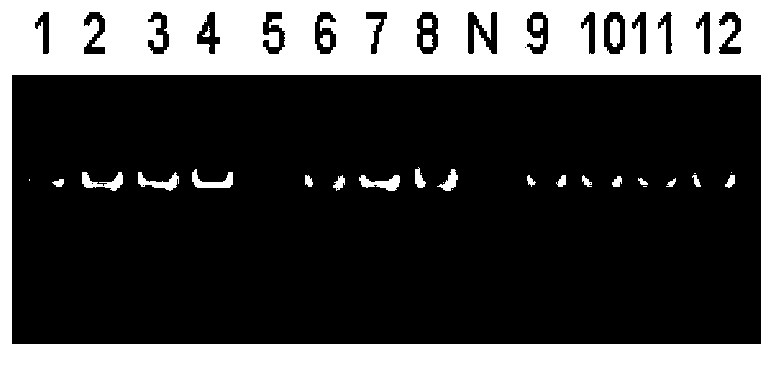

Examples
Embodiment 1
[0070] Example 1 Carrying out HLA typing detection on samples of known genotypes
[0071] In this implementation, PCR amplification primer pairs and sequencing primers as shown in Table 1 were used to conduct HLA-A, HLA-B, HLA-C, HLA-DRB1, HLA - High-resolution genotyping confirmation of the DQB1 locus. The specific steps of the test are as follows:
[0072] 1. Genomic DNA extraction
[0073] (1) Draw 600μl of mixed whole blood into a labeled 2ml EP tube;
[0074] (2) Add 1000 μl red blood cell lysate (Beiyuntian Biotechnology Research Institute, Cat. No. C3702), shake well until the mixture is bright, and centrifuge at 11000 rpm for 1 min;
[0075] (3) Discard the supernatant, buckle the opening of the EP tube downward on the absorbent paper, and drain the remaining residual liquid as much as possible;
[0076] (4) Add 1000 μl red blood cell lysate, repeat (2);
[0077] (5) Discard the supernatant, put the opening of the EP tube downward on the absorbent paper, and drain...
PUM
 Login to View More
 Abstract
Description
Claims
Application Information
 Login to View More