
Hyaluronic acid-orientated channel composite bracket material used for spinal cord injury repair
A technology of hyaluronic acid and composite scaffolds, applied in medical science, prostheses, etc., can solve problems such as nerve regeneration and functional recovery that cannot be fundamentally solved, improve the damage microenvironment, reduce the damage area, and promote spinal cord injury Repair effect
- Summary
- Abstract
- Description
- Claims
- Application Information
AI Technical Summary
Problems solved by technology
Method used
Image

Examples
preparation example Construction
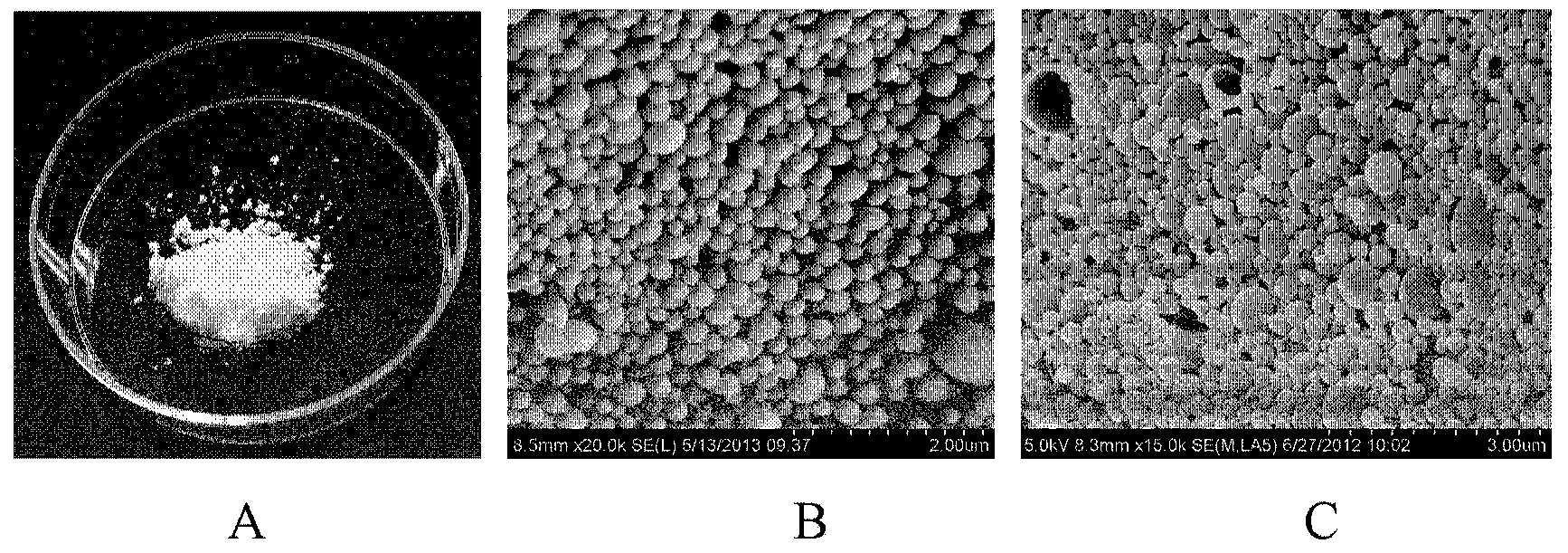
[0054] The method for preparing a hyaluronic acid directional channel composite scaffold material for spinal cord injury repair provided by the present invention, first prepares HA and PLL into a hydrogel with longitudinal channels, uses the oxidation grafting method to connect NogoR antibodies, and prepares the encapsulating BDNF and The PLGA microspheres of VEGF were injected into the HA material before transplantation to obtain a hyaluronic acid-oriented channel composite scaffold material for spinal cord injury repair.
[0055] Specifically, its main steps are:
[0056] 1) Take 0.20g of sodium hyaluronic acid, add 20ml of deionized water to make a 1% hyaluronic acid solution, stir well; add 0.04g of polylysine (PLL), mix well and add adipic acid di Hydrazide (ADH) 1.5g, stir well; add 1mol / L HCl (about 3ml) dropwise until the pH value reaches 4-5; then add carbodiimide salt (EDC) 0.4g, stir well for 10min-20min, The solution gradually turns into a gel; use 1mol / L NaOH to ...
Embodiment 1
[0063] 1) Preparation of hyaluronic acid hydrogel oriented channel scaffold
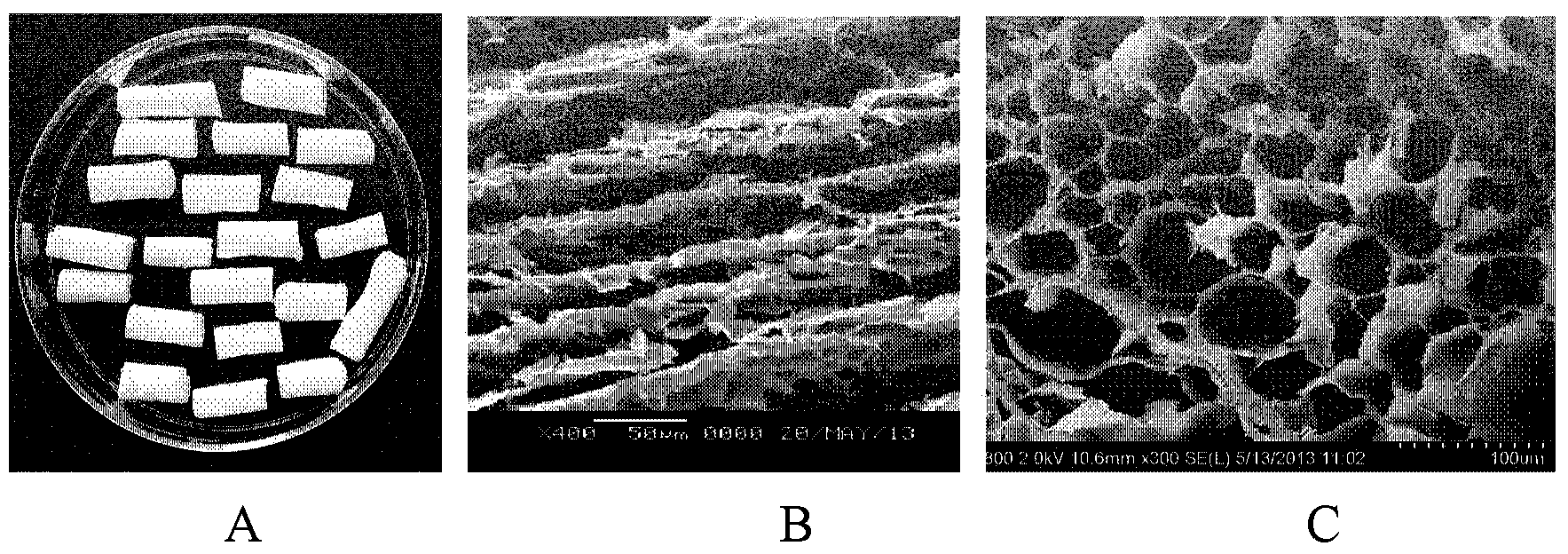
[0064] According to relevant literature, take 0.20g of sodium hyaluronic acid, add 20ml of deionized water, and make a 1% hyaluronic acid solution, stir well; add 0.04g of polylysine (PLL), mix well Acid dihydrazide (ADH) 1.5g, stir well; add 1mol / L HCl (about 3ml) dropwise until the pH value reaches 4~5; then add carbodiimide salt (EDC) 0.4g, stir well for 10min~ After 20 minutes, the solution gradually turned into a gel; the pH value was adjusted to 7 with 1mol / L NaOH, and then the fluid was injected into a known mold, the upper and lower ends were opened, and the surroundings were wrapped with foam plastics, immersed in liquid nitrogen and frozen for 30 minutes; Freeze for 2 hours and dry in a freeze vacuum dryer for 48 hours to shape.
[0065] 2) Hyaluronic acid hydrogel oriented channel scaffold grafted with NogoR antibody
[0066] Add sodium periodate to the NogoR antibody PBS solution at a c...
Embodiment 2
[0078] Effects of Hyaluronic Acid Composite Scaffold on Neurons in Vitro
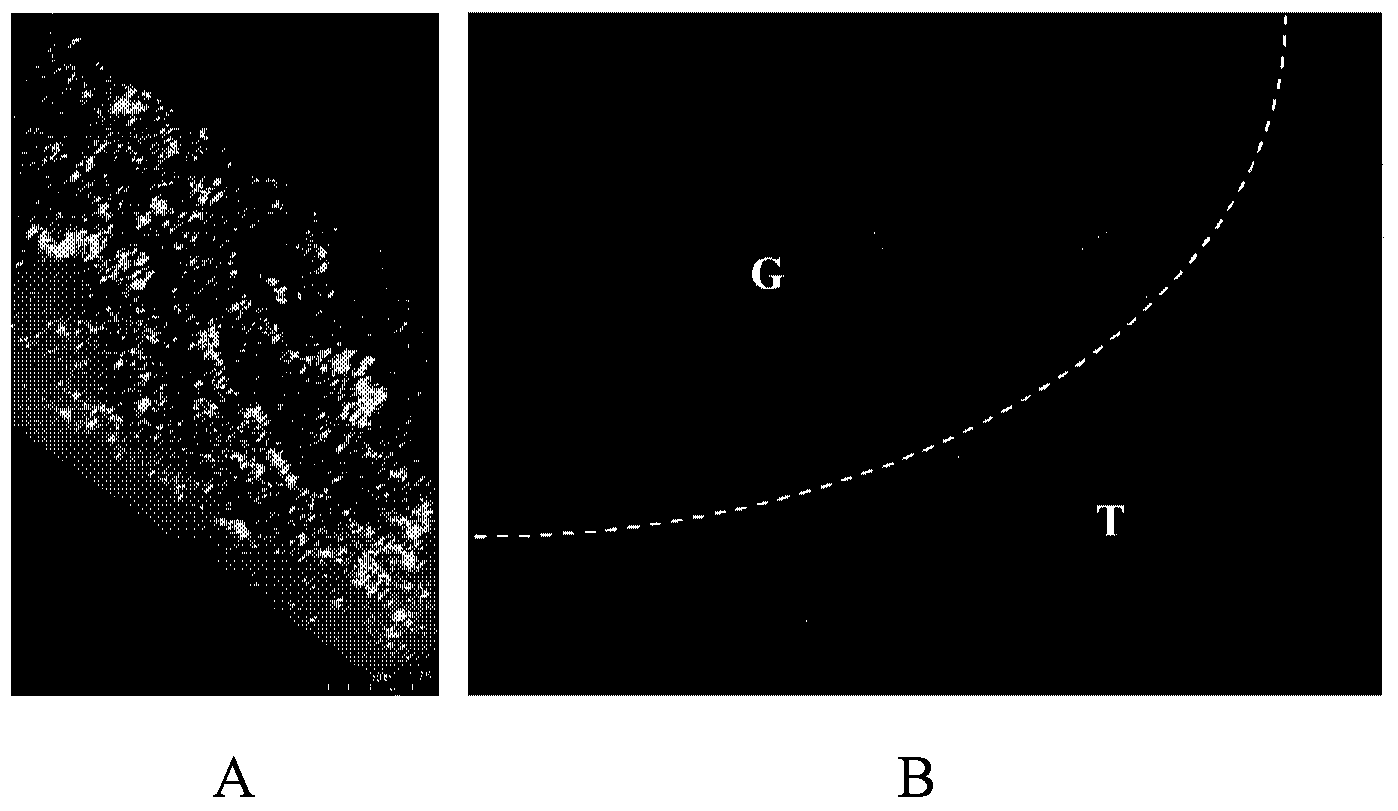
[0079] Rat cortical neurons were inoculated on the hyaluronic acid composite scaffold material prepared in Example 1, and neurons were also inoculated on ordinary hyaluronic acid hydrogel, and NF immunofluorescent staining after culturing for 1 week and counted 10 randomly The number of NF-positive cells in the field of view was statistically found that the number of NF-positive cells inoculated on the hyaluronic acid composite scaffold material was significantly more than the number of cells inoculated on the ordinary hyaluronic acid hydrogel, indicating that the hyaluronic acid composite scaffold material can promote neurogenesis. meta-adhesion, growth (see Figure 6 ).
PUM
| Property | Measurement | Unit |
|---|---|---|
| pore size | aaaaa | aaaaa |
| diameter | aaaaa | aaaaa |
| diameter | aaaaa | aaaaa |
Abstract
Description
Claims
Application Information
 Login to View More