
Photobiological farming device
A technology of photobiology and circulation devices, applied in biochemical cleaning devices, enzymology/microbiology devices, photobioreactors, etc., can solve the problem of low partial pressure controllability, high cost investment in glass greenhouses, and difficulty in industrial scale-up applications and other issues, to achieve the effect of increasing yield, improving photobiological yield, and simple structure
- Summary
- Abstract
- Description
- Claims
- Application Information
AI Technical Summary
Problems solved by technology
Method used
Image

Examples
Embodiment Construction
[0033] Specific embodiments of the present invention will be described below in conjunction with the accompanying drawings.
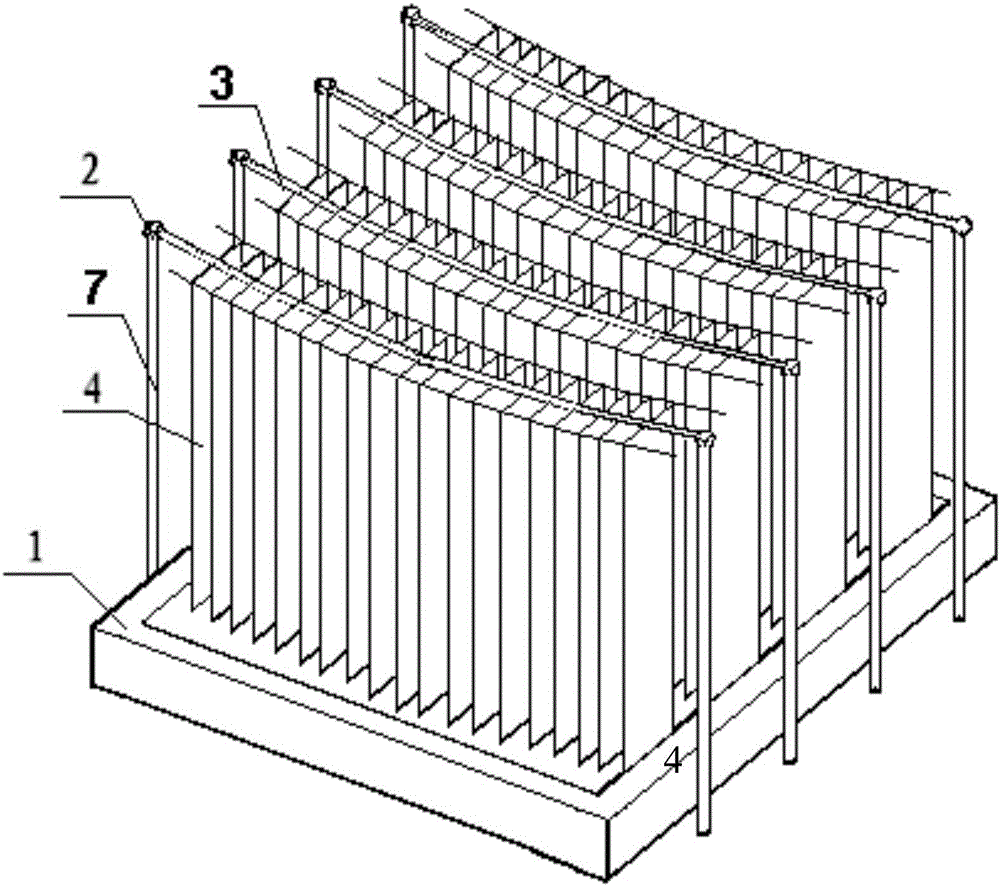
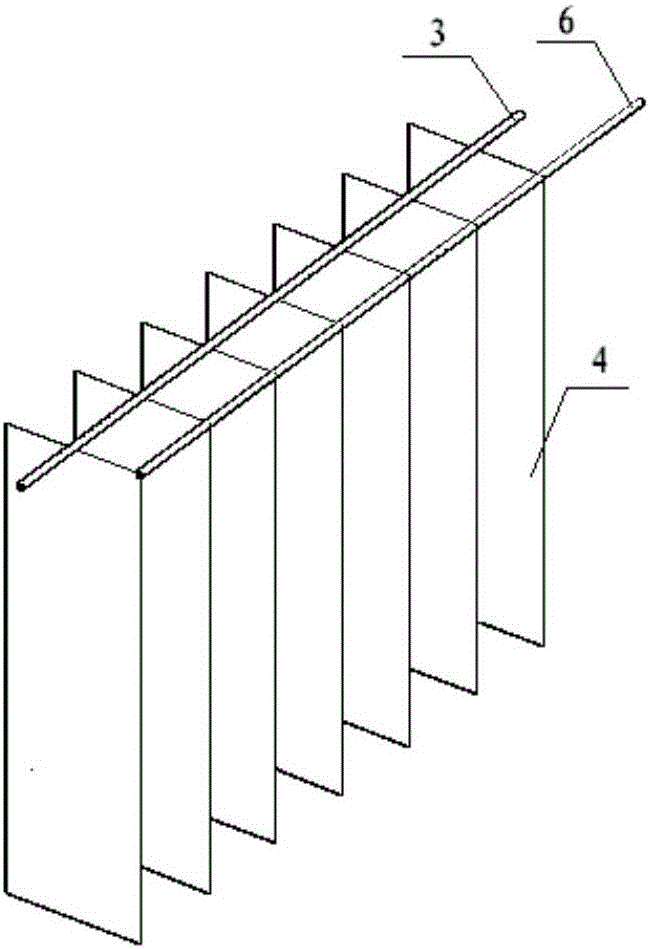
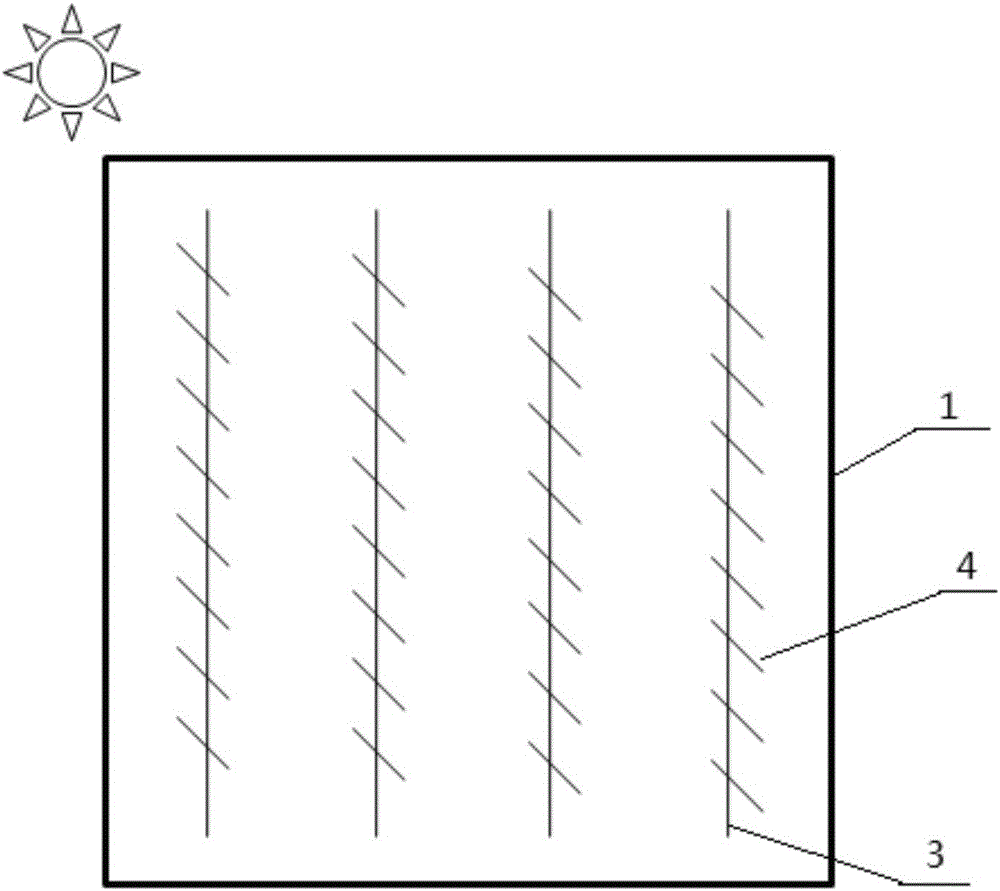
[0034] refer to figure 1, the first embodiment of the photobiological culture device of the present invention, comprising: at least one support frame 2; 4 is suspended on the supporting frame 2.
[0035] Wherein, the carrier 4 is preferably made of a material with high water retention, toughness, and durability, and it is non-toxic or slightly toxic to the cultured photobiological cells. Optionally, the carrier 4 is made of one or more materials in glass fiber, nylon, cotton, hemp, carbon fiber, synthetic fiber, sponge, plastic foam, metal, and synthetic plastic to absorb photobiological cells, nutrient solution and photobiological culture fluid. Alternatively, the carrier 4 includes a base and a cover covering the base, the base is made of a material with a certain hardness, and the cover is made of an adsorption material that can absorb photobiolog...
PUM
 Login to View More
 Abstract
Description
Claims
Application Information
 Login to View More