
Cold-box binding agent systems and mixtures for use as additives for such binding agent systems
A technology of mixtures, binders, applied in the application of additives, moulds or cores for casting, solutions containing polyisocyanates, in the field of manufacturing cores or moulds for casting, able to solve problems such as cost
- Summary
- Abstract
- Description
- Claims
- Application Information
AI Technical Summary
Problems solved by technology
Method used
Image

Examples
example 1
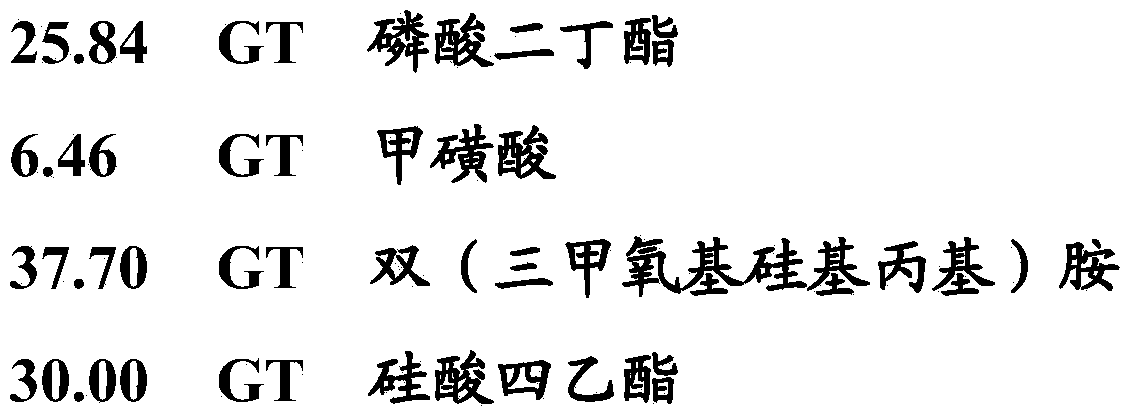
[0167] Example 1: Preparation of mixture M1 according to the invention :
[0168] The following substances were dispensed in the order indicated in a reaction vessel equipped with a stirrer, cooling device and thermometer, wherein the temperature was kept below 35°C:
[0169]
[0170] The product is a mixture according to the invention.
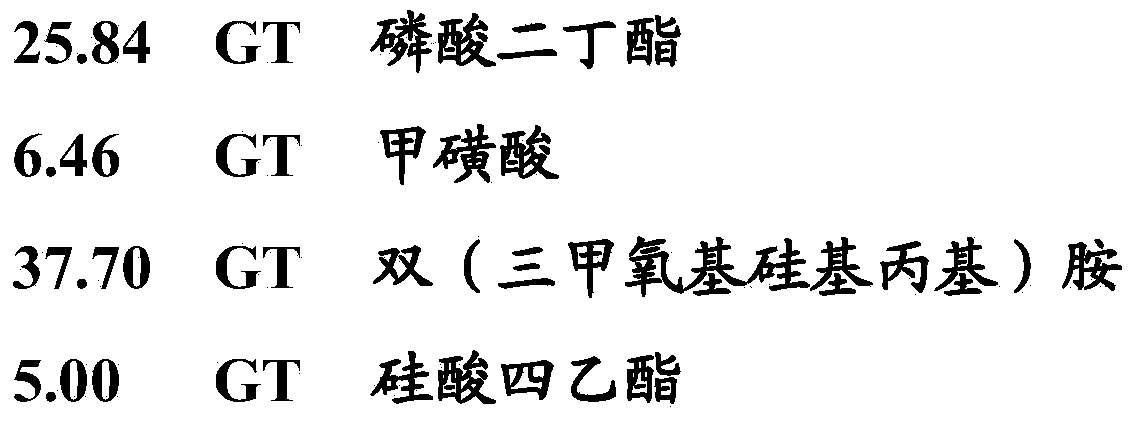
[0171] Example 1a: Preparation of mixture M2 according to the invention :
[0172] The following substances were dispensed in the order indicated in a reaction vessel equipped with a stirrer, cooling device and thermometer, wherein the temperature was kept below 35°C:
[0173]
[0174] The product is a mixture according to the invention.
[0175] Example 1b: Preparation of mixture M3 according to the invention :
[0176] The following substances were dispensed in the order indicated in a reaction vessel equipped with a stirrer, cooling device and thermometer, wherein the temperature was kept below 35°C:
[0177] 25.84 GT Dibuty...
example 2
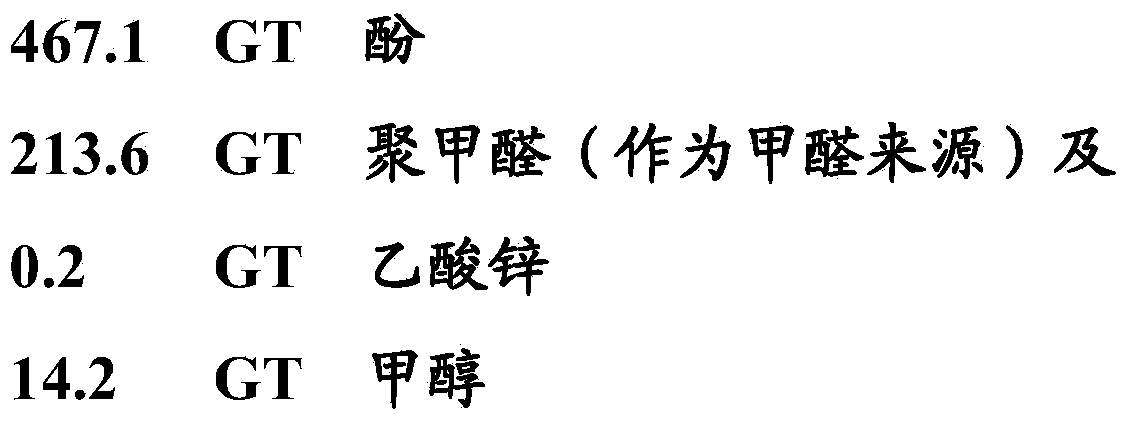
[0181] Example 2: Preparation of preferred benzyl ether type phenolic resins (precondensates) :
[0182] Place the following in a reaction vessel equipped with a cooling device, thermometer and stirrer:
[0183]
[0184] Put the cooler on reflux. The temperature was continuously increased to 110 °C within 1 hour and maintained at said temperature until the refractive index (n D 20 ) to 1.547 (2 to 3 hours).
[0185] Then, the cooler was switched to atmospheric distillation and the temperature was increased to 125°C-126°C within 1 hour, so that volatile components were distilled from the product solution until the refractive index of the product (n D 20 ) reaches about 1.595.
[0186] Then carry out vacuum distillation, until the refractive index (n D 20 ) is 1.617, where the remaining volatile components are removed.
example 3
[0187] Example 3: Preparation of cold box phenolic resin solution H1 :
[0188]From the phenolic resin (precondensate) according to Example 2, after reaching the desired value for the refractive index, a resin solution H1 for the cold box process was prepared, which solution had the composition specified below:
[0189] Phenolic resin solution H1
[0190]
PUM
 Login to View More
 Abstract
Description
Claims
Application Information
 Login to View More