
A kind of r2r3-myb gene CsMYB2 of red purple bud tea tree and its application
A technology of R2R3-MYB and red purple bud tea tree, which is applied in the fields of application, genetic engineering, and plant gene improvement, and can solve the problems of tea tree anthocyanin correlation that need to be further studied
Active Publication Date: 2017-10-17
广东省农业科学院饮用植物研究所
View PDF4 Cites 0 Cited by
- Summary
- Abstract
- Description
- Claims
- Application Information
AI Technical Summary
Problems solved by technology
Quantitative analysis found that the relative expression of CsMYB2 in leaves was more than 100 times that of roots, and pointed out that shading treatment could significantly reduce the anthocyanin content in leaves and increase the expression of CsMYB1, but had little effect on the transcription factor CsMYB2. The correlation with tea tree anthocyanin synthesis needs further study
Method used
the structure of the environmentally friendly knitted fabric provided by the present invention; figure 2 Flow chart of the yarn wrapping machine for environmentally friendly knitted fabrics and storage devices; image 3 Is the parameter map of the yarn covering machine
View moreImage
Smart Image Click on the blue labels to locate them in the text.
Smart ImageViewing Examples

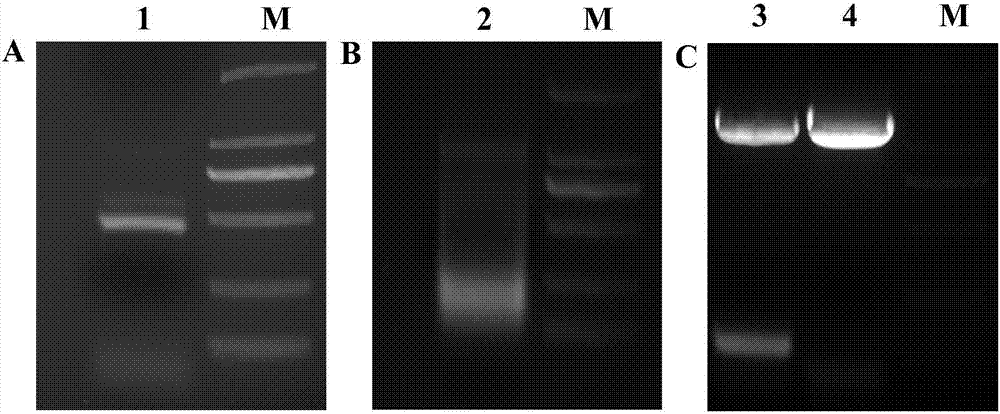
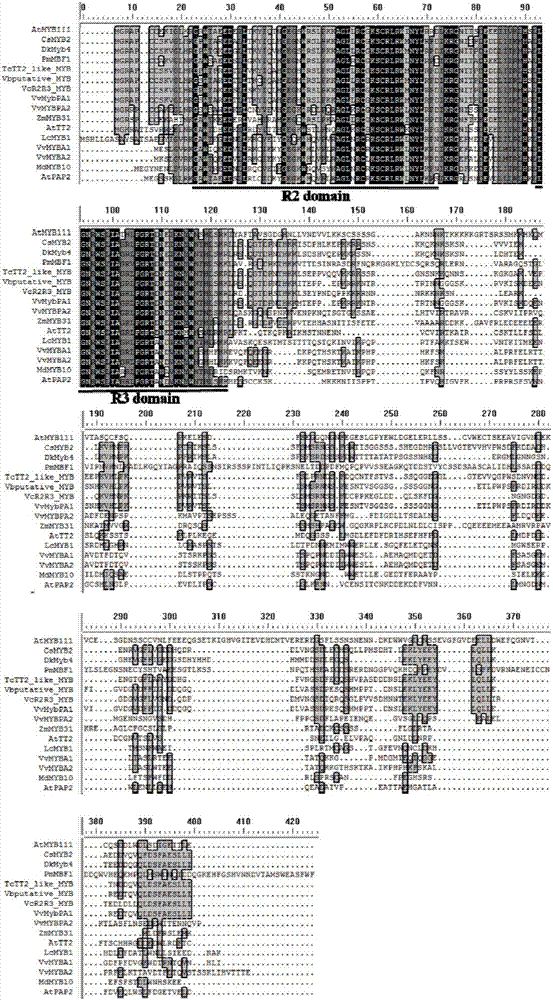
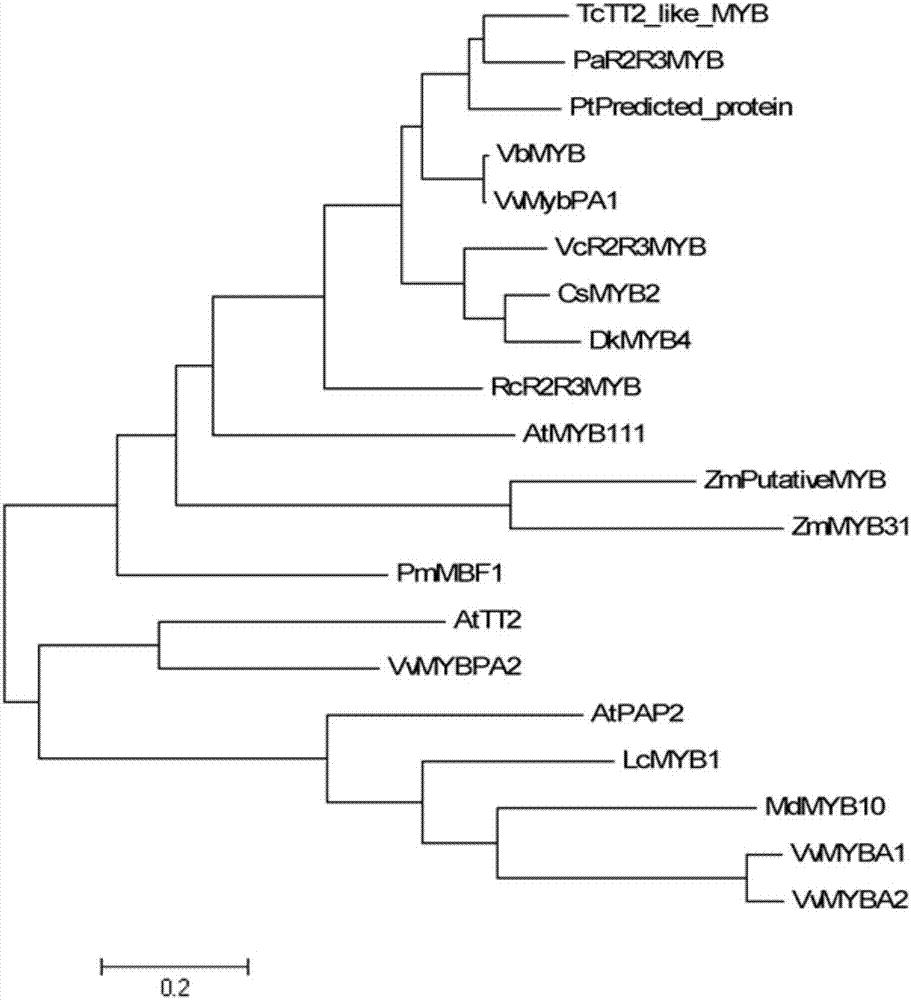
Examples
Experimental program
Comparison scheme
Effect test
Embodiment 1
[0031] 1. Black tea bud tea tree selection
[0032] The red purple bud tea tree leaves used in the present invention are taken from the red purple bud tea tree variety in the "Guangdong Provincial Tea Tree Germplasm Resource Garden" of the Institute of Drinking Plants, Guangdong Academy of Agricultural Sciences. The collected samples were quickly frozen with liquid nitrogen, brought back to the laboratory and stored in a -80°C refrigerator for anthocyanin content determination, gene cloning and gene expression analysis.
[0033] 2. Extraction and detection of RNA from red purple bud tea tree buds and leaves
the structure of the environmentally friendly knitted fabric provided by the present invention; figure 2 Flow chart of the yarn wrapping machine for environmentally friendly knitted fabrics and storage devices; image 3 Is the parameter map of the yarn covering machine
Login to View More PUM
 Login to View More
 Abstract
The invention discloses a red purple bud tea tree R2R3-MYB gene CsMYB2 and its application, belonging to the field of biological genes. The present invention obtains the nucleotide sequence of the CsMYB2 gene as shown in SED NO ID: 1 by designing the CsMYB2 fragment, the RACE fragment and full-length primers, amplifying and sequencing, and then translating it into an amino acid sequence and analyzing the structure of the gene. From the analysis of the amino acid structure of CsMYB2, CsMYB2 may have the function of regulating the biosynthesis of anthocyanins in tea tree buds and leaves, and then it was confirmed that CsMYB2 has the function of regulating anthocyanins biosynthesis by transforming Arabidopsis. It laid the foundation for the application of CsMYB2 in improving the accumulation of plant pigments.
Description
technical field [0001] The invention belongs to the field of biological genes, in particular to a red purple bud tea tree R2R3-MYB gene CsMYB2 and its application. Background technique [0002] Anthocyanidin, also known as anthocyanidin, is one of the most important metabolites in the biosynthetic pathway of flavonoids and is an important water-soluble flavonoid pigment in nature. Anthocyanins in plants are unstable and often combine with sugars to exist in the form of glycosides to form anthocyanins. In addition to glucose, the glycosyl donor can also be replaced by different sugars such as galactose, rhamnose, arabinose and xylose (Panagiotis Arapitsas, 2008). Due to the differences in the site and number of glycosylation of anthocyanins and the differences in the degree of methylation and acylation, various anthocyanins are formed in natural plants and accumulate in the form of glycosides in plant cells. in the vacuole. Anthocyanin belongs to flavonoids, its basic stru...
Claims
the structure of the environmentally friendly knitted fabric provided by the present invention; figure 2 Flow chart of the yarn wrapping machine for environmentally friendly knitted fabrics and storage devices; image 3 Is the parameter map of the yarn covering machine
Login to View More Application Information
Patent Timeline
 Login to View More
 Patent Type & AuthorityPatents(China)
IPC IPC(8): C12N15/29C12N15/84C07K14/415A01H5/00
Inventor刘军吴华玲潘亚燕阳成伟陈栋李家贤
Owner广东省农业科学院饮用植物研究所