
Anti-EGFRvIII chimeric antigen receptor, encoding gene, recombinant expression vector, construction method of recombinant expression vector, and application
A chimeric antigen receptor, chimeric receptor technology, applied in the direction of receptor/cell surface antigen/cell surface determinant, application, carrier, etc.
- Summary
- Abstract
- Description
- Claims
- Application Information
AI Technical Summary
Problems solved by technology
Method used
Image

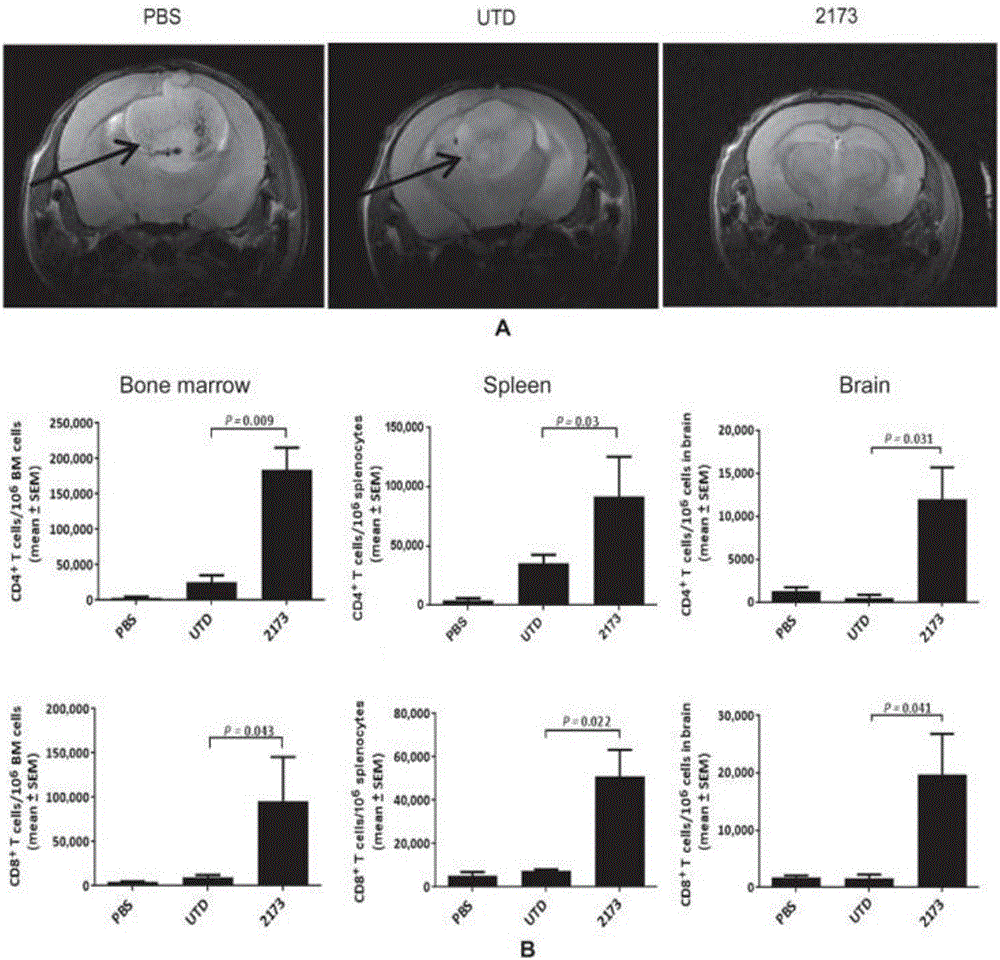
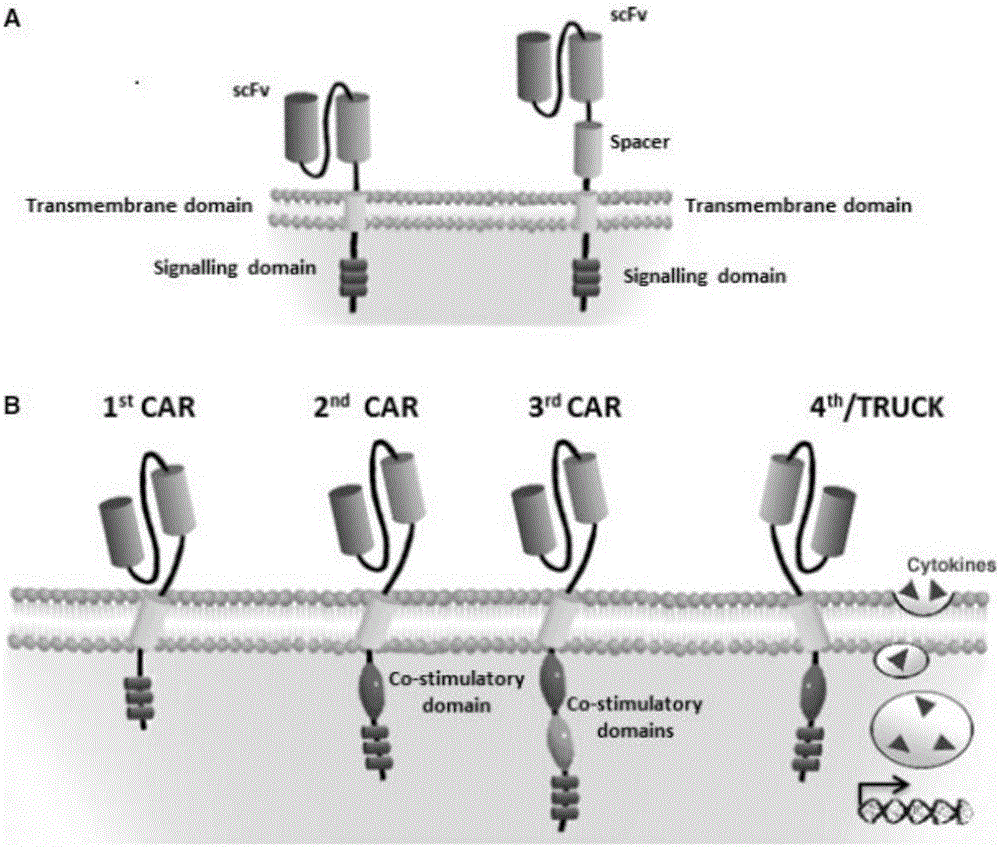
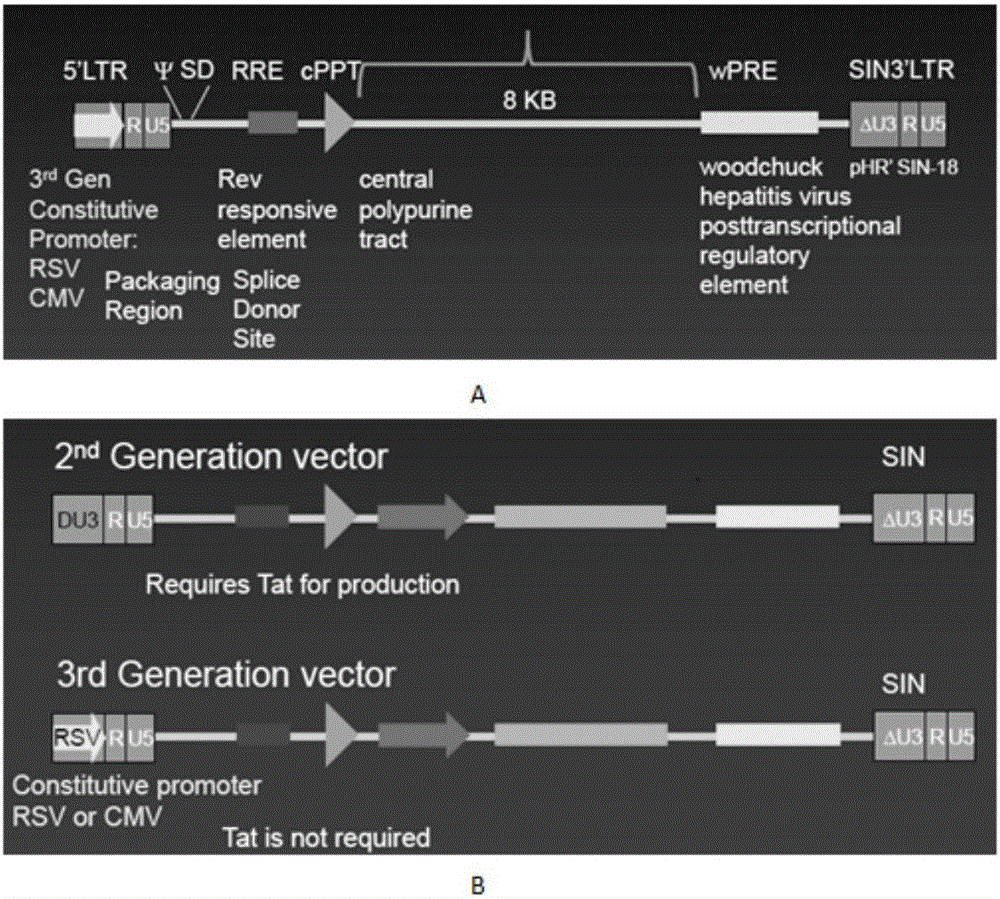
Examples
Embodiment 1
[0082] Example 1 Construction of recombinant lentiviral vector
[0083] 1. Materials
[0084] 1. The lentiviral backbone plasmid pLenti-3G basic, the lentiviral packaging plasmids pPac-GP, pPac-R and the membrane protein plasmid pEnv-G, HEK293T / 17 cells, and homologous recombination enzyme were supplied by Shiao (Shanghai) Biomedical Technology Co., Ltd. supply;
[0085] 2. Primers: According to the principles of primer design, the primers required for amplifying DNA fragments and target sites are designed. The primers are synthesized by Shanghai Biological Company, specifically:
[0086] EF1α-F: 5'-ATTCAAAATTTTATCGATGCTCCGGTGCCCGTCAGT-3' (SEQ ID NO.26)
[0087] EF1α-R: 5'-TCACGACACCTGAAATGGAAGA-3' (SEQ ID NO.27)
[0088] CD8leader-F: 5'-GGTGTCGTGAGGATCCGCCACCATGGCCTTACCAGTGACCGC-3'
[0089](SEQ ID NO. 28)
[0090] CD8leader-R: 5'-GTGTCATCTGGATGTCCGGCCTGGCGGCGTG-3' (SEQ ID NO.29)
[0091] VL-F: 5'-CCACGCCGCCAGGCCGGATGTTGTGATGACCCAGACTCC-3' (SEQ ID NO.30)
[0092] VL-R...
Embodiment 2
[0181] Example 2 Concentration and detection of recombinant lentiviral vector
[0182] 1. Purification of recombinant lentiviral vector by ultracentrifugation;
[0183] (1) Divide the collected supernatant into 50ml centrifuge tubes, centrifuge at 500g room temperature for 10min, and remove cells and large debris;
[0184] (2) Filter the supernatant with a 0.22 μm-0.8 μm filter;
[0185] (3) Take 6 Hitachi 40PA ultracentrifuge tubes, spray 70% ethanol on the surface to sterilize them, put them on a clean table and irradiate them with ultraviolet light for 30 minutes to sterilize them. It can also be sterilized by high temperature and moist heat;
[0186] (4) Aliquot 32ml of the cell supernatant sample processed in step 2 into a centrifuge tube;
[0187] (5) Cover the metal cover, balance the centrifuge tube together with the metal cover, and adjust with 1XPBS to make the weight deviation within 0.02g;
[0188] (6) Place the balanced centrifuge tubes symmetrically in the ul...
Embodiment 3
[0266] Example 3 Functional detection of recombinant lentiviral vectors lvCAR-EGFRvIII-CLA, lvCAR-EGFRvIII-CLB, lvCAR-EGFRvIII-OLC
[0267] 1. Cell-level expression detection of CAR gene:
[0268] (1) After the recombinant lentiviral vectors lvCAR-EGFRvIII-CLA, lvCAR-EGFRvIII-CLB, and lvCAR-EGFRvIII-OLC infect PBMC cells, collect the cells and use RT-PCR to detect the transcription level of CAR mRNA to verify the expression of the CAR gene, if An increase in the transcription level of CAR mRNA indicates that the transcription level of the CAR gene is successfully expressed;
[0269] (2) After infecting PBMC cells with recombinant lentiviral vectors lvCAR-EGFRvIII-CLA, lvCAR-EGFRvIII-CLB, and lvCAR-EGFRvIII-OLC, collect the cells and detect the expression level of CAR protein by western blot to verify the expression of the CAR gene. An increase in the protein expression level indicates that the translation level of the CAR gene is successfully expressed;
[0270] (3) Infect t...
PUM
 Login to View More
 Abstract
Description
Claims
Application Information
 Login to View More