
Visible waterproof dressing
A backing and absorbing layer technology, applied in dressings, viscous dressings, non-adhesive dressings, etc., can solve the problems of invisible wounds, incapable of waterproofing, not aesthetically pleasing, etc., and achieve the effect of facilitating wound healing, preventing bacterial invasion and reducing damage
- Summary
- Abstract
- Description
- Claims
- Application Information
AI Technical Summary
Problems solved by technology
Method used
Image

Examples
Embodiment Construction
[0017] The specific embodiments of the present invention will be further described below in conjunction with the accompanying drawings.
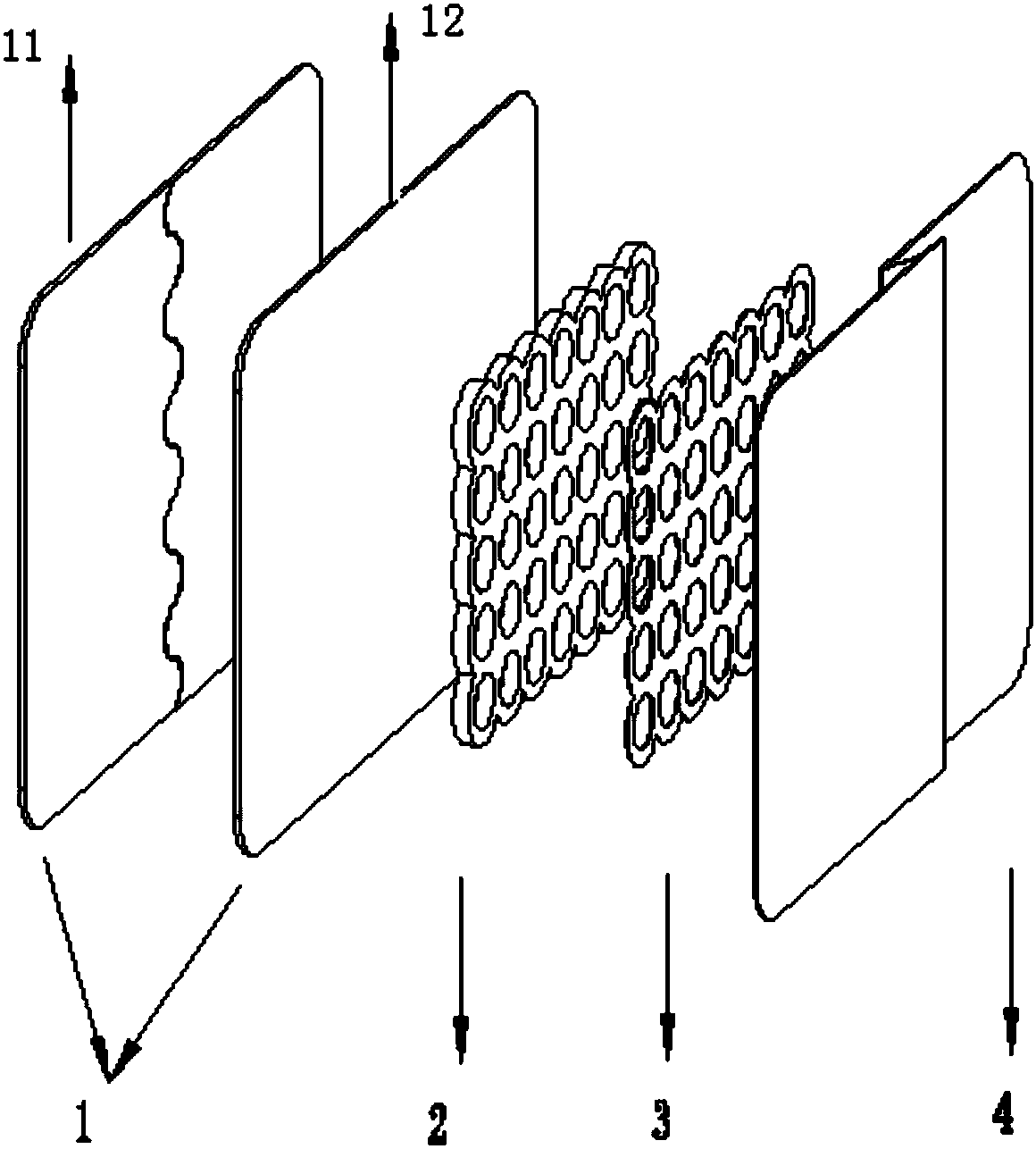
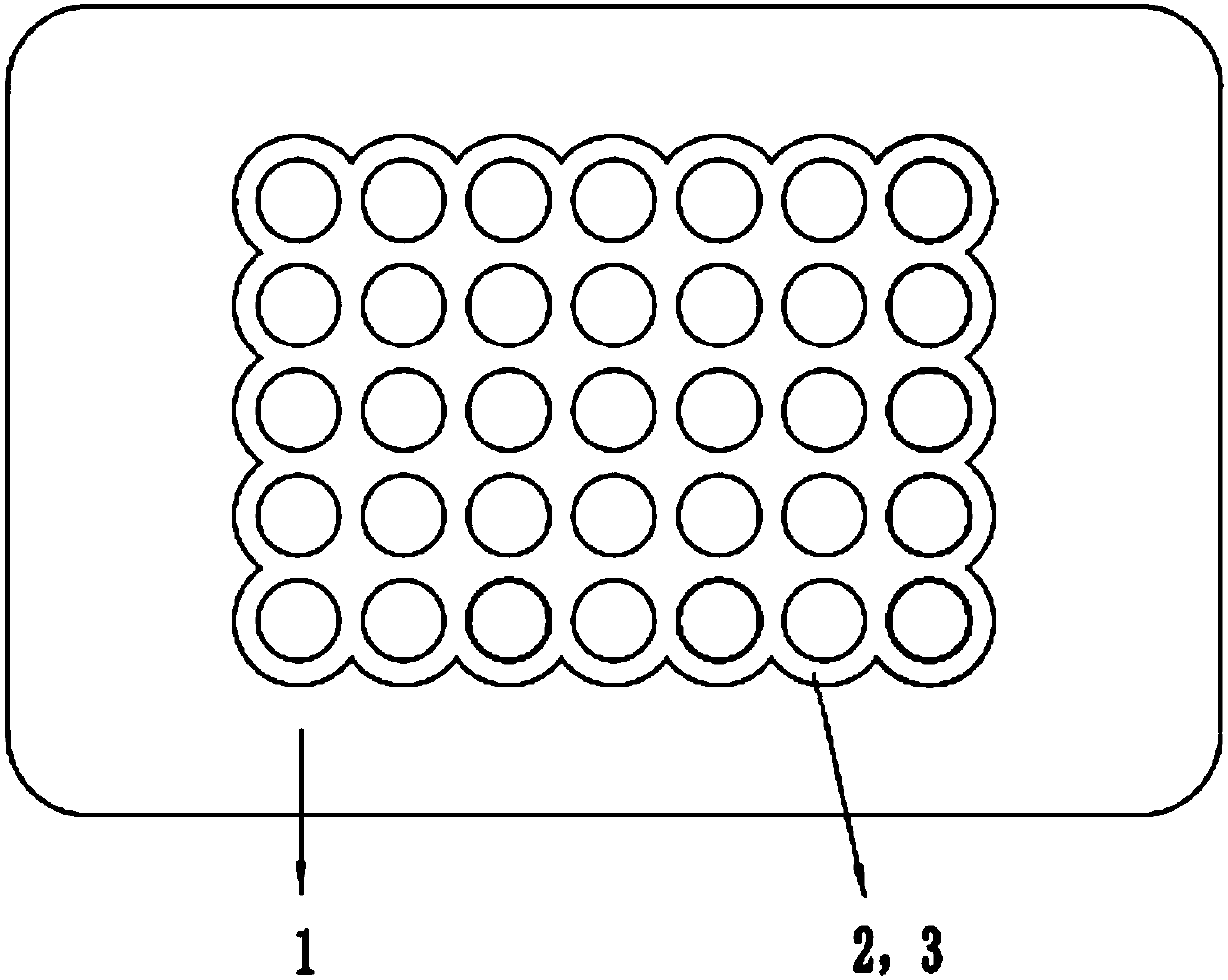
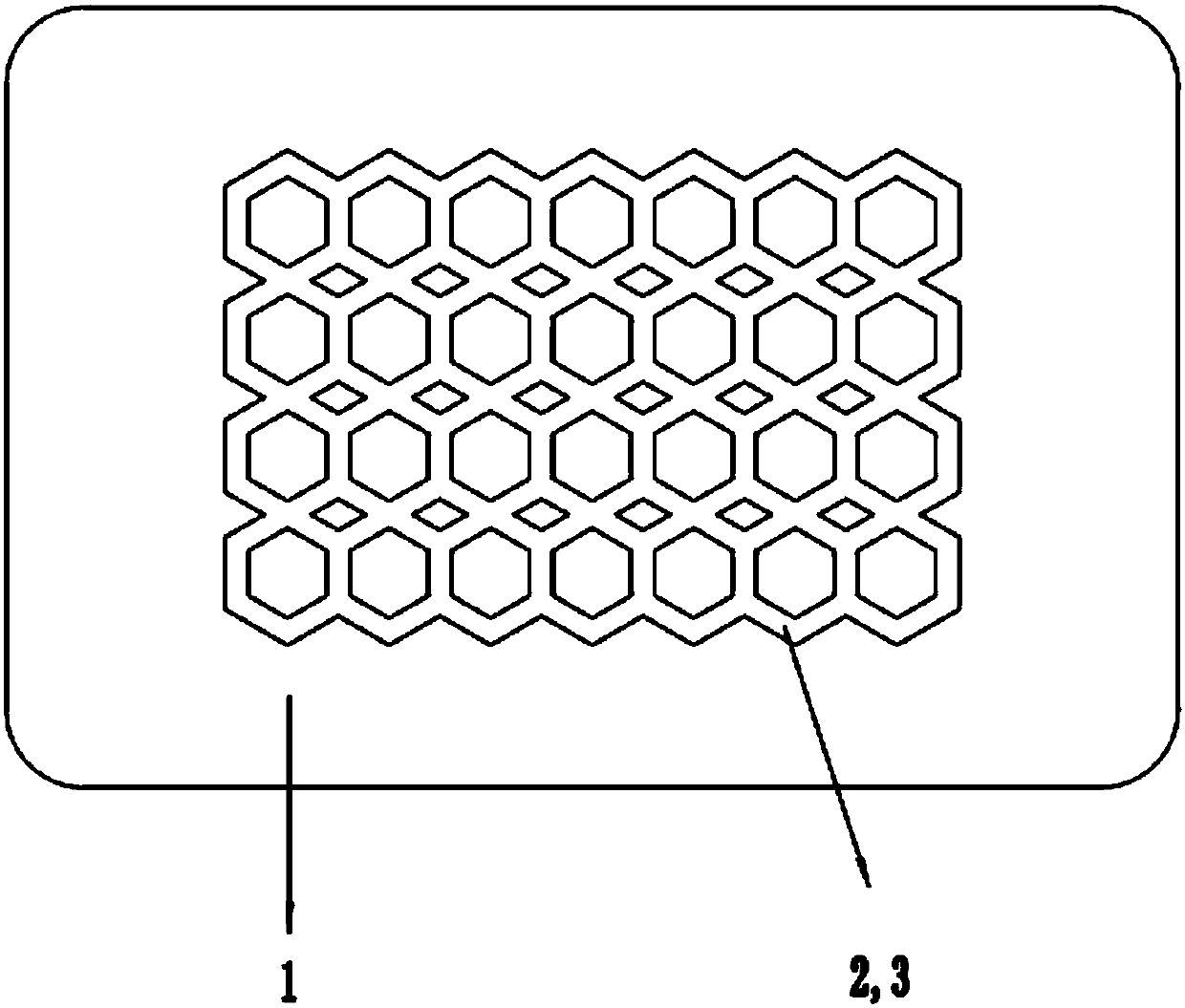
[0018] Such as figure 1 , figure 2 The visible waterproof dressing shown is divided into a four-layer structure, which is a backing 1 , an absorption layer 2 , a wound contact layer 3 and a release layer 4 from top to bottom. The function of the backing 1 is to protect the main body of the dressing. The backing 1 is a transparent polyurethane film 12 coated with a PE or PET layer 11, wherein the polyurethane film 12 is coated with a hypoallergenic acrylate adhesive. The thickness of the PU film 12 is 0.01-0.025 mm; preferably, the thickness of the PU film 12 is 0.01, 0.015, 0.02 or 0.025 mm, more preferably 0.025 mm. When covered with a PE layer, the thickness of the PE layer is 0.01-0.05 mm, preferably 0.01, 0.02, 0.03, 0.04 or 0.05 mm, more preferably 0.05 mm. When covered with a PET layer, the thickness of the PET layer is 0.01-0.06 m...
PUM
| Property | Measurement | Unit |
|---|---|---|
| Thickness | aaaaa | aaaaa |
| Thickness | aaaaa | aaaaa |
| Thickness | aaaaa | aaaaa |
Abstract
Description
Claims
Application Information
 Login to View More