
Instrument detection method for peculiar smell substances in mulberry silk floss products
A detection method, the technology of silk floss, which is applied in the field of silk detection, can solve the health hazards of the detection personnel, and does not involve the unpleasant smell of silk fabrics, etc., and achieve the effects of improving detection accuracy, scientificity, and convenient operation
- Summary
- Abstract
- Description
- Claims
- Application Information
AI Technical Summary
Problems solved by technology
Method used
Image

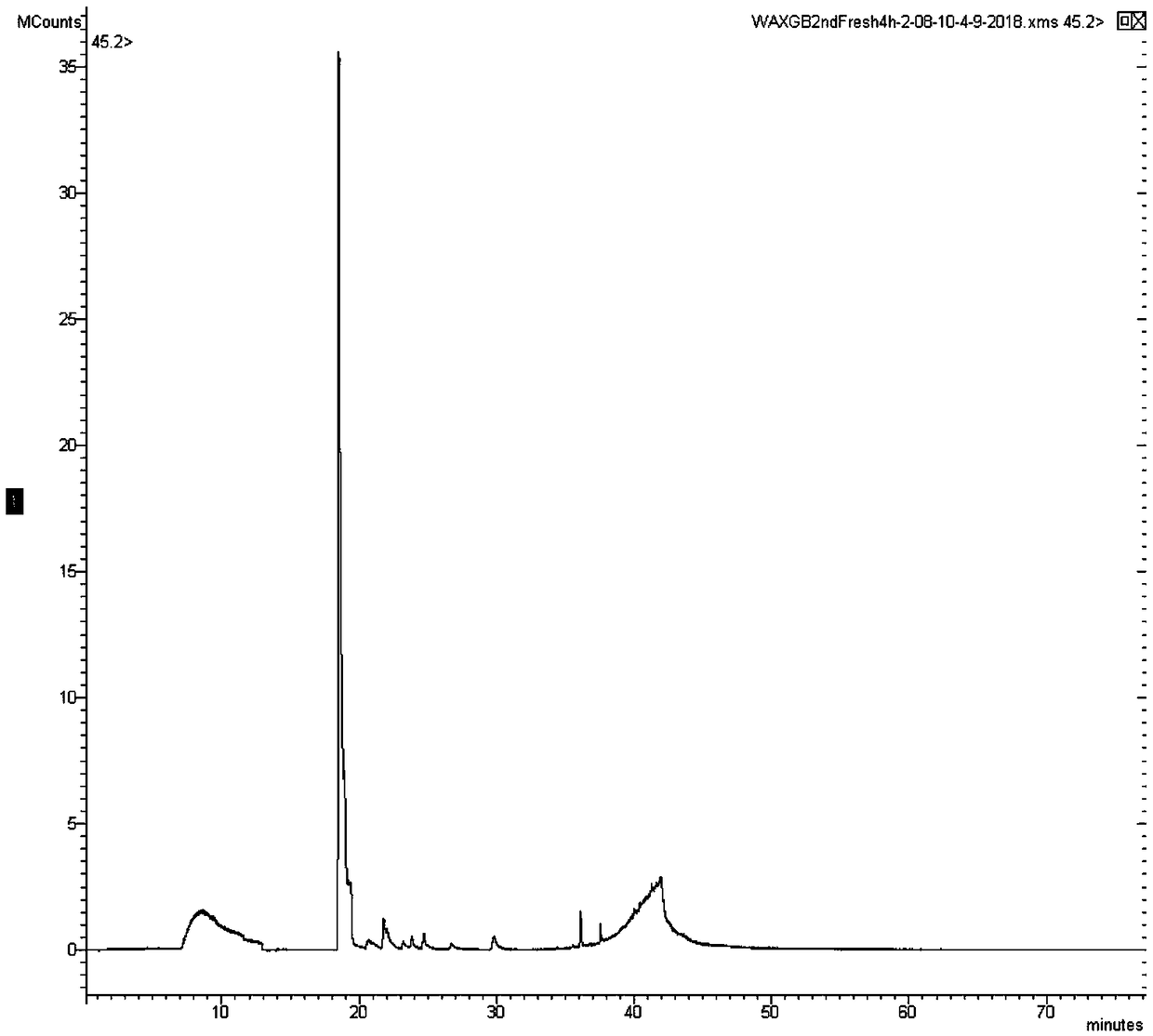
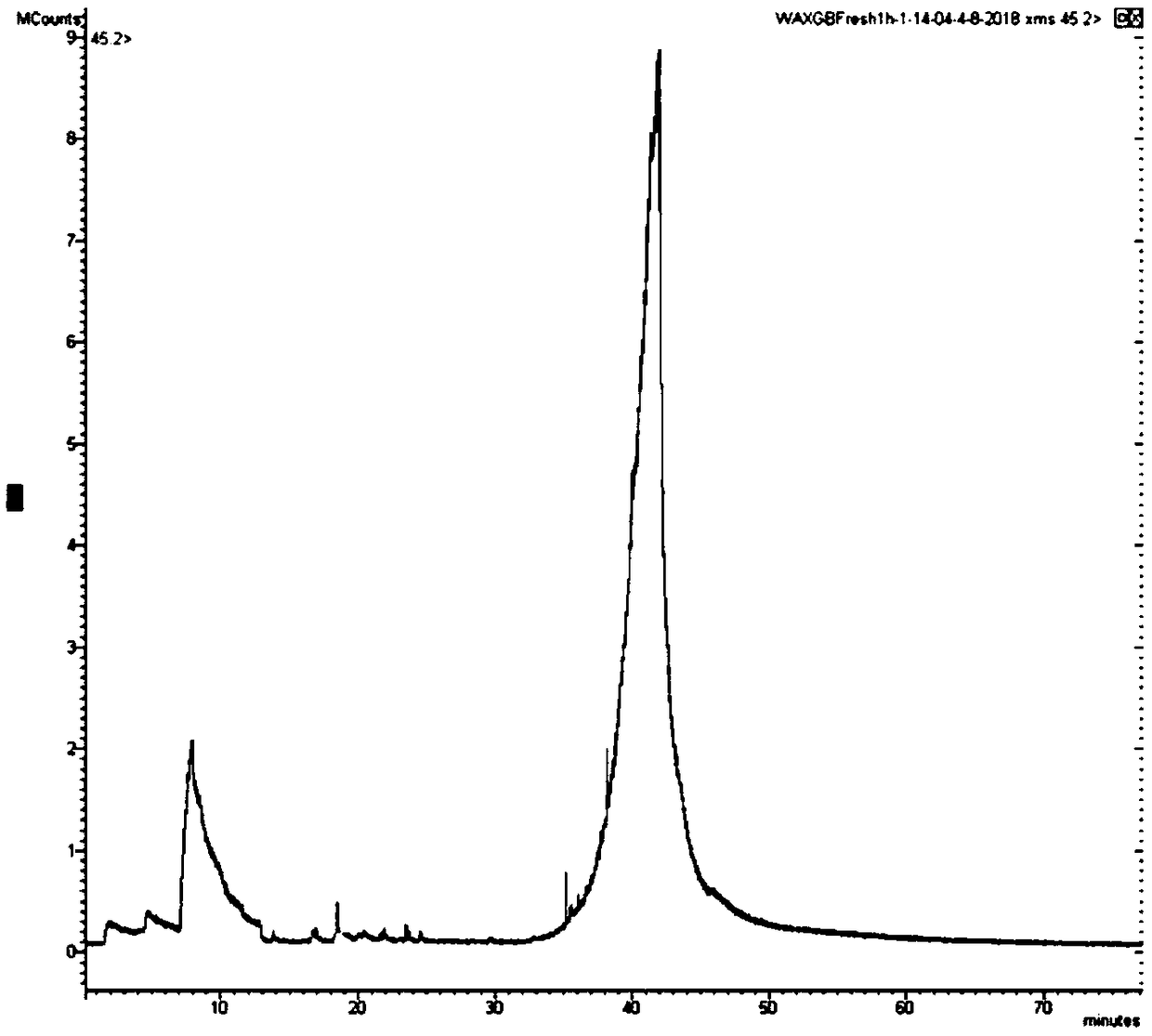
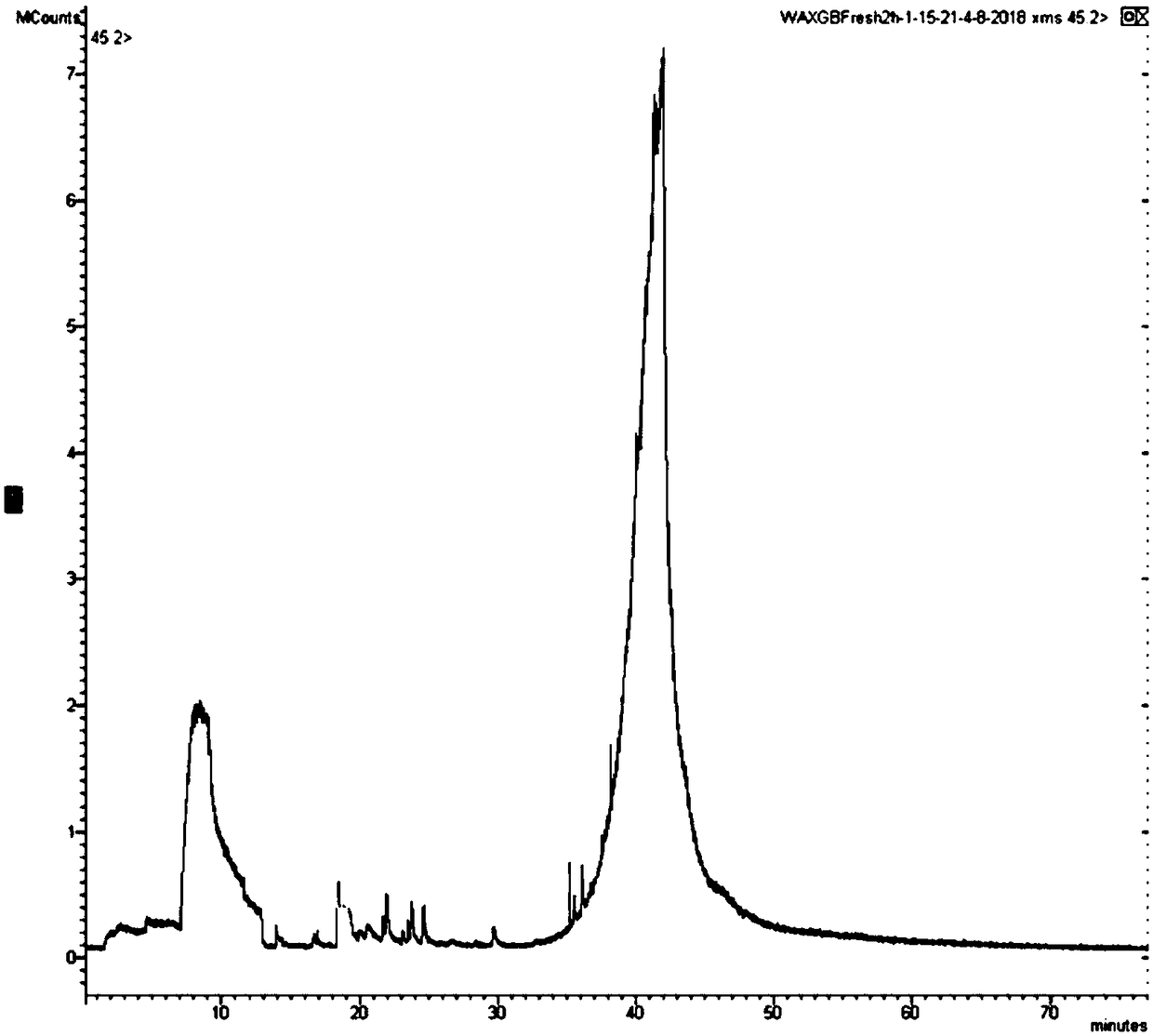
Examples
Embodiment 1
[0050] An instrument detection method for odorous substances in mulberry silk cotton products, comprising the following steps:
[0051] (1) Put 0.5g of the mulberry silk cotton product to be tested in water for 30 minutes, centrifuge and dehydrate at 10000rpm for 5 minutes, put it into an open beaker, place it at 40°C for 4 hours, and then transfer it into a headspace sampling bottle to obtain a sample bottle to be tested ;
[0052] (2) Boil 0.5g non-polluted mulberry silk cotton in boiling water for 30 minutes, dry at 120°C for 20 minutes, then place it in methanol for ultrasonic extraction for 30 minutes, dry it in the air and dry at 120°C for 20 minutes, soak in water for 30 minutes, 10000rpm Centrifuge and dehydrate for 5 minutes, put it into an open beaker, place it at 40°C for 4 hours, and then transfer it into a headspace sample bottle to obtain a blank sample bottle;
[0053] (3) Take the empty bottle, blank sample bottle, and sample bottle to be tested as the sample ...
Embodiment 2
[0062] (1) Boil five 0.50g non-polluting mulberry silk cotton products in boiling water for 30 minutes, dry them at 120°C for 20 minutes, then place them in methanol for ultrasonic extraction for 30 minutes, dry them in the air and dry them at 120°C for 20 minutes; then soak them in water , After centrifugation and dehydration, place at 40°C for 240 minutes, and then put them into headspace sampling vials respectively to obtain five blank vials;
[0063] (2) Dilute the 1,2-dimethylhydrazine (CAS No: 540-73-8) standard with methanol to obtain standard working solutions with different concentrations, 10μg / mL, 50μg / mL, 200μg / mL, 500μg / mL, 1000μg / mL; 5μL of the standard working solution was injected into each blank vial using a micro syringe to obtain a standard working solution vial, and the concentration of 1,2-dimethylhydrazine in the standard working solution vial was 0.1 mg / kg, 0.5mg / kg, 2mg / kg, 5mg / kg, 10mg / kg;
[0064] (3) Using the empty bottle, blank sample bottle, and ...
Embodiment 3
[0066] According to the method of Example 2, standard working solution sample vials were prepared, in which the concentrations of 1,2-dimethylhydrazine were 1 mg / kg, 5 mg / kg and 50 mg / kg, respectively.
[0067] Take the empty bottle, blank sample bottle, and standard working solution sample bottle as the sampling bottle in turn, and use headspace solid phase microextraction-gas chromatography-mass spectrometry to measure the blank sample chromatogram and standard working curve chromatogram, according to 1,2 -The mass spectrogram, retention time and response value thereof of dimethylhydrazine, obtain mass spectrometry response value, measure 6 times for every sample, then calculate average recovery rate and relative standard deviation, bring into mass spectrometry response value-concentration standard working curve, obtain 1 , the detection concentration of 2-dimethylhydrazine, the results are shown in Table 1, the recoveries of 6 parallel samples of all the levels of addition a...
PUM
 Login to View More
 Abstract
Description
Claims
Application Information
 Login to View More