
Bacillus marinus containing sterilization composition and application thereof
A technology of marine bacillus and composition, applied in the application, fungicides, biocides and other directions, can solve the problem of difficult to completely eliminate pathogenic bacteria, and achieve the effect of delaying the generation of pest resistance, good synergy, and less dosage
- Summary
- Abstract
- Description
- Claims
- Application Information
AI Technical Summary
Problems solved by technology
Method used
Image

Examples
Embodiment 1
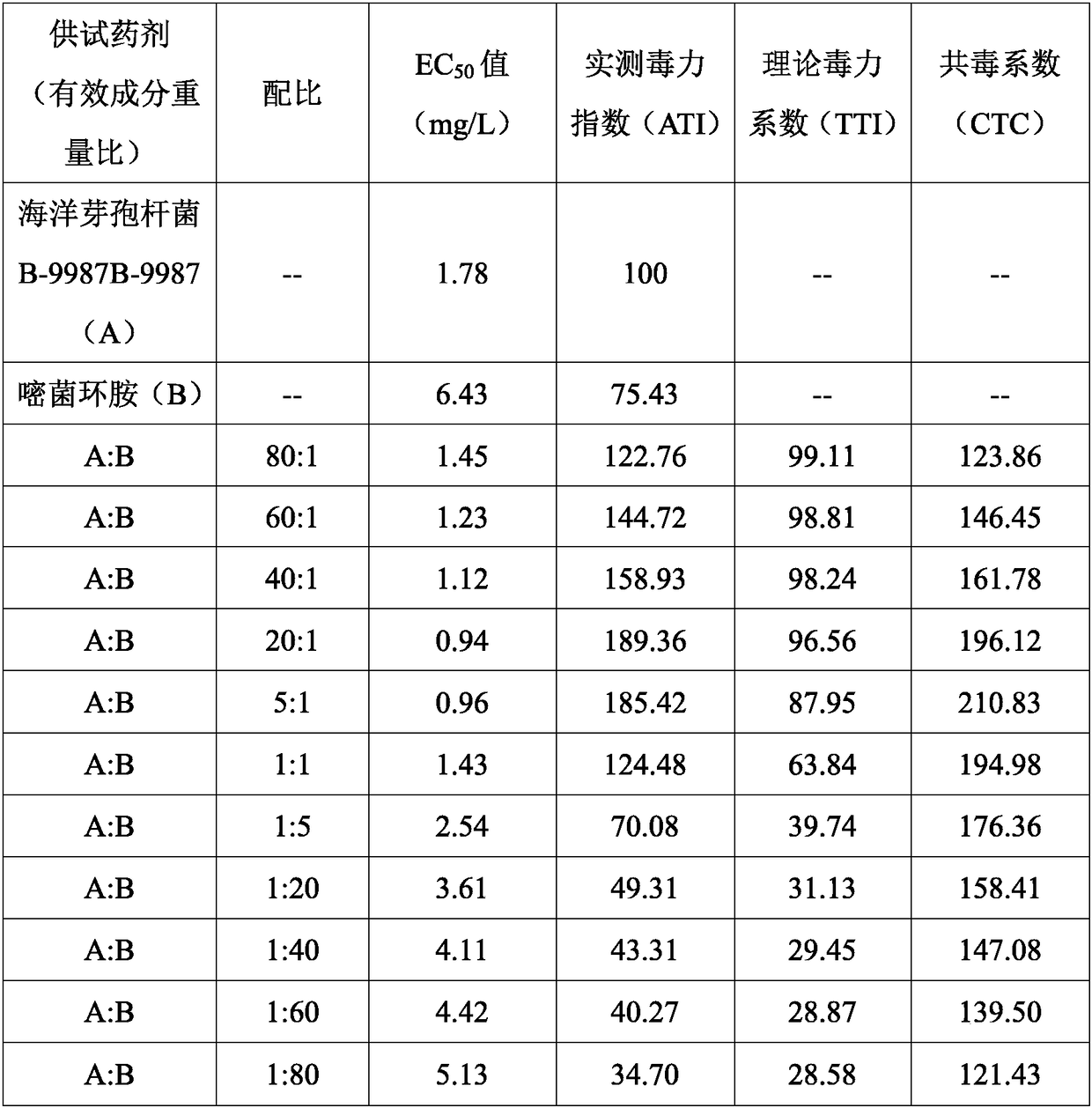
[0027] Example 1 Indoor Toxicity Determination of Marine Bacillus B-9987 and Cyprodinil Compounded to Tomato Botrytis Botrytis
[0028] Determination method of indoor antibacterial effect: The growth rate method is used to determine the inhibitory effect of the fungicidal composition on Botrytis cinerea. Take 5mm-diameter mycelium blocks from the edge of wheat take-all colonies cultured on PDA medium for 4 days and inoculate them on PDA medium plates containing different concentrations of fungicides, culture at a constant temperature of 28°C, and use the plates without agents as blank As a control, measure the colony diameter of each treatment after 4 days, and calculate the inhibitory percentage of the medicament to mycelial growth. Regression analysis was carried out by the logarithm of each treatment dose and the probability value of the mycelial growth inhibition rate, and the inhibitory medium concentration (EC) of the treatment fungicide to tomato gray mold disease was c...
Embodiment 2
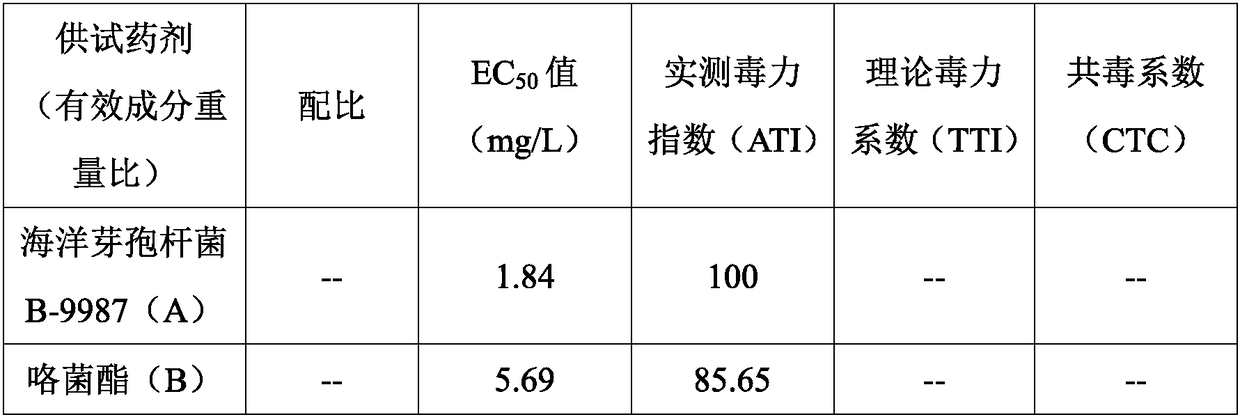
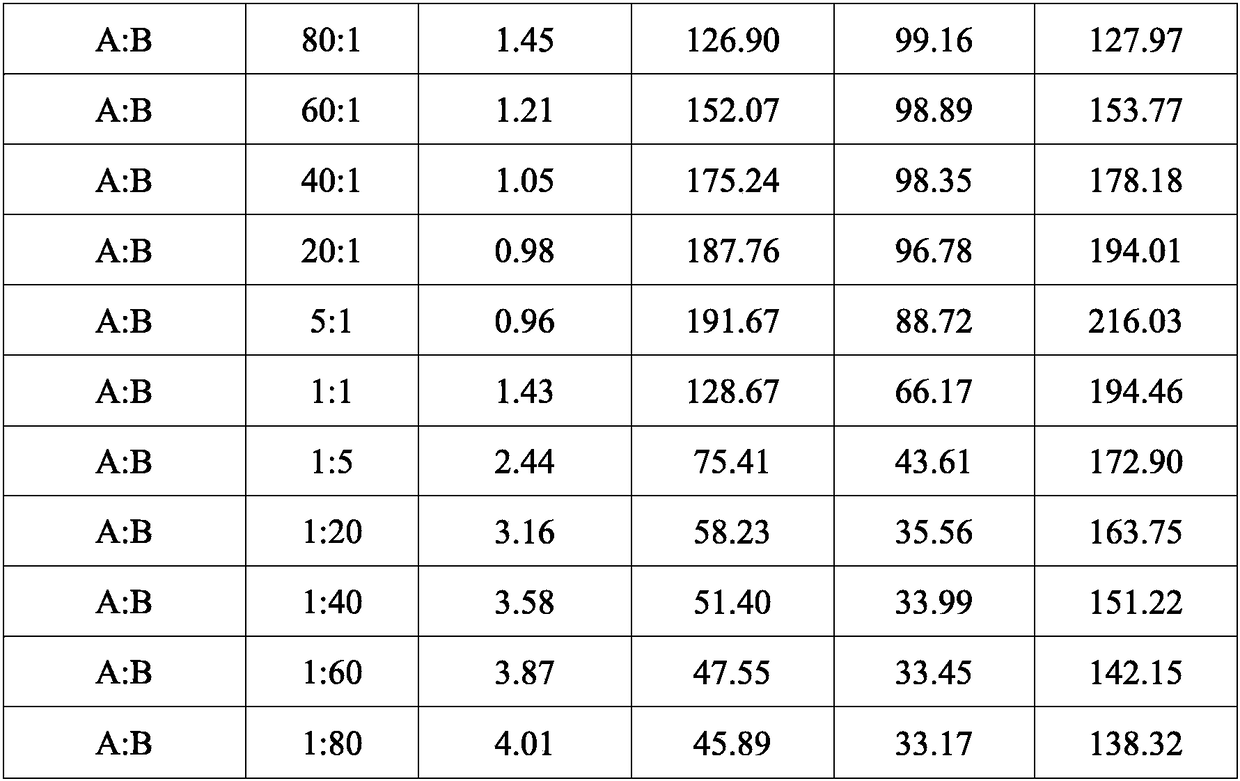
[0036] Example 2 Indoor virulence determination of marine bacillus B-9987 and fludioxate compounded against botrytis cinerea
[0037] Indoor bacteriostatic effect test method: the growth rate method was used to measure the inhibitory effect of the bactericidal composition on botrytis cinerea. Take mycelia pieces with a diameter of 5 mm from the edge of wheat sheath blight colonies cultured on PDA medium for 4 days and inoculate them on PDA medium plates containing different concentrations of fungicides, culture at a constant temperature at 28°C, and use the plates without agents as blank As a control, measure the colony diameter of each treatment after 4 days, and calculate the inhibitory percentage of the medicament to mycelial growth. The logarithm of each treatment dose and the probability value of the mycelial growth inhibition rate were used for regression analysis to calculate the inhibitory medium concentration (EC 50 ), and then calculate the co-toxicity coefficient (...
Embodiment 3
[0046] Example 3 Indoor Toxicity Determination of Cucumber Botrytis in Combination of Marine Bacillus B-9987 and Ditofencarb
[0047] Determination method of indoor antibacterial effect: The growth rate method is used to determine the inhibitory effect of the fungicidal composition on Botrytis cinerea. Take mycelium blocks with a diameter of 5 mm from the edge of the wheat root rot colony cultured on PDA medium for 4 days and inoculate them on PDA medium plates containing different concentrations of fungicides, and culture them at a constant temperature at 28°C. As a control, measure the colony diameter of each treatment after 4 days, and calculate the inhibitory percentage of the medicament to mycelial growth. Through the regression analysis of the logarithm of each treatment dose and the probability value of mycelial growth inhibition rate, the inhibitory medium concentration (EC) of fungicides to cucumber gray mold was calculated. 50 ), and then calculate the co-toxicity c...
PUM
 Login to View More
 Abstract
Description
Claims
Application Information
 Login to View More