
Breeding method of silage corn male parent
A technology of silage corn and male parent, which is applied in the field of breeding of silage corn male parent, can solve the problems of low biological yield, prolonged growth period, and uncoordinated male and female, and achieve high biological yield, high quality, and good greenness Effect
- Summary
- Abstract
- Description
- Claims
- Application Information
AI Technical Summary
Problems solved by technology
Method used
Image

Examples
Embodiment 1
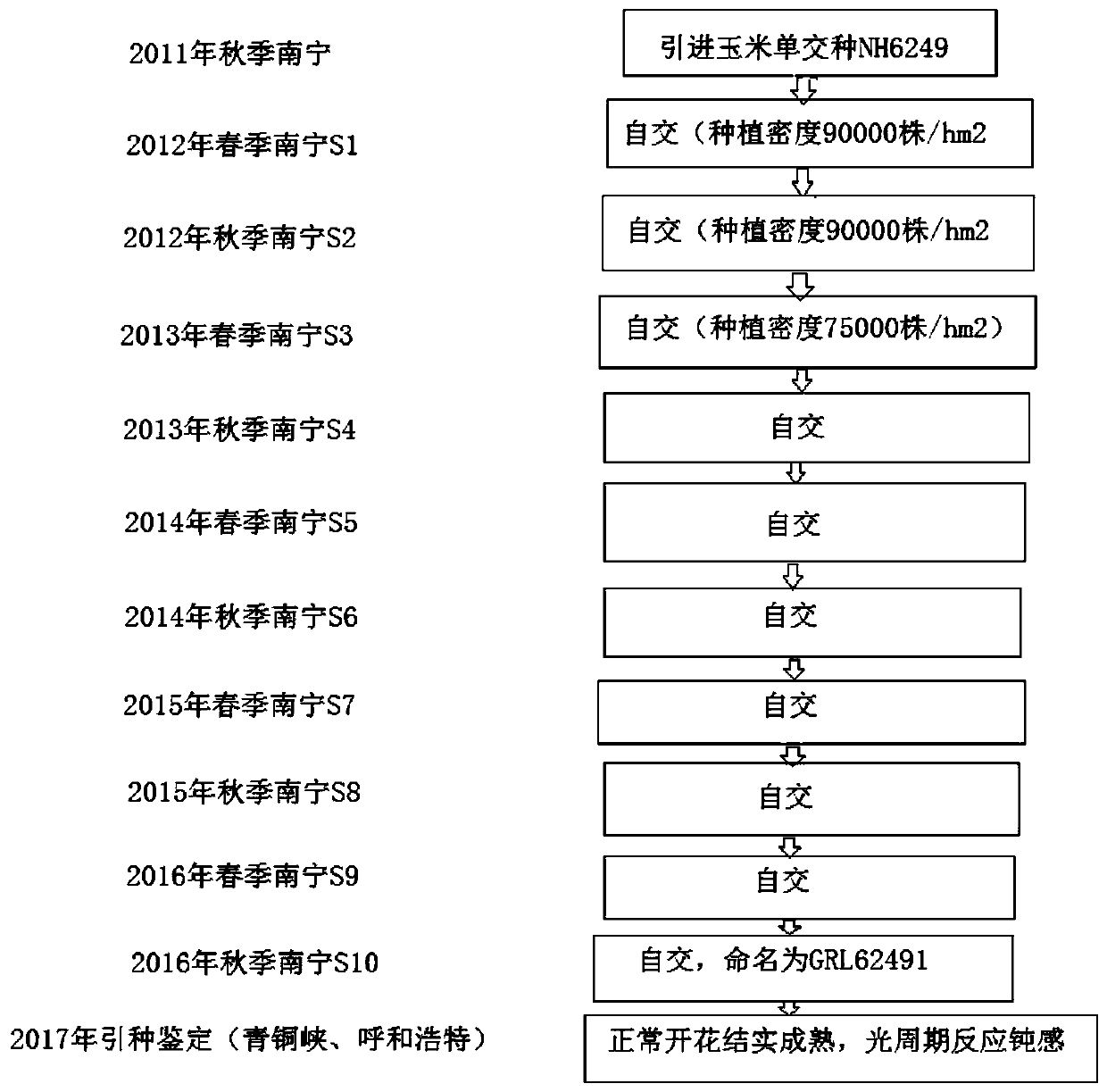
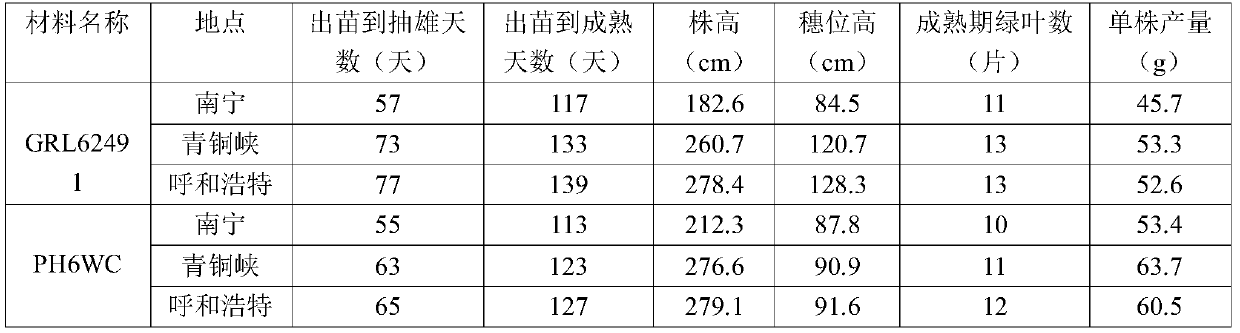
[0025] Breeding process of silage corn male parent GRL62491: This inbred line is a two-ring line that was bred in 2016 by using the single-cross corn NH6249 as the basic material and selecting excellent single plants for 10 consecutive generations of self-crossing. In 2012, spring S1 and autumn S2 were planted in Nanning, Guangxi, with 90,000 plants / hm 2 High-density selection suppresses and eliminates bad individual plants, and selects excellent individual plants for self-crossing in combination with target traits; plant S3-S10 generations from 2013 to 2016, and select plants with dark green leaves, high grain quality, and disease resistance through field investigations and indoor planting tests Good, dense and resistant to lodging, the excellent single plant is continuously selfed. At the end of 2016, a stable inbred line was bred and named GRL62491; in 2017, GRL62491 was planted in Qingtongxia City, Ningxia City, and Hohhot City, Inner Mongolia. The inbred line PH6WC was use...
Embodiment 2
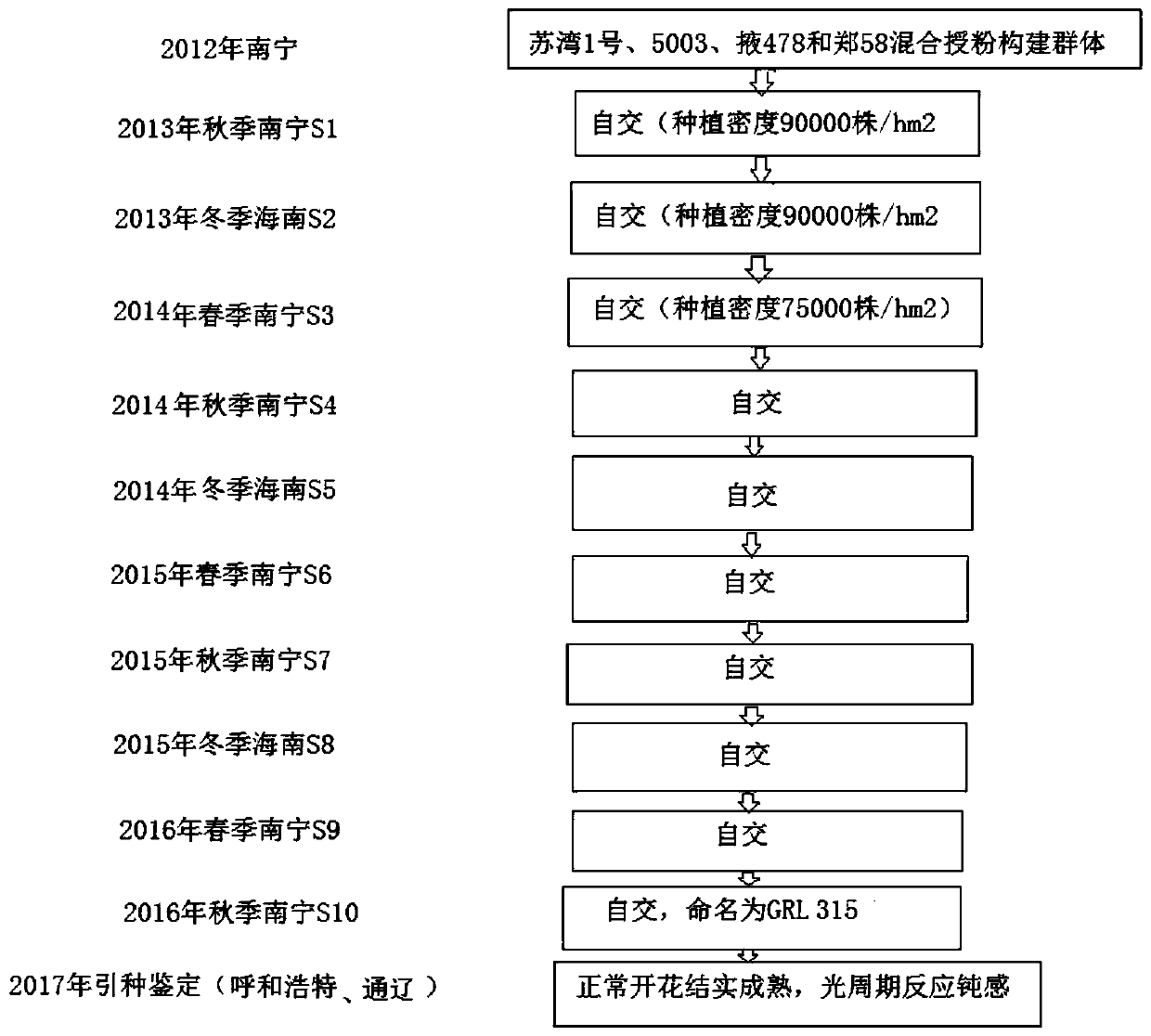
[0031] Breeding process of the male parent GRL315 of silage corn: in 2012, the population was constructed with Suwan 1, 5003, Ye 478 and Zheng 58 as the basic materials; in 2013, Nanning S1 in autumn and Hainan S2 in winter were used at 90,000 plants / hm 2 Self-fertilize under high density to select excellent individual plants; in the spring of 2014, Nanning S3 continued to self-select excellent individual plants; in autumn, Nanning S4 was identified for disease resistance, and individual plants with good disease resistance were selected for seedlings; in winter, Hainan S5 used 4 backbone lines Combining ability was determined as a test species; Nanning S6 was self-bred and purified in spring 2015, Nanning S7 was selected for self-crossing in autumn with good combining ability, and Hainan S8 was tested and self-crossed again in winter; Nanning S9 was self-bred and purified in spring 2016. In autumn, Nanning S10 selected the best ear selfing, and the inbred line was named GRL315....
PUM
 Login to View More
 Abstract
Description
Claims
Application Information
 Login to View More