
Pituitary stalk interruption syndrome biomarker as well as determination method and application thereof
A biomarker and determination method technology, applied in the field of pituitary stalk blockage syndrome biomarkers and its determination, can solve the problems of difficult operation, difficult diagnosis, expensive MRI diagnosis, etc., and achieve easy operation, low cost and fast The effect of batch detection
- Summary
- Abstract
- Description
- Claims
- Application Information
AI Technical Summary
Problems solved by technology
Method used
Image

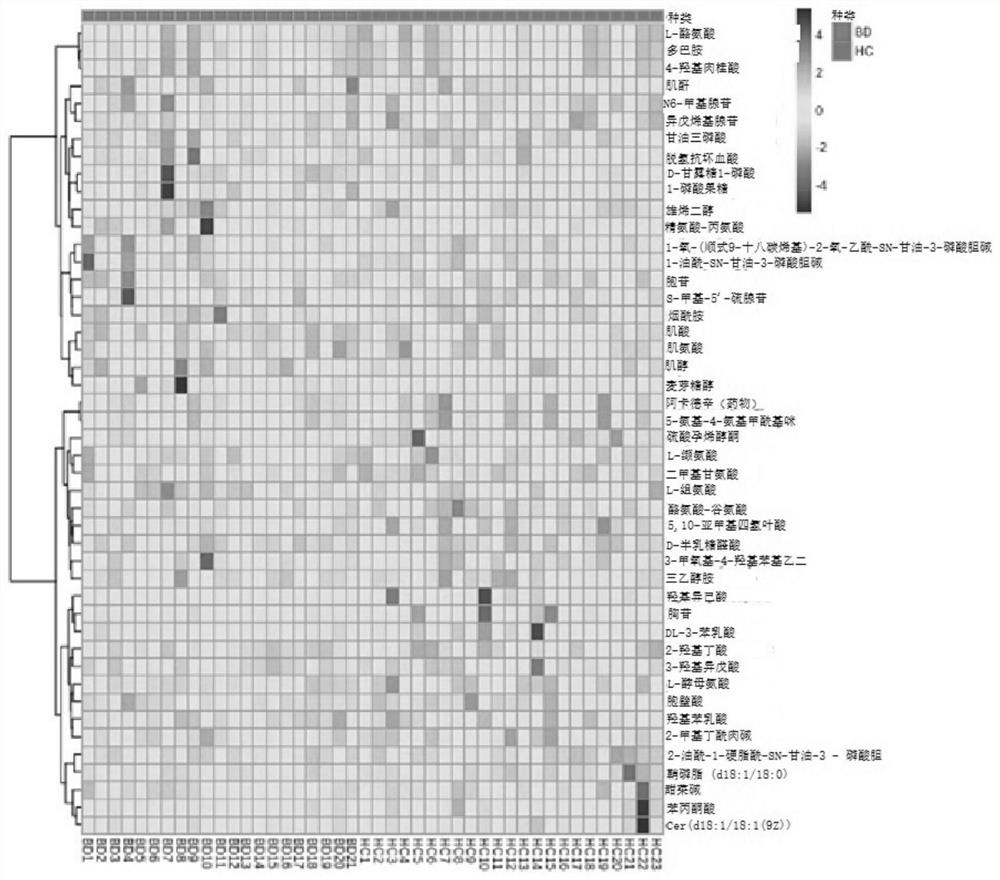
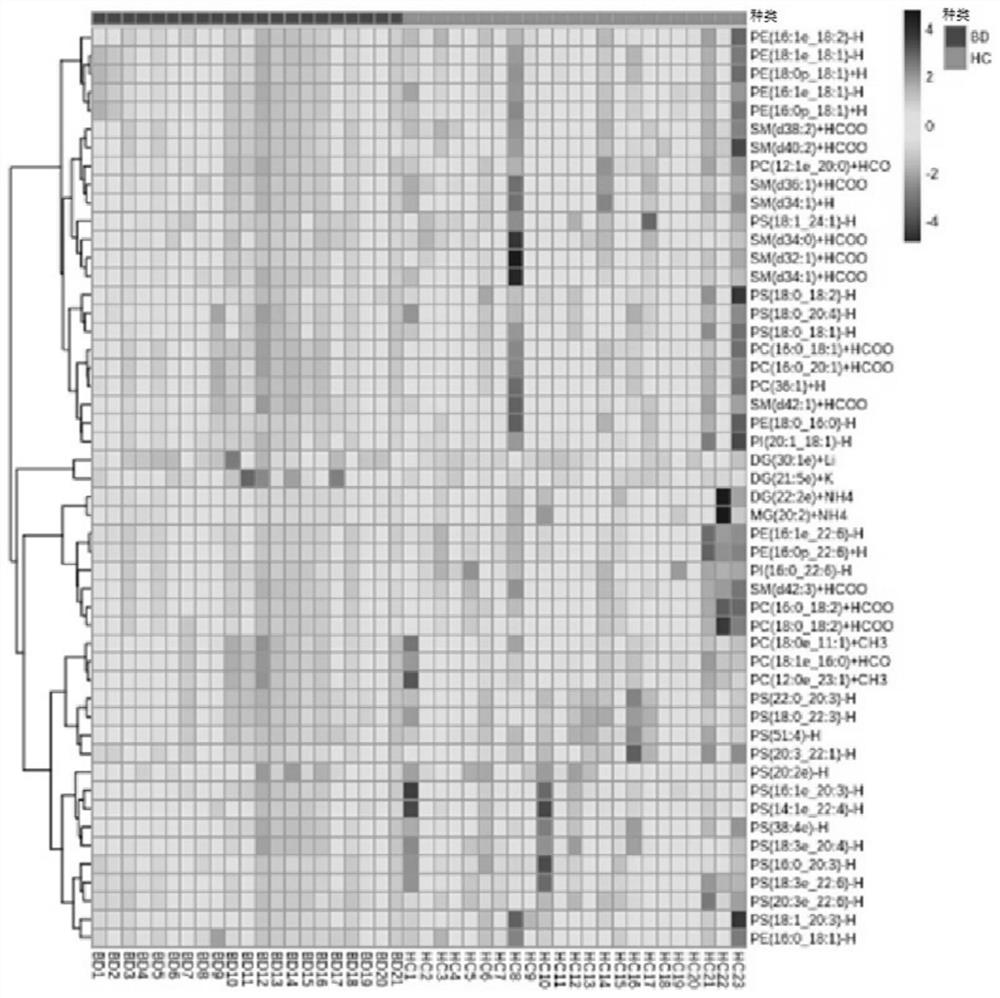
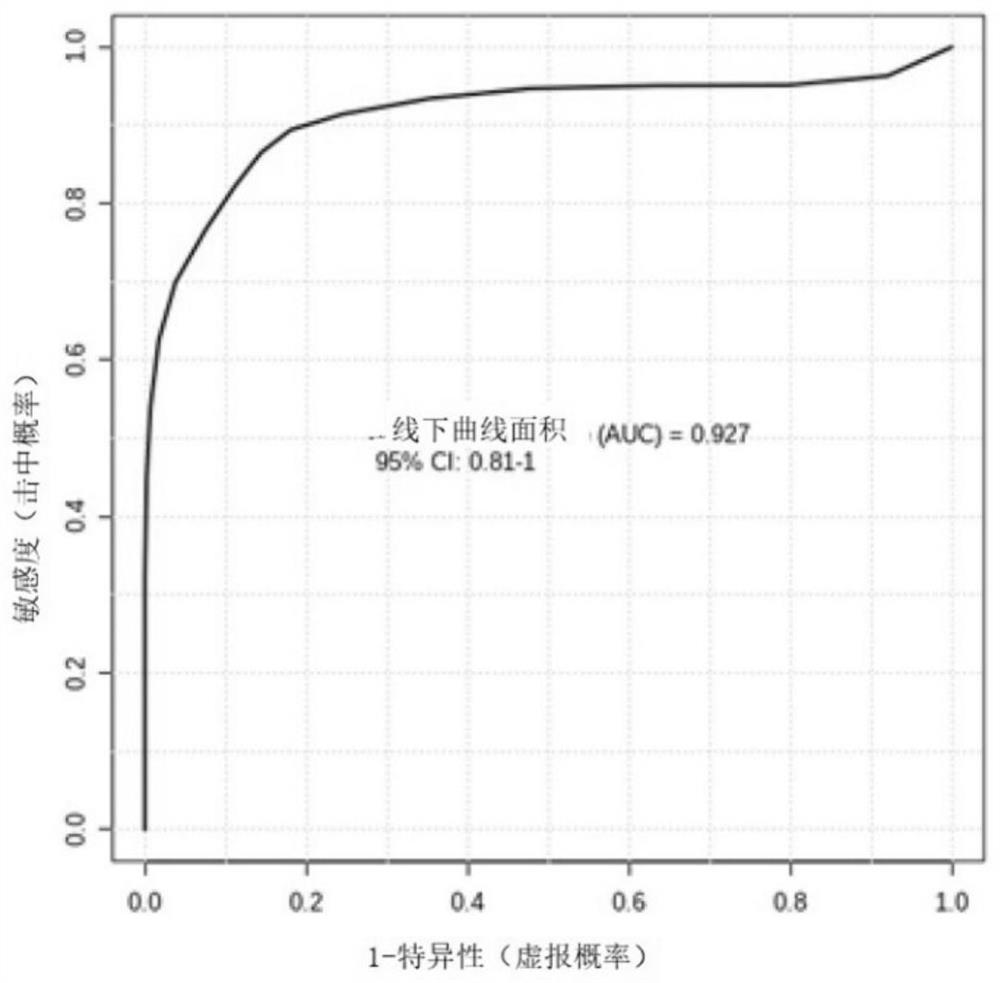
Examples
Embodiment 1
[0030] The present embodiment provides PSIS diagnostic biomarkers, the biomarkers are pregnenolone sulfate and L-
[0031] saccharin.
[0032] 21 PSIS patients (BD group), 23 nCHH patients (HH group), 20 varicocele patients (VC group) and 23 healthy controls with normal semen parameters (HC group) were recruited from Peking Union Medical College Hospital. Diagnostic criteria include: (a) growth hormone deficiency; (b) triad of absent or thin pituitary stalk, pituitary hypoplasia, and / or ectopic neurohypophysis on magnetic resonance imaging (MRI). All patients and HCs included were of Han nationality. Semen samples were generated by masturbation after ≥3 days of abstinence. The basic information of all participants is listed in Table 1.
[0033] All PSIS patients had abnormalities (100%). Their mean age was 24.6±4.9 years. Many patients had non-liquefied semen (10 / 21) and concentrated semen (9 / 21). PSIS patients had smaller testicular volume (PSIS group 5.9±2.6ml vs HC gr...
Embodiment 2
[0056] Different from Example 1, BD vs nCHH, according to the main difference lipid species, combined with multi-stage mass spectrometry information to search the metabolite database, can preliminarily determine that the PSIS biomarker can also be MG (18:2(9Z, 12Z) / 0:0 / 0:0). Validated by ROC, PSIS can be distinguished from other types of male infertility patients. The marker can be used to prepare a PSIS diagnostic kit and / or reagent.
Embodiment 3
[0058] Different from Example 1, BD vs VC, according to the main differential lipid species, combined with multi-stage mass spectrometry information to search the metabolite database, it can be preliminarily determined that the PSIS biomarker can also be uncosanoic acid. Validated by ROC, PSIS can be distinguished from other types of male infertility patients. The marker can be used to prepare a PSIS diagnostic kit and / or reagent.
PUM
 Login to View More
 Abstract
Description
Claims
Application Information
 Login to View More