
Making process of antireflecting protection component for projecting screen
A technology for projection screens and manufacturing methods, which is applied to optics, instruments, projection devices, etc., can solve the problems of affecting image quality, low production efficiency, and no reduction in reflectivity, and achieve simple production process, high production efficiency, and thickness. control effect
- Summary
- Abstract
- Description
- Claims
- Application Information
AI Technical Summary
Problems solved by technology
Method used
Image

Examples
Embodiment Construction
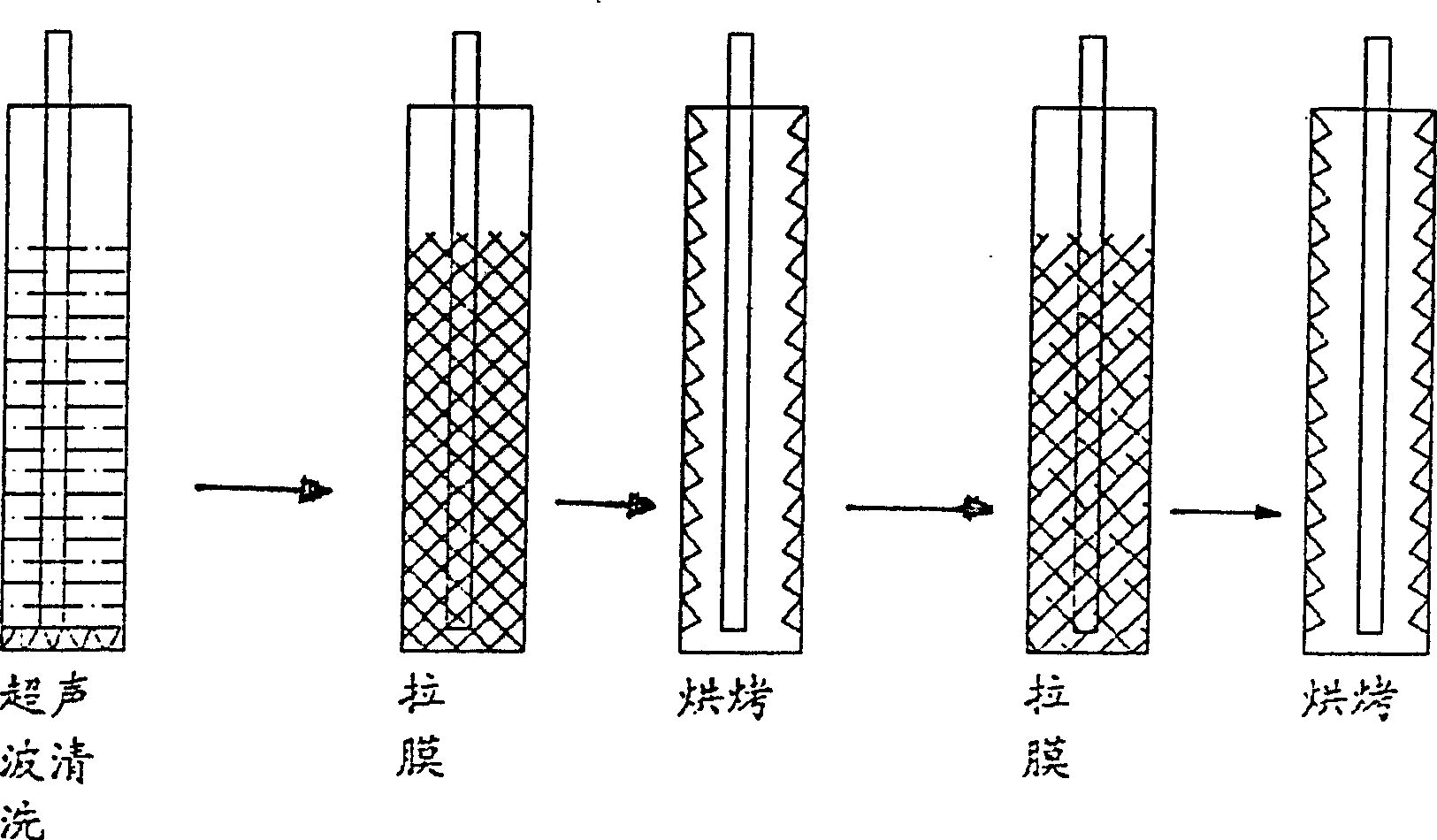
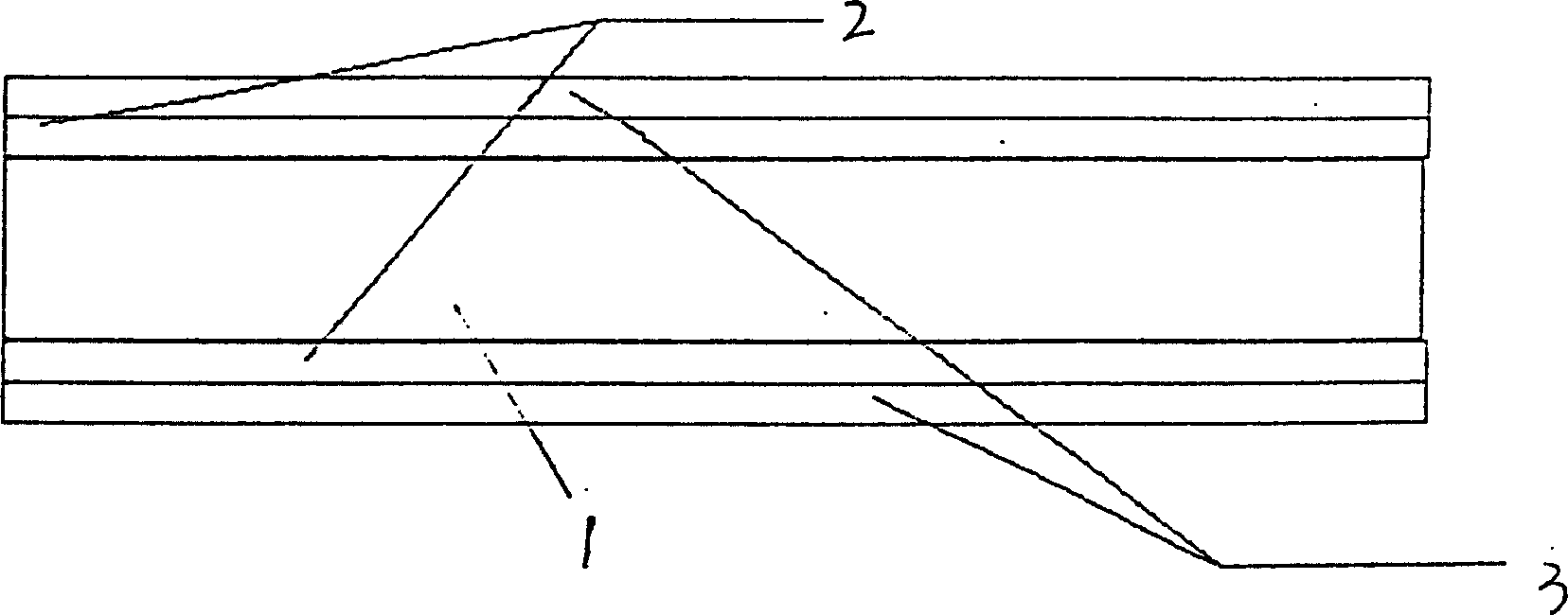
[0032] The present invention is shown in a diagram, which describes the equipment and process for continuously producing anti-reflection and anti-reflection protection components, that is, anti-reflection and anti-reflection glass. Its production process is as follows:
[0033] The first step: glass cleaning, considering the large area of the glass, it is generally cleaned by ultrasonic cleaning process. Glass uses K 9 tempered glass.
[0034] The second step: place the above-mentioned cleaned glass on Ti(OC 2 h 5 ) 4 +4H 2 O solution pulls the film, forming H on the double surface of the glass 4 TiO 4 +C 2 h 5 OH sol films. Control the stable environmental conditions. The liquid temperature is 25° C. to 36° C., and the drawing speed is controlled at 0.1 to 0.5 m / s, so that the corresponding film thickness can be obtained.
[0035] Step 3: Bake in a constant temperature room at 110 to 150°C for 5 to 10 minutes to volatilize the dehydrated ethanol of titanate to fo...
PUM
 Login to View More
 Abstract
Description
Claims
Application Information
 Login to View More