
Phosphors for a plasma display panel, and a plasma display panel using the same
A plasma and display panel technology, applied in the field of phosphors, can solve problems such as reducing image brightness
- Summary
- Abstract
- Description
- Claims
- Application Information
AI Technical Summary
Problems solved by technology
Method used
Image

Examples
Embodiment
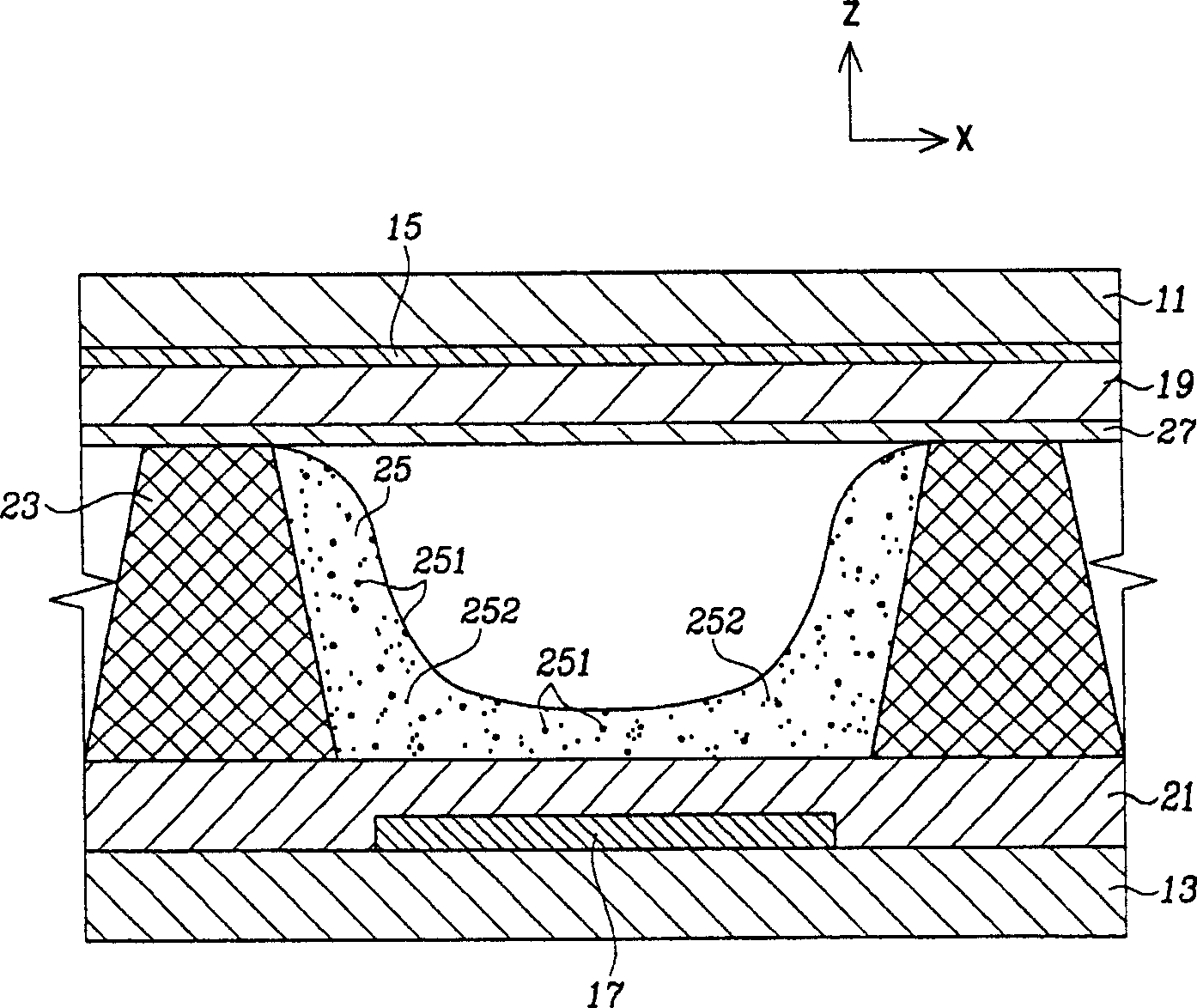
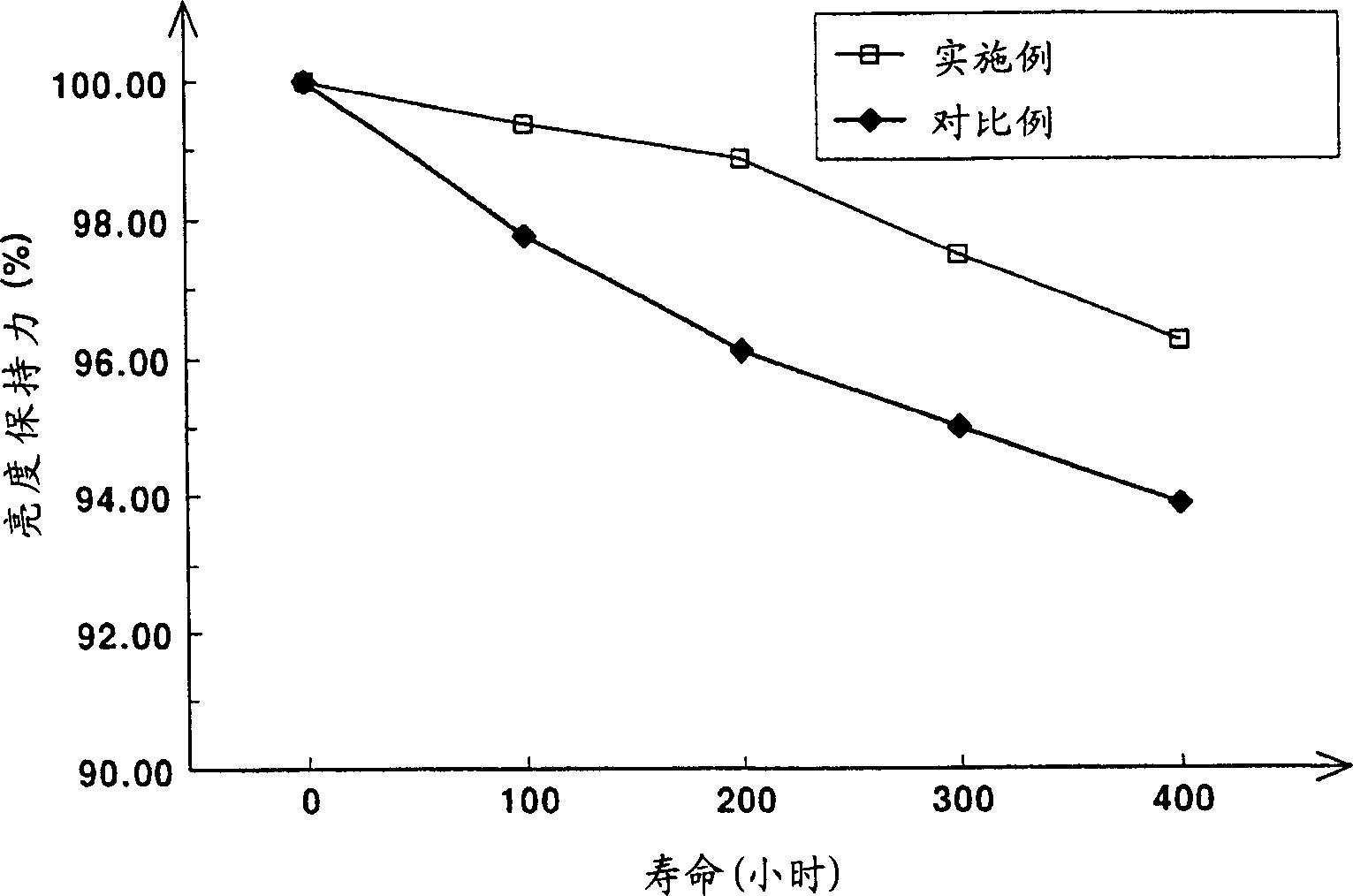
[0027]First dissolve the binder, nitroethyl cellulose ("NEC") in a solvent to provide an appropriate viscosity, then add optical initiators, multifunctional monomers and various additives to prepare a high molecular weight liquid solution. A fluorescent powder containing 20% by weight of MgO is added as the first non-fluorescent material to the high molecular weight liquid solution. The solution was then stirred with a high speed stirrer. Then, the phosphor powder is evenly dispersed by three rollers to form a photosensitive phosphor slurry while controlling the viscosity. The fluorescent paste is then coated between the barrier ribs and fired to make a PDP. Brightness was measured at 0 hours, 100 hours, 200 hours, 300 hours and 400 hours.
PUM
 Login to View More
 Abstract
Description
Claims
Application Information
 Login to View More