Recombinant human co-stimulatory molecule bacilli-calmette-guerin strain and process for making same

A technology of molecular BCG and co-stimulatory molecules, which is applied in the field of genetic engineering, can solve problems such as no BCG strains, and achieve the effect of reducing dosage and reducing toxic and side effects

CN1704472AActive Publication Date: 2005-12-07天津市泌尿外科研究所 +4
1 Cites 3 Cited by

Patent Information

Authority / Receiving Office
CN · China
Patent Type
Applications(China)
Current Assignee / Owner
Publication Date
2005-12-07

Smart Images

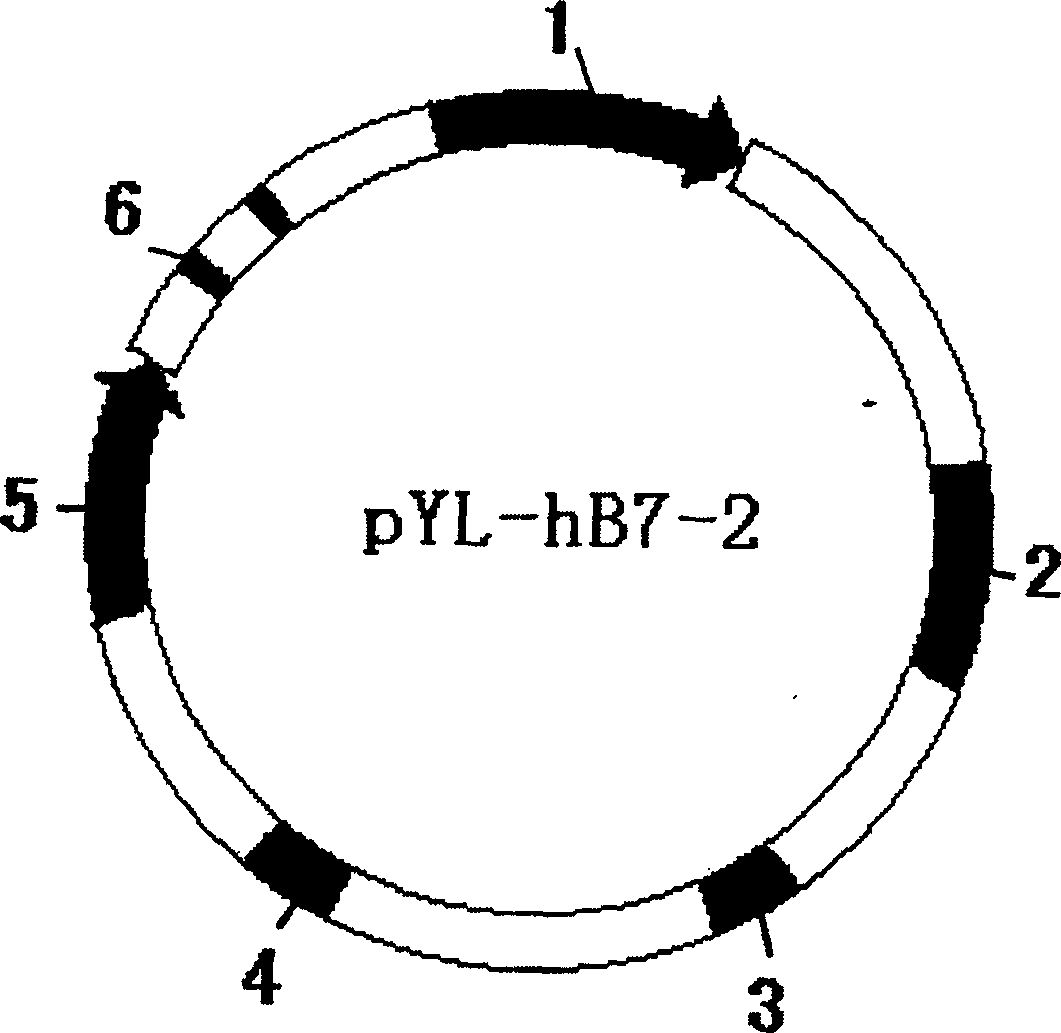
  • Figure 1
    Figure 1
Patent Text Reader

Abstract

The invention discloses a recombinant human co-stimulatory molecule bacilli-calmette-guerin strain and process for preparation, wherein the cultrue preservation number is CGMCC No.1120. The preparing process consists of carrying out hB7-2(IgC+IgV) fragment polymerase chain reaction, establishing plasmid pYL-hB7-2 and transforming, carrying out E.Coli-pYL-hB7-2 monoclonal bacterial colony expansion, plasmid extraction and purification, electrophoresis, enzyme cutting and determination of pYL-hB7-2 plasmid through PCR reaction, bacillus Calmette-Guerin vaccine electrical transformation, rBCG-hB7-2 monoclonal bacterial colony selection, expansion, and determination.
Need to check novelty before this filing date? Find Prior Art

Description

technical field

[0001] The invention relates to genetic engineering technology, in particular to a recombinant human co-stimulatory molecule Bacillus Calmette-Guerin strain and a preparation method thereof. Background technique

[0002] Bacillus Calmette-Guerin (BCG) is a highly virulent biological immunomodulator formed by attenuated Mycobacterium bovis, which has a high degree of safety and few serious complications, and is widely used in the prevention of tuberculosis all over the world.

[0003] Intravesical infusion of wild-type BCG has achieved satisfactory clinical efficacy in the prevention of tumor recurrence, treatment of residual tumors and carcinoma in situ, but 30-45% of patients still do not respond to intracavitary BCG infusion therapy. Endo-BCG perfusion can cause local and systemic reactions in the bladder, 5% of patients may have serious complications, and 0.5% may even be life-threatening, which limits the prevention and treatment of superficial bladder tu...

Examples

Embodiment Construction

[0024] 1. Materials

[0025] (1) Bacterial strain: Escherichia coli is DH5α, which is preserved in our institute. BCG was purchased from Beijing Institute of Biological Products, Denmark type I.

[0026] (2) Plasmid: The vector plasmid pYL-hIFN-α-2B plasmid was provided by Professor YI LUO of Iowa University, USA. The huB7-2(IgV+C) / pGEX-4T-3 plasmid containing hB7-2 cDNA was provided by Mr. Lai Baochang from Xi'an Medical University.

[0027] (3) Main instruments and equipment

[0028] 1. Microplate reader: SUNRISE TECAN A-5082 Austria

[0029] 2. Constant temperature incubator and desktop centrifuge:

[0030] 3. Low temperature and high speed centrifuge: BECKMAN J2-HS USA

[0031] 4. PCR instrument: PERKIN ELEMER GeneAmp PCR System 2400 USA

[0032] 5. Electroporator: Genepulser Electroprotocol, USA

[0033] (4) Preparation of main reagents and solutions

[0034] 1. Gel Extraction Kit: E.Z.N.A Gel Extraction Kit

[0035] 2. Purification Kit: TaKaRa DNA Fragment Purif...