[0010] The present invention provides a unique unexpectedly simple and easy to use cardiac
prosthesis that includes a semi-circular band portion having first and second ends. The first end includes a first portion of a tether and the second end includes a second portion of the tether, such that when the first and second portions of the tether are secured to each other, the ultimate
assembly provides an adjustable semi-circular band. This band can be affixed to an annulus of a valve, or can be inserted through trabeculae associated with papillary muscles.
[0016] The method of the invention can further include securing synthetic or biologic chords from the
papillary muscle to the annuloplasty
prosthesis. There are several ways to accomplish this. The chords can be inserted through tissue about each
prosthesis. Additional securing can be accomplished by use of pledgets to help prevent damage to the tissue. Alternatively, the replacement chords can be inserted through each prosthesis, thereby minimizing potential damage to the surrounding tissue. The chords can be made of materials known in the art, such as nylons,
polypropylene, polyesters, polyurethanes and the like or made of biologic membranes. The replacement chord can also be a
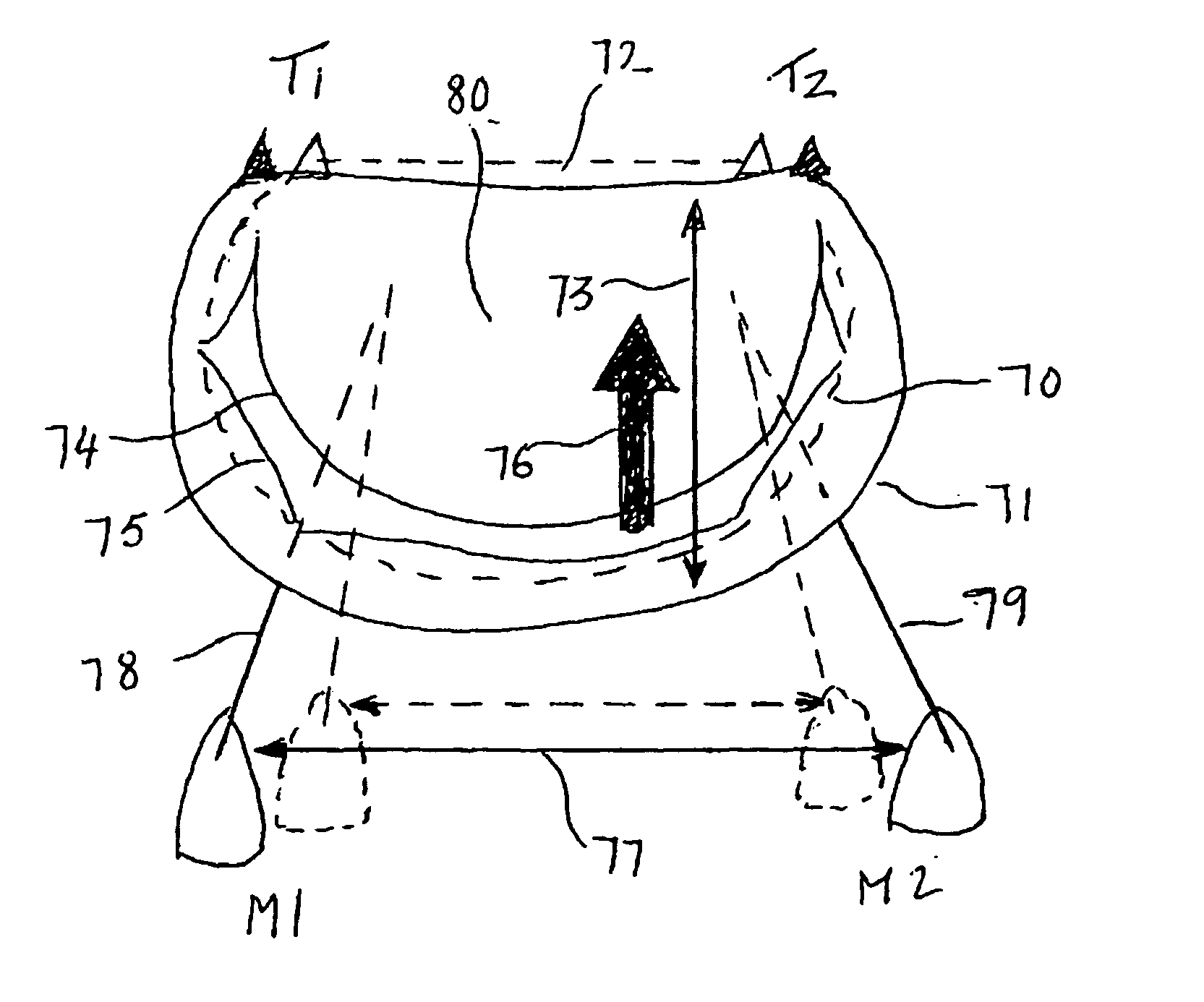
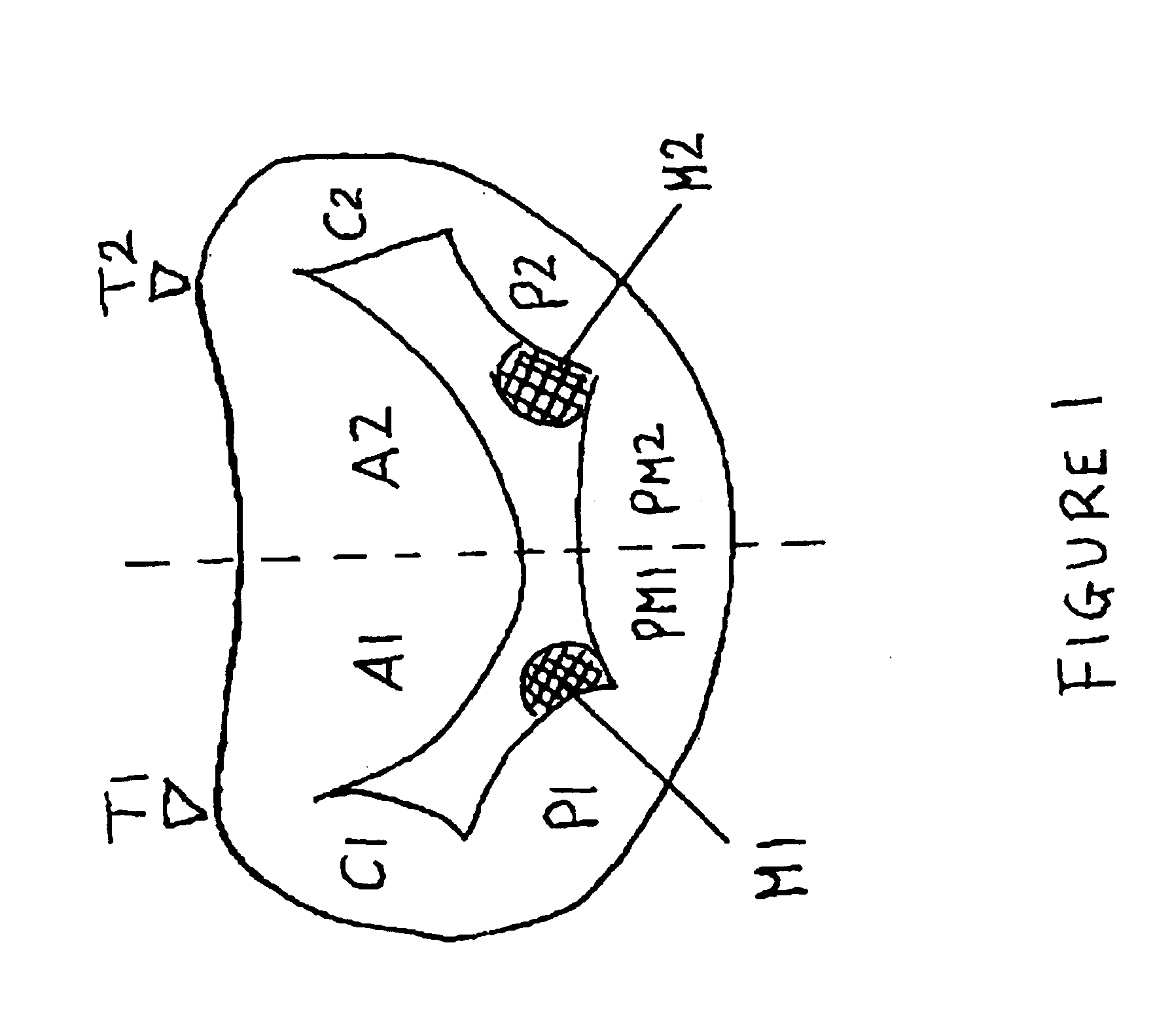
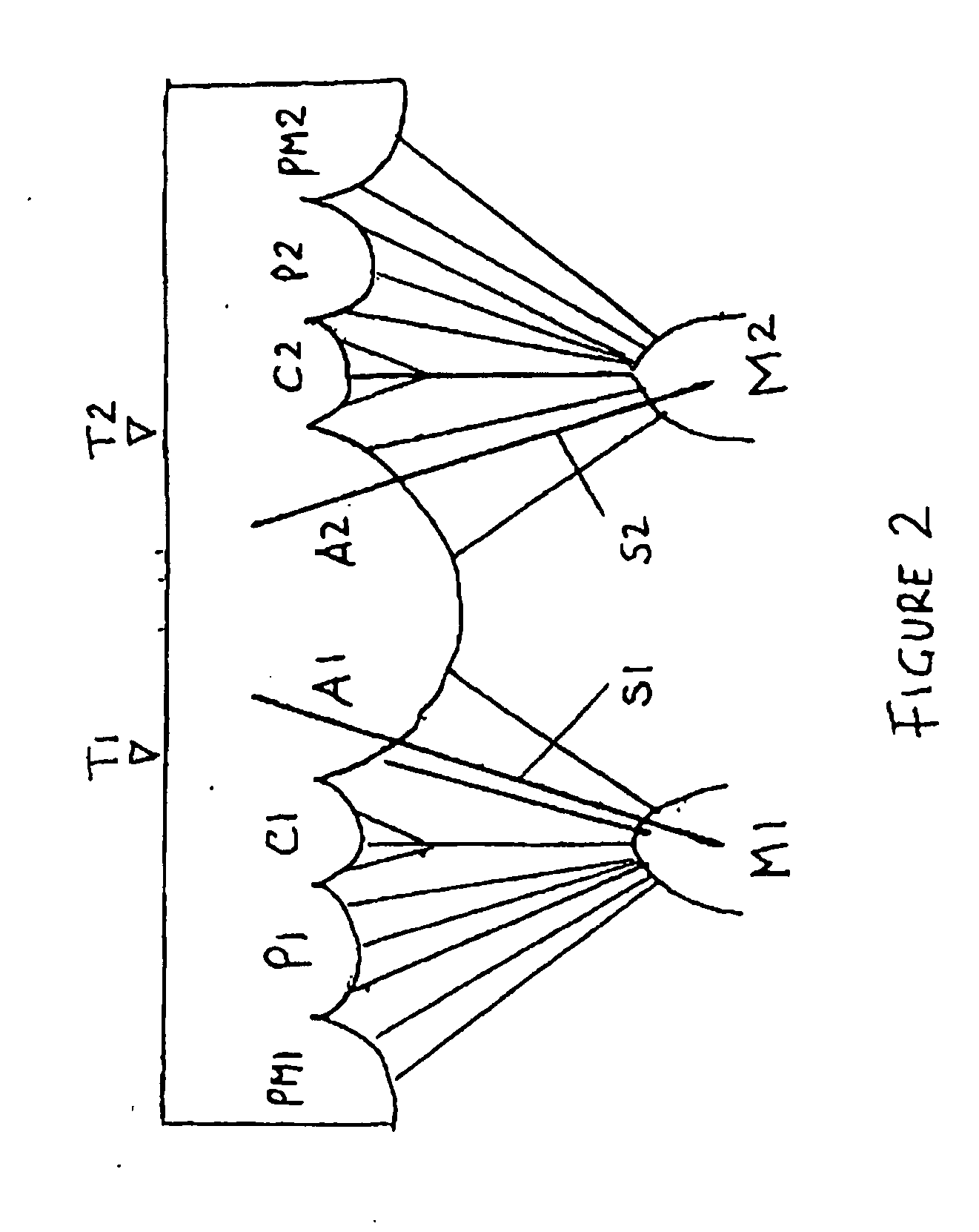
rigid rod. In any event, the synthetic chords will have a length wherein the relationship between the lengths of the chords are adjusted such that the distance from the tips of the papillary muscles is approximately equal to the intertrigonal distance of the valve annulus.
[0018] To help estimate the intertrigonal distance and assist with the methods of the invention, the present invention also provides a trigonal-papillary
sizing device. The trigonal-papillary
sizing device includes a
handle attached to a two forked prong. The two forked prong includes a proximal portion and two distal ends each having an equivalent length, wherein the proximal portion connects the two prongs. The two distal prong ends are generally rounded or configured in such a fashion as to not damage tissue as the device is being manipulated in the ventricular chamber. The distance between the two prongs and the lengths of the two prongs are equivalent, the distances being equal to the intertrigonal distance of the valve.
Sizing devices can be constructed such that the operator can quickly choose the appropriate size by comparing the distance between the forks with the intertrigonal distance. The present invention, therefore provides, intertrigonal-papillary sizing devices of varying dimensions that are suited to various sized hearts.
[0020] The present invention also provides methods to align the papillary muscles of the
ventricle. This is accomplished by forming a passage about the papillary muscles of the
ventricle through the surrounding trabeculae. The cardiac prosthesis of the invention, as described throughout the specification, is guided through and adjusted via the tether, such that the papillary muscles and chords are aligned relative to the
mitral valve annulus. In an alternative embodiment, the cardiac prosthetic can be guided through the trabeculae simultaneously while forming the passage, or the device can be configured such that a needle or hook is attached to either end of the tether and then removed prior to securing the tether. Optionally a biocompatible tape, such as Gore-Tex could be used. Additionally, pledgets can be secured to the papillary muscles with the suture or tape to prevent damage to the papillary tissue.
[0024] The method can further include securing chords from the cardiac prosthesis to the
mitral valve annuloplasty prosthesis. There are several ways to accomplish this. The chords can be inserted through tissue about each prosthesis. Additional securing can be accomplished by use of pledgets to help prevent damage to the tissue. Alternatively, the chords can be inserted through each prosthesis, thereby minimizing potential damage to the surrounding tissue. The chords can be made of materials known in the art, such as nylons,
polypropylene, polyesters, polyurethanes and the like or biologic membrane. The chord can also be a
rigid rod. In any event, the chords will have a length wherein the relationship between the lengths of the chords are adjusted such that the distance from the tips of the papillary muscles is equal to the intertrigonal distance of the
mitral valve annulus.


 Login to View More
  Login to View More