
Pressure pulse/shock wave therapy methods for organs
- Summary
- Abstract
- Description
- Claims
- Application Information
AI Technical Summary
Benefits of technology
Problems solved by technology
Method used
Image

Examples
Embodiment Construction
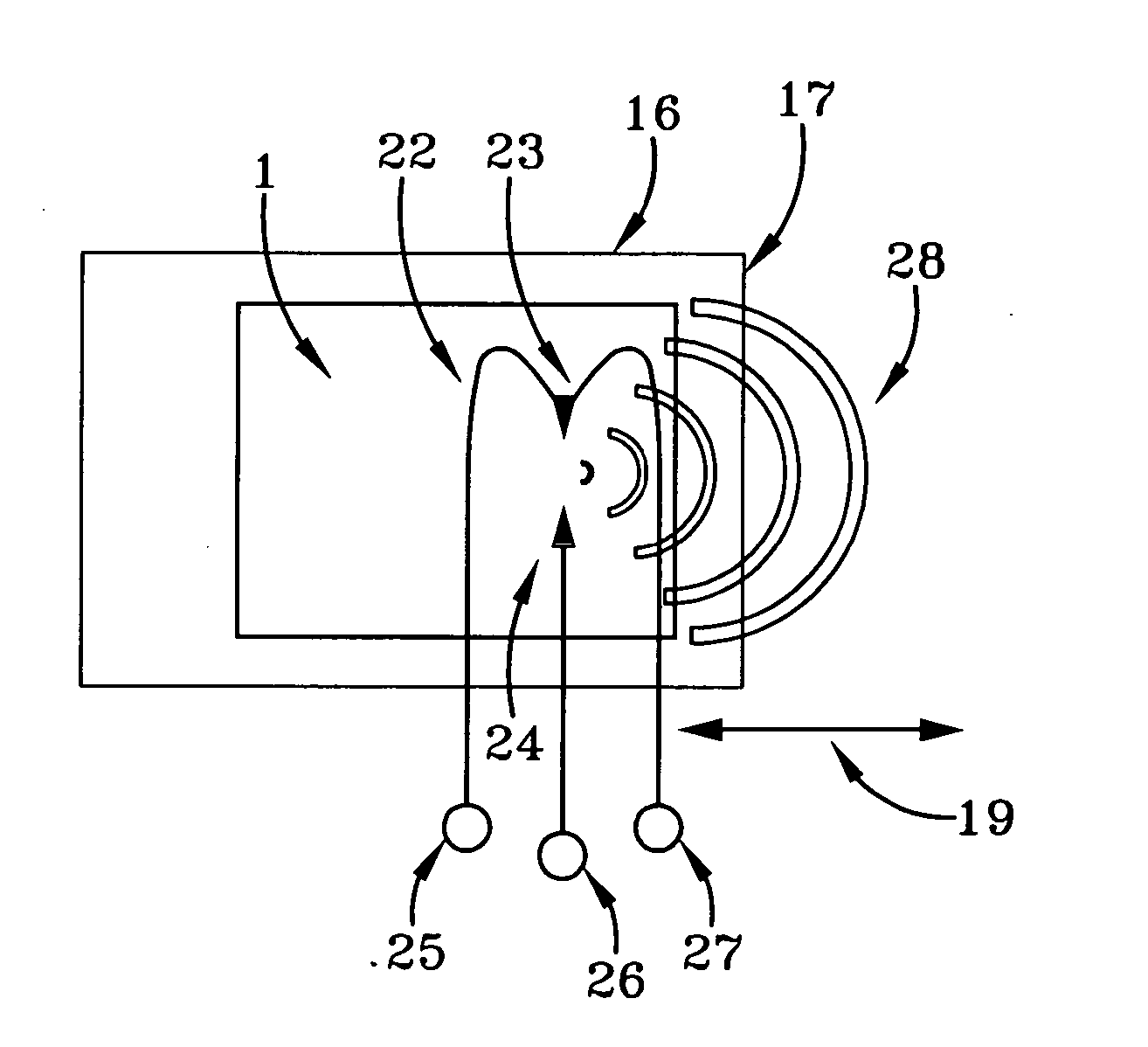
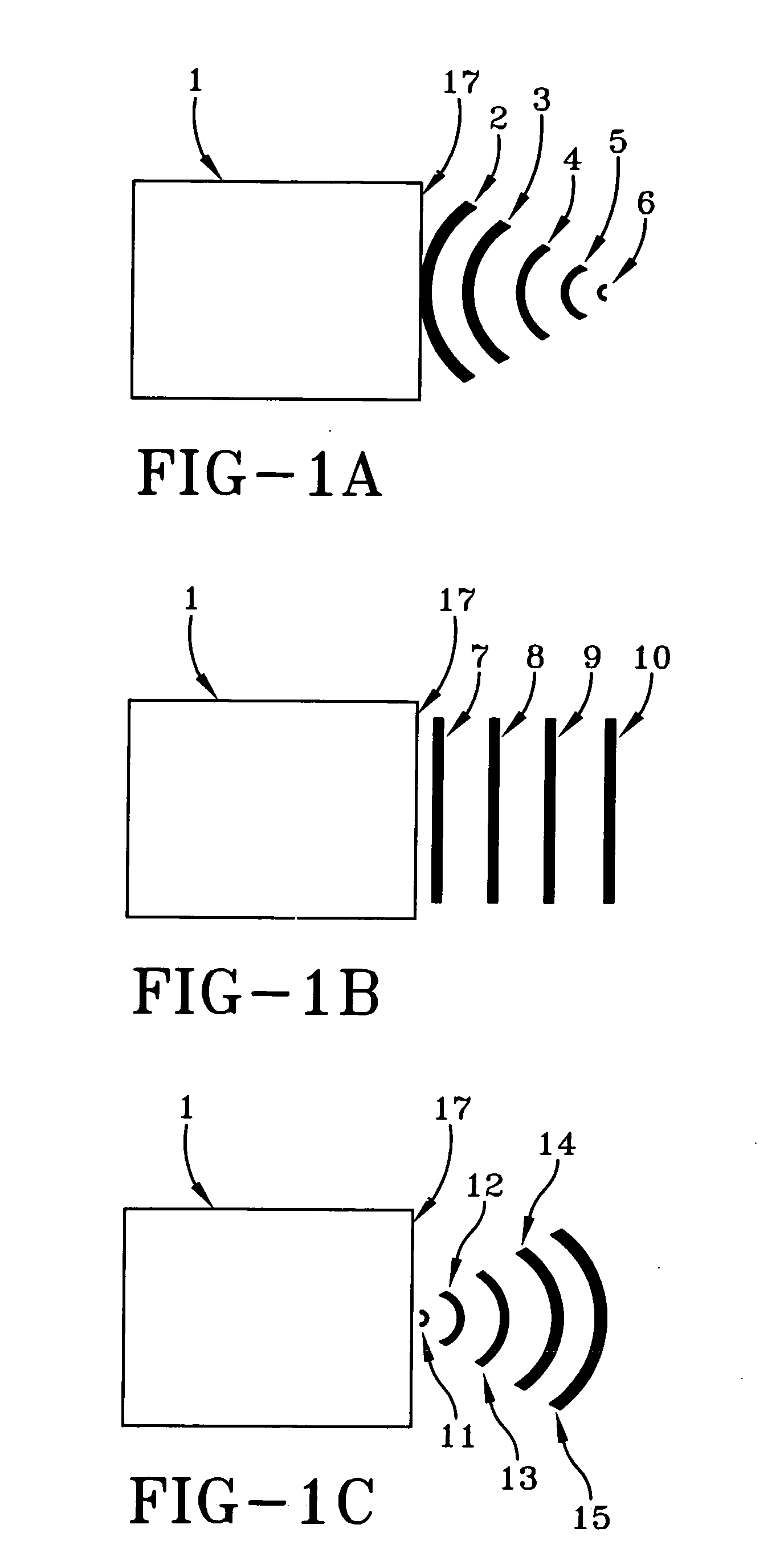
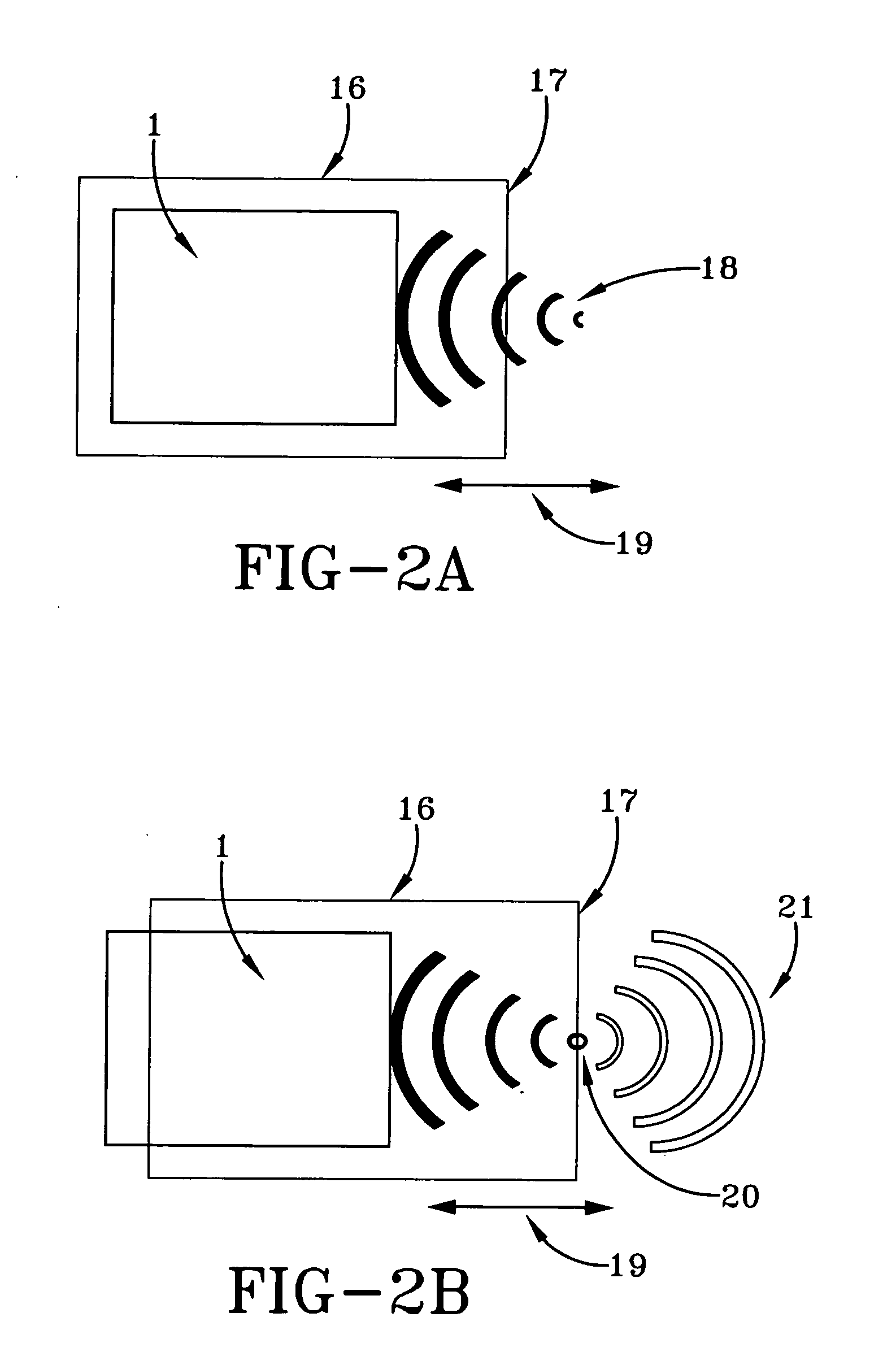
[0055] In the shock wave method of treating an organ of a mammal be it human or an animal with an at least partially exposed target site on the organ, the organ is positioned in a convenient orientation to permit the source of the emitted waves to most directly send the waves unobstructed to the target site to initiate shock wave stimulation of the target area with minimal, preferably no interfering tissue or bone features in the path of the emitting source or lens. Assuming the target area is within a projected area of the wave transmission, a single transmission dosage of wave energy may be used. The transmission dosage can be from a few seconds to 20 minutes or more dependant on the condition. Preferably the waves are generated from an unfocused or focused source. The unfocused waves can be divergent or near planar and having a low pressure amplitude and density in the range of 0.00001 mJ / mm2 to 1.0 mJ / mm2 or less, most typically below 0.2 mJ / mm2. The focused source preferably ca...
PUM
 Login to View More
 Abstract
Description
Claims
Application Information
 Login to View More