
Enhanced performance mode converter
a converter and performance technology, applied in the field of optical mode converters, can solve the problems of less effective modulator, prone to problems, and ineffective electronic mode modulator
- Summary
- Abstract
- Description
- Claims
- Application Information
AI Technical Summary
Benefits of technology
Problems solved by technology
Method used
Image

Examples
Embodiment Construction
[0026] The present invention sets out to provide an enhanced electro-optical mode converter by alleviating problems due to the presence of free carriers (both intrinsic free carriers and free carriers generated through multi-photon absorption) in the waveguide region of the modulator. The invention further sets out to mitigate the effect of the presence of higher order modes in the waveguide as well as to provide a means for allowing a lower mode conversion voltage without substantially augmenting the modulator's inductance and capacitance.
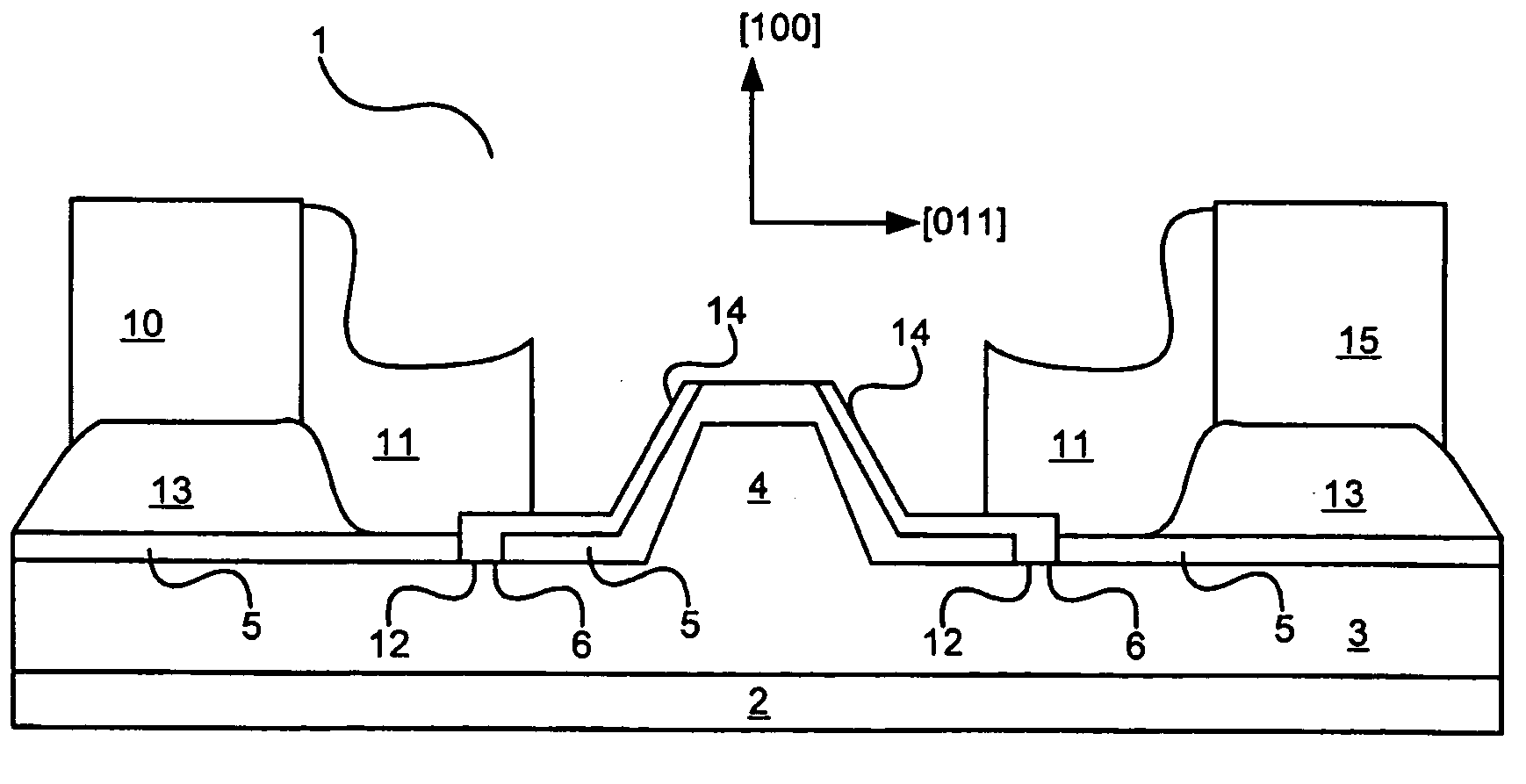
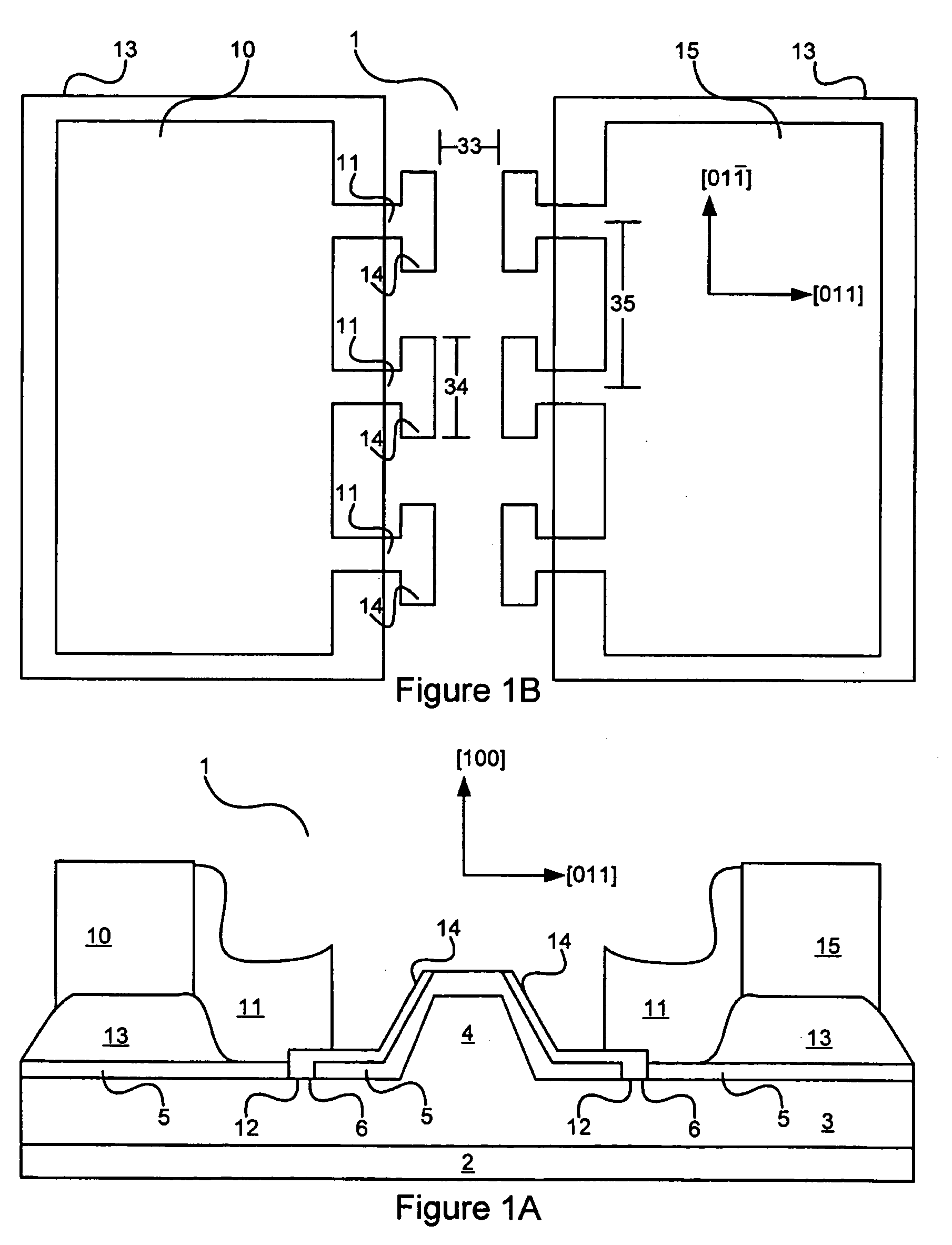
[0027] An embodiment of the present invention is shown in FIGS. 1A and 1B where cross-sectional and top views of optical mode converter 1 are respectively shown.
[0028] A substrate 2 supports an optical guiding layer, such as layer 3, which includes a waveguide, such as ridge optical waveguide 4. In a presently preferred embodiment, the optical guiding layer, illustrated as layer 3, is epitaxially grown on substrate 2, though in other embodiments...
PUM
| Property | Measurement | Unit |
|---|---|---|
| impedance | aaaaa | aaaaa |
| dielectric constant | aaaaa | aaaaa |
| dielectric constant | aaaaa | aaaaa |
Abstract
Description
Claims
Application Information
 Login to View More