Subsurface imagery for temperature measurement and fluid flow for oil recovery using electromagnetic impedance tomography (EMIT)

a technology of electromagnetic impedance tomography and subsurface imagery, which is applied in the direction of instruments, detection using electromagnetic waves, and borehole/well accessories, etc., can solve the problems of inability to take into account or take advantage of limited quality and utility of image created using current system and method, and inability to give a three-dimensional image over a large volume of conventional cross-borehole eit methods

US20060170424A1Inactive Publication Date: 2006-08-03KSN ENERGIES
3 Cites 34 Cited by

Patent Information

Authority / Receiving Office
US · United States
Patent Type
Applications(United States)
Current Assignee / Owner
Publication Date
2006-08-03
Estimated Expiration
Not applicable · inactive patent

Smart Images

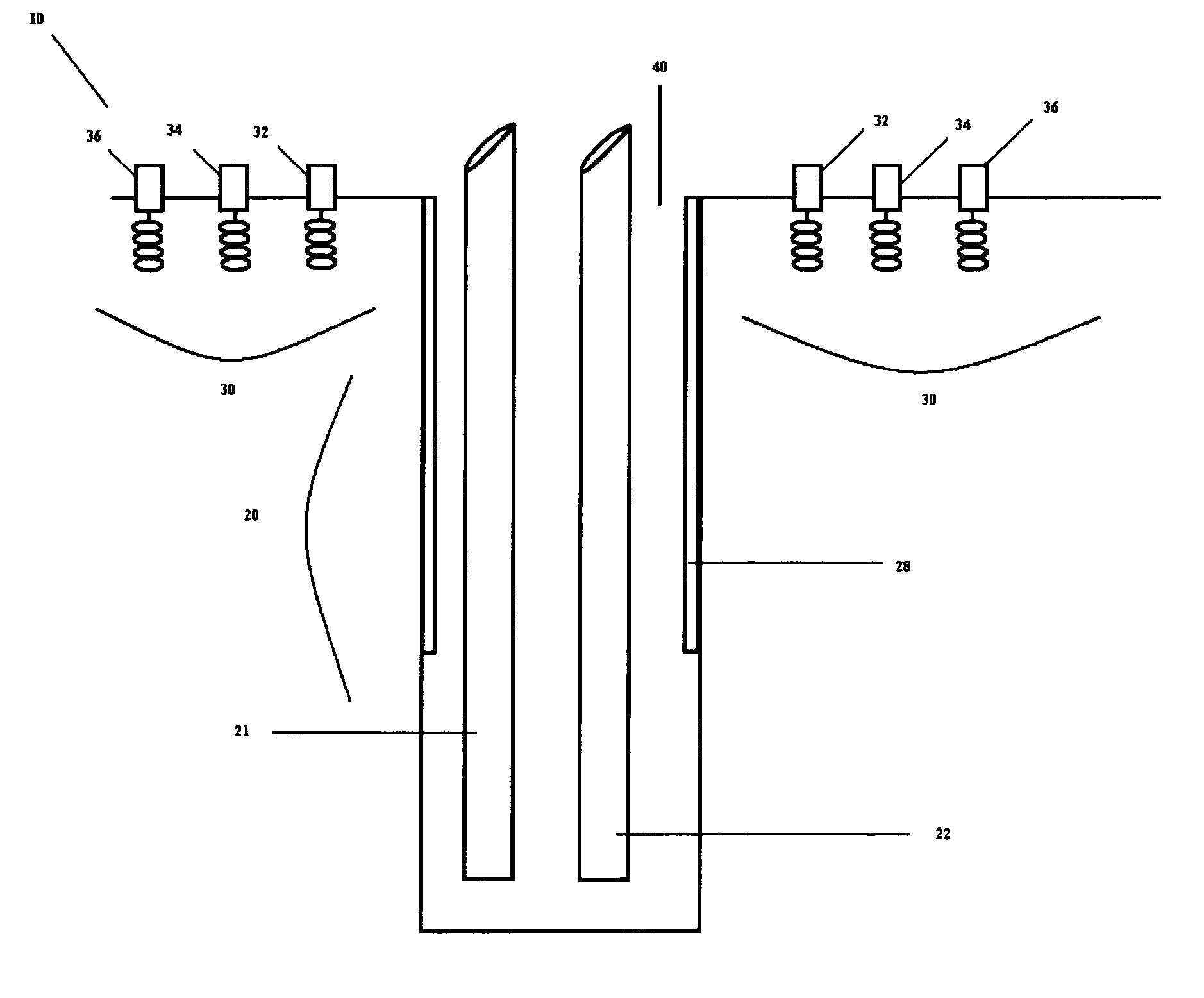
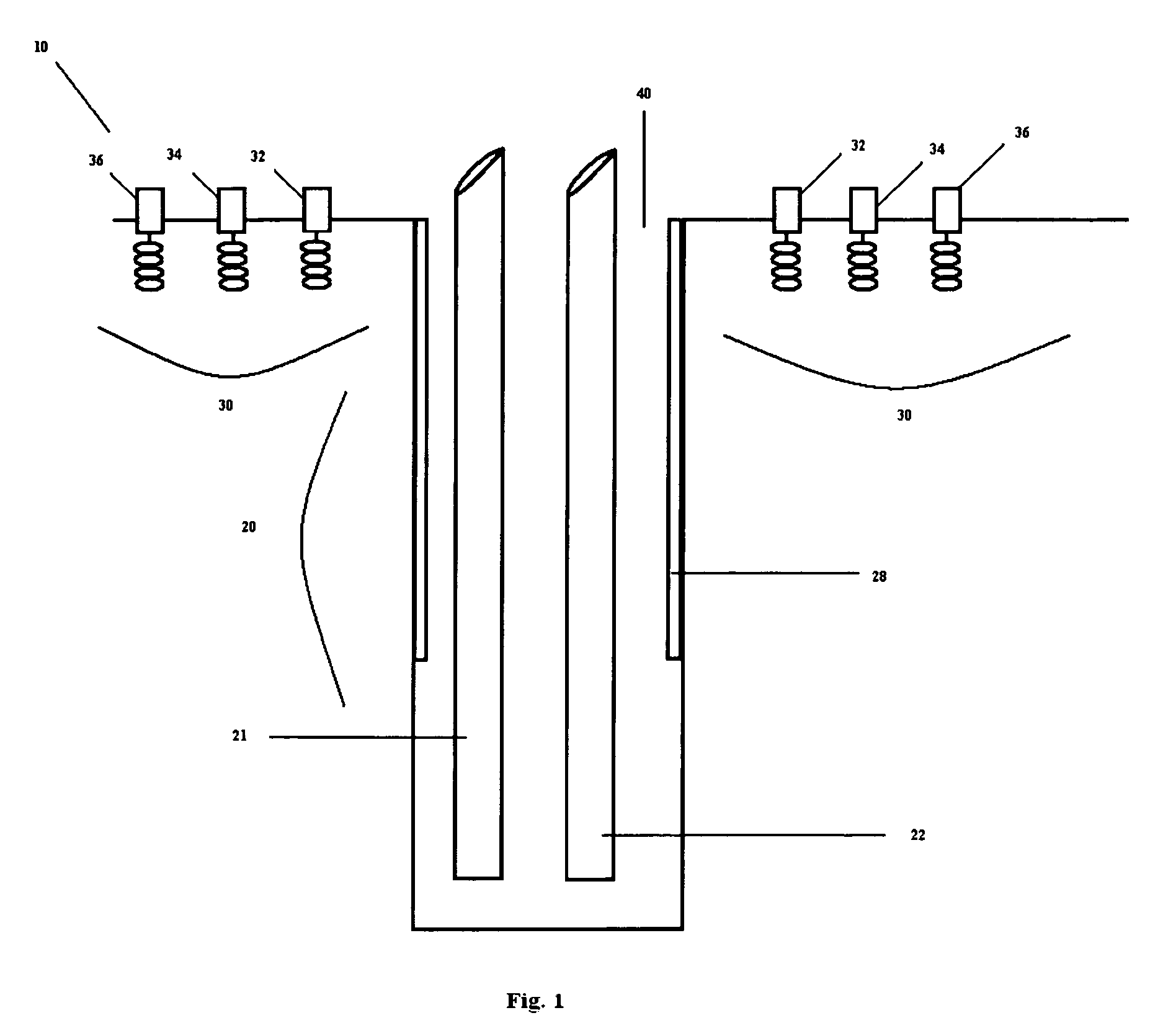
  • Figure 1
    Figure 1
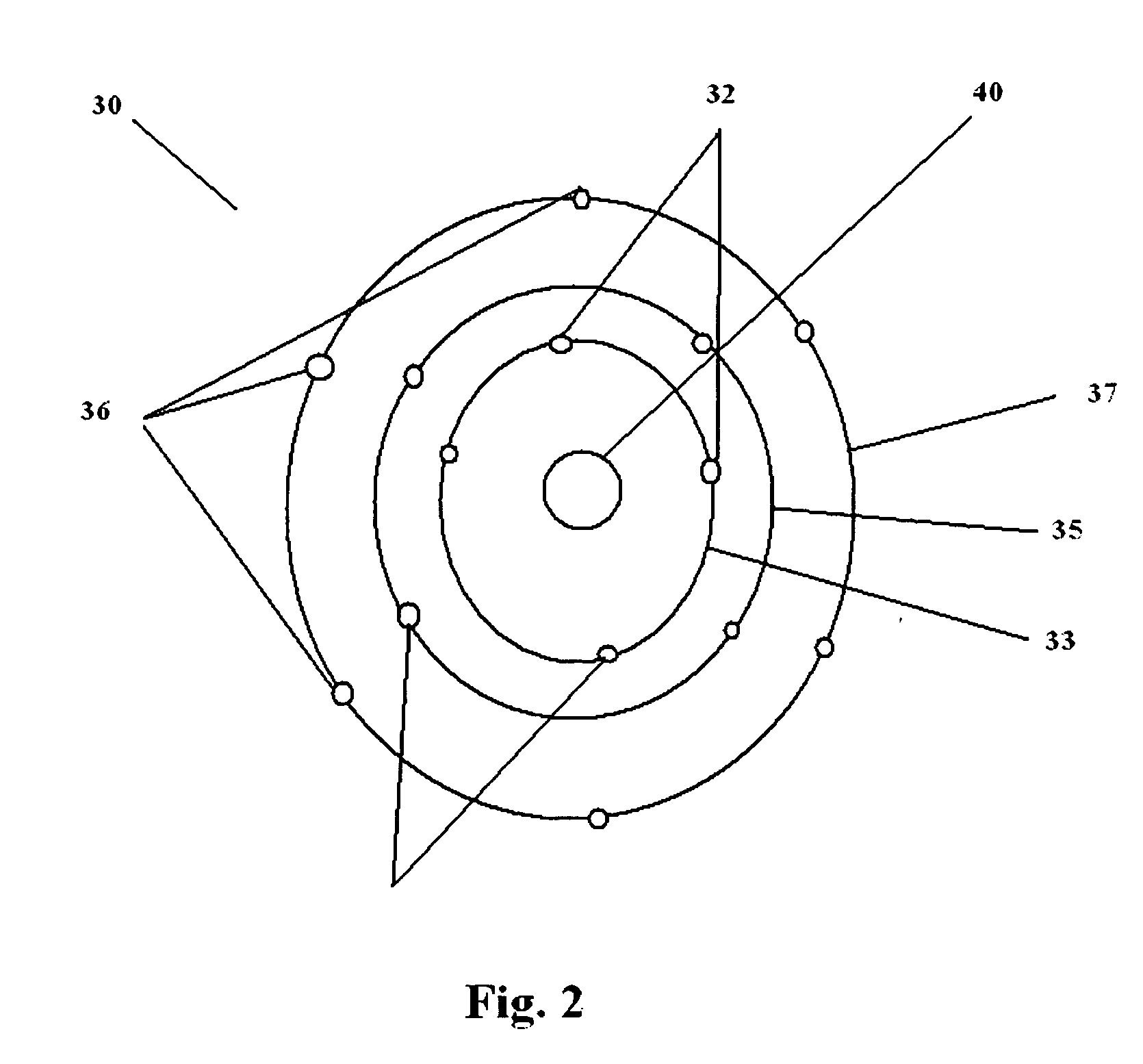
  • Figure 2
    Figure 2
  • Figure 3
    Figure 3
Patent Text Reader

Abstract

A new application of electromagnetic tomography is described directly related to the efficient recovery of oil and gas as well the removal of unwanted liquids from subsurface formations. The process involves the deployment of both surface and a single borehole magnetic dipole structures used for both transmitting and receiving low frequency electromagnetic energy. The surface antenna consists of circularly concentric arrays of small receiving solenoid antennas and the downhole system consists of one or more solenoid antenna in a single borehole. The concentricity of the surface array is centered about or in proximity to the borehole axis. The electromagnetic field radiated by the downhole antenna is received by each surface antenna. The amplitude and phase of voltages and currents received by each surface antenna is electronically processed based on the theoretical processing principles similar to what has been recently established for electromagnetic impedance tomography (EMIT). Several concentric surface antenna arrays with electronic switching between each circular array and the downhole solenoid will have the ability to image the spread and movement of oil and gas during thermal treatment and provide three dimensional temperature measurement. The oil movement to recovery wells may be provided by radiofrequency heating or steam flood as in enhanced oil recovery. This information allows for developing very efficient oil and fluid recovery techniques by actually observing tomographic images developed according to this invention.
Need to check novelty before this filing date? Find Prior Art

Description

CROSS-REFERENCE TO RELATED APPLICATION(S)

[0001] This application claims priority from U.S. provisional patent application No. 60 / 645,156, which was filed on Jan. 19, 2005, and which is incorporated herein by reference in its entirety.FIELD OF THE INVENTION

[0002] The present invention generally relates to the use of electromagnetic impedance tomography (“EMIT”) to track subsurface fluid movement and provide three dimensional temperature measurement. More particularly, this invention relates to systems for using EMIT to create images of the spread and movement of oil and gas during thermal treatment and to provide three dimensional images over a large volume. BACKGROUND OF THE INVENTION

[0003] There is a widespread need for images of subsurface conditions and materials in connection with various industrial applications. Such imaging can be used to map subsurface water movement or mineral deposits. It may also be sued to assist in the recovery of oil or gas, or in environmental remed...

Examples

Embodiment Construction

[0016] The dynamic tracking of subsurface fluid movement and three dimensional temperature measurement based on the change in resistivity or dielectric properties with temperature such as created by borehole selective radiofrequency heating or steam drive in a reservoir of heavy crude oil can be provided by the principles of EMIT as described herein. This application requires a special arrangement of borehole and surface antenna structures sufficient in number and distribution to track the movement of the moving fluids during the application radiofrequency heating or steam drive (“EMIT Antenna Array”). By providing generally circular arrays of magnetic and electric receiving elements consisting of concentric arrays of increasing diameter and a single transmitting borehole containing a solenoid-like antenna, real time tracking of the direction and spread of the hot fluids can be determined so as to optimize the oil recovery method. The arrangement of receivers on the surface need not...